معرفی
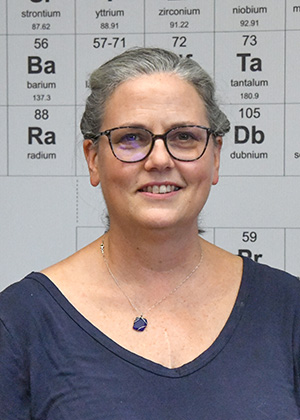
Charles Hanifin is a Professor in the Department of Biology at Utah State University's Uintah Basin campus in Vernal, Utah, where he teaches undergraduate courses including General Biology, Evolution, Genetics, and Physiology. A USU alumnus (PhD 2005), he maintains active research and teaching roles as evidenced by Fall 2024 course listings.
Education:
- PhD in Biology (Ecology), Utah State University, 2005
- BA in Biology, University of Chicago, 1991
Research Focus: Dr. Hanifin investigates evolutionary genetics of toxin resistance, particularly tetrodotoxin (TTX) dynamics in newt-predator arms races. His work integrates molecular biology, field ecology, and computational modeling to examine voltage-gated sodium channel adaptations across diverse taxa including newts, octopuses, and snakes. Recent studies (2022) employ in silico analysis to decode toxin-channel binding mechanisms.
Publication Trends: His 15-year publication record (2008-2022) demonstrates consistent focus on TTX resistance evolution, with increasing computational approaches in recent work. Collaborations with Geffeney, Brodie, and Stokes dominate his output, revealing cross-taxon patterns in sodium channel adaptation. Key themes include convergent evolution mechanisms, geographic variation in toxicity, and novel toxin discoveries in terrestrial invertebrates.
Awards:
- Utah State University Uintah Basin Research of the Year (2016)
- Undergraduate Research and Creative Opportunity Award (2013)
Mentorship & Grants: Dr. Hanifin mentors graduate students (e.g., Kristopher Pedersen, 2018) and supervises undergraduate research through BIOL 5800. His 2013 award reflects success in developing Course-Based Undergraduate Research Experiences (CUREs), particularly for students at the Uintah Basin campus. Teaching records show sustained commitment to evolutionary biology education since 2012.
Research Context: Based at USU's Vernal campus, his work leverages regional ecosystems for field studies of Taricha newts while collaborating with national experts on molecular analyses. The BEERC facility supports his integrated lab-field investigations of coevolutionary dynamics.