

Chandra Shekhar
استاد پژوهشی · Topological Materials
Max Planck Institute for Chemical Physics of Solidsمعرفی
Chandra Shekhar serves as Group Leader of the Topological Quantum Chemistry research group at the Max Planck Institute for Chemical Physics of Solids (MPI CPfS) in Dresden, Germany. His research focuses on the cutting-edge field of topological quantum materials, where he leads a team of postdoctoral researchers and graduate students investigating exotic electronic states in novel materials systems.
Dr. Shekhar's research interests center on topological materials including topological insulators, Weyl semimetals, and Dirac semimetals. His group specializes in single crystal growth using multiple techniques including flux growth, Bridgman method, laser/optical floating zone, and chemical vapor transport. They combine these synthesis capabilities with advanced transport measurements to characterize the electronic properties of quantum materials. The research has significant implications for understanding Majorana, Weyl, and Dirac fermions in condensed matter systems.
Analysis of Dr. Shekhar's recent publications reveals a strong focus on kagome lattice materials, chiral topological systems, and Heusler compounds. His work spans fundamental investigations of topological phases, transport phenomena including anomalous Hall effects, and the relationship between crystal structure and electronic properties. The research often involves international collaborations with theoretical groups to interpret experimental findings through the lens of topological band theory.
Dr. Shekhar actively mentors several graduate students and postdoctoral researchers including Avdhesh Kumar Sharma, Subhajit Roychowdhury, and others. His group maintains the TOPMAT resource for sharing single crystals with the broader research community. The group's expertise in crystal growth techniques enables exploration of novel quantum phenomena in carefully engineered materials.
Dr. Shekhar's laboratory employs multiple crystal growth techniques including flux growth for solution-based synthesis, Bridgman method for congruently melting compounds, laser/optical floating zone for contamination-free growth up to 2600°C, and chemical vapor transport for transition metal dichalcogenides and pnictides. These capabilities allow his team to systematically investigate structure-property relationships in topological quantum materials under various conditions.
Chandra Shekhar در سایتهای دیگر
جستوجوهای مرتبط
شاید اینها هم برایتان مناسب باشند
 John PhilipIllinois College · استاد
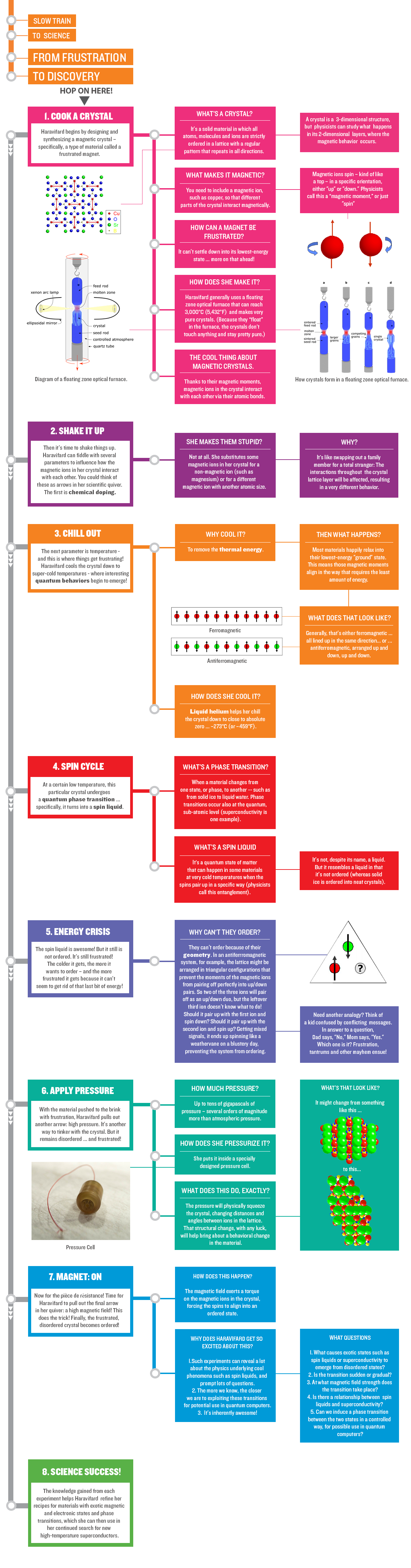 Sara HaravifardDuke University · دانشیار
 Edouard LesneMax Planck Institute for Chemical Physics of Solids · پژوهشگر
- MMichael BaenitzMax Planck Institute for Chemical Physics of Solids · استاد پژوهشی
 Ivan KokanovićUniversity of Zagreb · استاد
 Yun Suk EoTexas Tech University · استادیار