معرفی
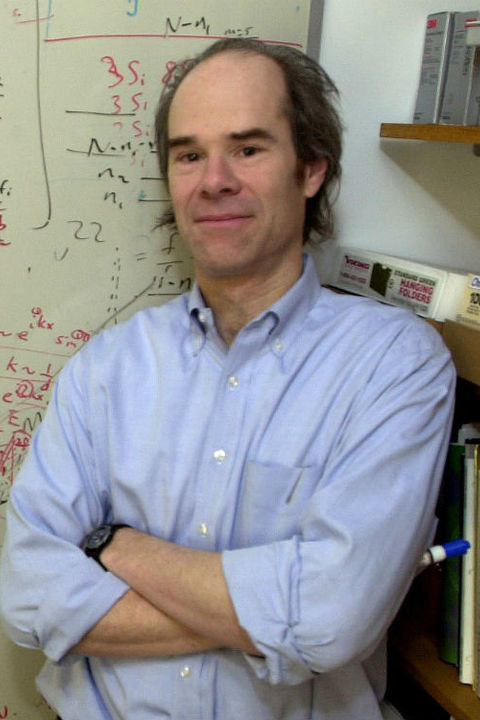
Dr. Chandra Sekhar Prayaga is a Professor in the Department of Physics at the University of West Florida, within the Hal Marcus College of Science and Engineering. He has over 35 years of teaching experience and has been a faculty member at UWF since 2002. His office is located in Building 58, Room 005, and he can be reached at cprayaga@uwf.edu.
His educational background includes a Ph.D. in Physics from the Indian Institute of Science, Bangalore; an M.S. in Physics from the Indian Institute of Technology, Delhi; and a B.S. in Special Physics, Mathematics, and Chemistry from Osmania University, Hyderabad, India.
Dr. Prayaga's research focuses on two major areas: the optical and electronic properties of liquid crystals—especially near phase transitions—and innovative approaches to physics education. His experimental work involves the fabrication and characterization of liquid crystal thin films using techniques such as Langmuir-Blodgett deposition, spin-coating, dielectric spectroscopy, XRD, and optical microscopy. In education, he leads the Discovery Spot initiative, which provides hands-on STEM+C activities for middle and high school students and supports teacher and parent engagement.
The 15 most recent publications reflect a strong interdisciplinary focus, blending condensed matter physics with educational technology. Key themes include liquid crystal behavior under confinement, phase transitions in 2D systems, and the integration of robotics and simulations into physics curricula. His work bridges fundamental materials research with practical educational outreach, emphasizing accessibility and experiential learning.
Dr. Prayaga has secured over $3 million in research funding, supporting both student and faculty projects. He has been instrumental in developing teacher training programs, notably through the Teacher Institute for Physical Sciences, which received funding from the Florida Department of Education. He teaches a wide range of courses, including Quantum Theory I and II, Thermodynamics, Solid State Physics, and University Physics.
He is the co-author of the book Robotics: A Project-Based Approach (2014) and has published in journals such as Journal of Computing Sciences in Colleges, Synthetic Metals, and Bulletin of the American Physical Society. His work continues to influence both materials science and STEM education at the K-12 and university levels.