معرفی
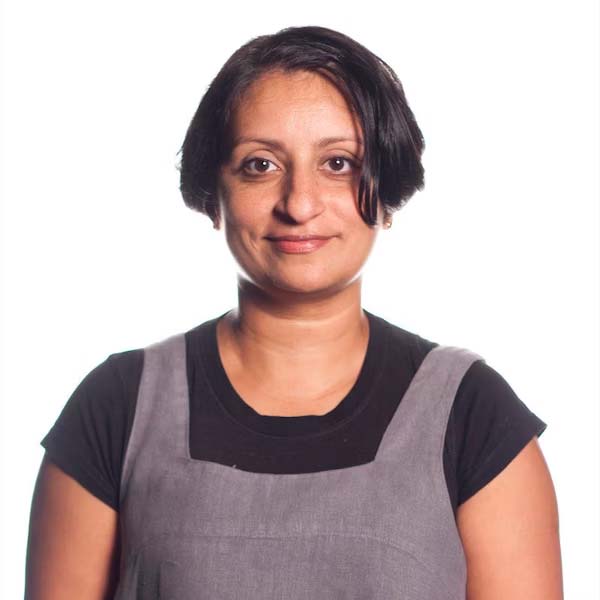
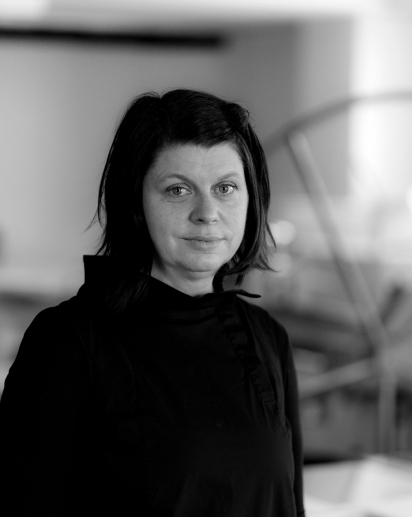
Catie Newell is Professor of Architecture at the University of Michigan's Taubman College of Architecture and Urban Planning, where she joined the faculty in 2009 as the Oberdick Fellow. She received her Masters of Architecture from Rice University and a Bachelor of Science in architecture from Georgia Tech. Newell is also a founding principal of Alibi Studio based in Detroit, which serves as the platform for her creative practice that bridges academic research with practical architectural applications.
Her research focuses on the intersection of architecture, light, and material systems. Newell's work explores how spaces and material effects can create new atmospheres through the exploration of textures, volumes, and the effects of light or lack thereof. She is particularly interested in how darkness works in architecture and how light can transform spaces. Her creative practice has been widely recognized for exploring design construction and materiality in relation to location, geography, and cultural contexts.
Newell's notable projects include the 'Inhabiting Light' installation (2025), the 'New Inhabiting Light Alcove at Nichols Arboretum' (2024), and the groundbreaking 'Secret Sky' barn installation (2020) that transformed a rural Michigan barn into a dramatic light sculpture. Her early work 'Weatherizing' (2010) adapted an old Detroit garage using nearly one thousand glass tubes to capture and channel light.
Her achievements include the Architectural League Prize for Young Architects and Designers (2011), the ArtPrize Best Use of Urban Space Juried Award (2011), and the prestigious Cynthia Hazen Polsky and Leon Polsky Rome Prize Fellow in Architecture (2013-2014). She is also recognized as a Lucas Fellow, Kresge Artist Fellow, and Fellow of the American Academy in Rome.
Newell teaches courses including Advanced Prototyping, Glow Workshop: Local Light, and Material Engagement at the University of Michigan. Her work demonstrates a commitment to preserving architectural heritage while exploring innovative possibilities for spatial experience through creative use of materials and light.