معرفی
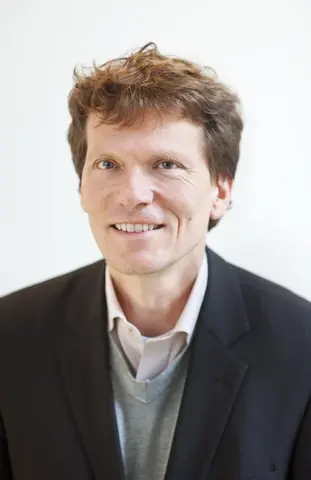
Carsten Herrmann-Pillath is a Research Fellow at the Max Weber Centre for Advanced Cultural and Social Studies at the University of Erfurt, Germany. He leads the subproject C06 "Property as a World Relationship" within the SFB 294 "Structural Change of Property" and conducts research on hybrid ownership structures in state capitalism through the COEVOLVERS project. His academic work bridges economics, philosophy, and Chinese studies, with a particular focus on the economic philosophy of the Anthropocene and ritual economy in China.
Herrmann-Pillath's research interests span several interconnected domains: the emerging field of Technosphere Science examining human-made artifacts and their ecological interactions; embodied economics exploring the relationship between cognition and economic behavior; Chinese economic culture with emphasis on ritual economy in Shenzhen; and the philosophical foundations of evolutionary economics. His work demonstrates a unique interdisciplinary approach that connects Western and Chinese perspectives on economic systems.
His recent publications (2022-2024) reveal a strong focus on embodied economics, with numerous articles exploring the relationship between embodiment, abstraction, and economic institutions. He has also produced significant work on Chinese economic culture, particularly examining property regimes, ritual economy, and cultural governance in Shenzhen. His research shows a clear trend toward integrating ecological concerns with economic theory, especially through the lens of the technosphere concept.
Herrmann-Pillath teaches regularly at the University of Erfurt, offering courses on Economic Ethics in the winter term and Introduction into Ecological Economics in the summer term. He maintains an active research profile with multiple ongoing book projects, including collaborations on "Brain, Body and Markets" and "A New Principles of Economics: The Science of Markets."
He has established significant academic networks, particularly with Chinese scholars, and maintains his own blog (www.technosphere.blog) alongside his personal academic website (www.cahepil.net), where he shares his research on the technosphere and economic philosophy.