معرفی
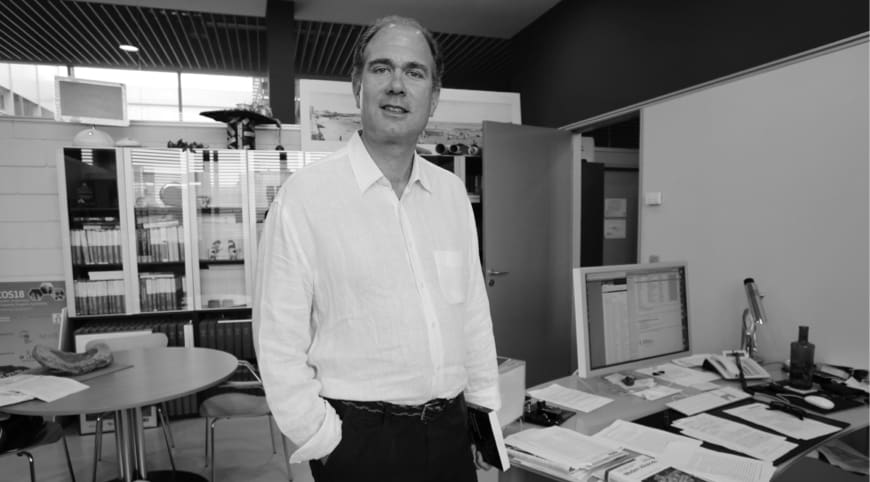
Carsten Bolm is a distinguished Professor of Organic Chemistry at RWTH Aachen University, Germany, where he has held a chair position since 1996. He also maintains international academic connections as an Honorary Professor at Central China Normal University (since 2016) and Adjunct Professor at Wuhan Institute of Technology (since 2012). His academic journey began with studies at TU Braunschweig and University of Wisconsin-Madison, followed by doctoral work under Professor Reetz and postdoctoral training with Nobel laureate Professor Sharpless at MIT.
Professor Bolm's research focuses on enantioselective catalysis, mechanochemistry, asymmetric synthesis, sulfur chemistry, biomass conversion, and bioactive compounds. His innovative work in solvent-free mechanochemical reactions has positioned him at the forefront of sustainable chemistry research, bridging traditional organic synthesis with modern green chemistry principles.
His publication record demonstrates consistent high-impact research output, with over 550 publications and exceptional citation metrics (Web of Science H-index of 101, Google Scholar H-index of 110). Recent work shows a strong trend toward combining mechanochemistry with other activation methods like electrochemistry and photochemistry, while maintaining focus on sulfur-containing compounds and asymmetric synthesis.
Major honors include:
- Thomson Reuters Highly Cited Researcher (2014, 2015, 2016)
- Fellow of the Royal Society of Chemistry (2015)
- Ranked among top 0.8% of scientists globally (2021)
- Multiple prestigious awards including Otto-Bayer-award and Adolf-von-Baeyer-Denkmünze
Professor Bolm has served as Associate Editor of the Journal of Organic Chemistry (2008-2021) and maintains board memberships with several chemistry journals. His research group actively welcomes international students and postdocs, providing comprehensive support for integration into the academic community at RWTH Aachen. His work continues to influence both fundamental organic chemistry and practical applications in pharmaceutical development and sustainable synthesis.