معرفی
Carolyn Teschke is a Professor and Department Head in the Molecular and Cell Biology Department at the University of Connecticut. Her research program focuses on understanding the complex mechanisms of viral assembly, particularly using bacteriophage P22 as a model system to investigate capsid formation and protein interactions.
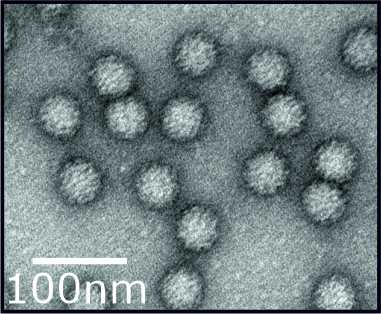
Teschke's research interests center on viral assembly pathways, with specific focus on how viruses build capsids with precise size and shape. Her work examines the sequential protein interactions involved in building infectious virions, particularly in tailed phages, herpesviruses, and other dsDNA viruses. She investigates how the portal protein is incorporated, scaffolding protein interactions, capsid maturation processes, and ejection protein mechanisms. A significant aspect of her research compares capsid interactions across related phages and between P22 and herpesviruses to understand evolutionary adaptations in viral assembly.
Analysis of Teschke's publication record reveals a strong emphasis on structural virology, with particular focus on the HK97 protein fold that appears across diverse viral families. Her research spans multiple techniques including NMR spectroscopy, cryo-EM, and biochemical analysis to understand protein interactions at the molecular level. Recent publications (2017-2025) demonstrate consistent contributions to understanding viral assembly mechanisms, with work appearing in high-impact journals including Nature Communications, Science Advances, and Journal of Virology.
- JVi Spotlight recognition for significant contribution to virology research
Teschke maintains an active research laboratory investigating fundamental questions about viral morphogenesis. Her work bridges structural biology, biochemistry, and microbiology to address how viruses assemble with remarkable precision. She has mentored numerous students and collaborators who appear as co-authors on her publications, though specific student names are not provided in the available information. Her research has implications for understanding not only basic viral biology but also potential applications in nanotechnology and therapeutic development.