معرفی
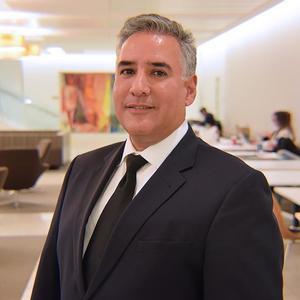
Carlos F. Acosta is an Adjunct Associate Professor of Law at American University Washington College of Law (AU-WCL), where he has taught since 1997 in the Trial Advocacy Program. He specializes in prosecutorial ethics and the prosecution of complex homicides. He also serves as a faculty member for the AU-WCL / CEJA / UAH Diplomado en Litigación Oral Penal (Diploma in Criminal Oral Litigation) Program and has trained legal professionals internationally.
- B.A., University of Maryland, 1985
- M.A. in English (Rhetoric), University of Maryland
- J.D., Southern Methodist University School of Law, 1991
His research and professional interests center on criminal law and procedure, trial advocacy, and ethical prosecution. He has developed expertise in using science and technology to combat crime and has contributed to international efforts in judicial reform, anti-corruption, and rule-of-law development.
While he does not publish scholarly articles in the traditional academic sense, his work has significantly influenced legal training and policy through international engagement, technical assistance, and high-impact judicial and prosecutorial practice. His contributions span global institutions such as the United Nations Development Programme, the Financial Action Task Force (FATF-GAFI), and the American Bar Association.
He has received notable recognition through invitations to lecture and train in countries including Argentina, Panama, Kosovo, Guatemala, Peru, and British Columbia. His engagements cover topics ranging from alternatives to incarceration to wildlife smuggling and gang prosecution.
Carlos Acosta has advised and trained prosecutors, judges, and police internationally. He has contributed to programs by the National Institute of Standards and Technology (NIST) and served as a speaker for the National Advocacy Center. His work reflects a strong commitment to justice education and systemic reform.
He is actively involved in multiple legal education initiatives, including the Diplomado program, and continues to support judicial training through AU-WCL and partner organizations. His leadership extends to cross-border legal cooperation and capacity building in emerging democracies.