معرفی
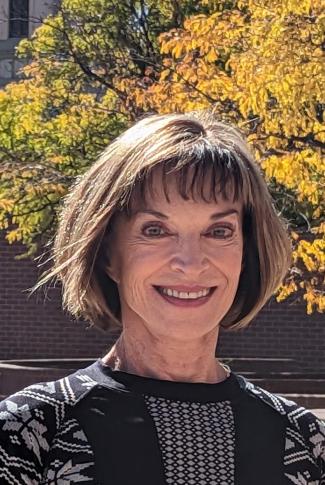
Candice Shelby is a Professor of Philosophy at the University of Colorado Denver, College of Liberal Arts and Sciences, Department of Philosophy. With 28 years of teaching experience at CU Denver, she has established herself as a respected scholar in multiple philosophical domains while maintaining active engagement with students through regular office hours (Mondays & Wednesdays 11:00-12:30 pm for Spring 2025) and a welcoming teaching philosophy.
Shelby earned her Ph.D. and M.A. in Philosophy from Rice University in 1991 and 1988 respectively, building on her undergraduate foundation with a B.A. in Humanities from the University of Houston-Clear Lake (1984). Her academic journey has positioned her at the intersection of theoretical philosophy and practical applications to contemporary issues.
Her research spans several interconnected domains: History of Philosophy provides historical context for her work; Metaphysics forms the theoretical foundation; Philosophy of Mind and Philosophy of Psychology explore consciousness and mental processes; Philosophy of Science examines methodological questions; and her specialized focus on Philosophy of Addiction addresses pressing societal issues. Notably, she currently investigates philosophical issues associated with psychedelic-assisted psychotherapy, bridging traditional philosophical inquiry with emerging therapeutic approaches.
Shelby's publication record reveals a consistent focus on addiction philosophy with increasing specialization in psychedelic therapy applications. Her work demonstrates a progression from broader philosophical foundations to targeted applications in mental health treatment, particularly examining the relationship between belief systems and recovery processes. The publications also show interdisciplinary reach, connecting philosophy with psychiatry, psychology, and neuroscience.
As an educator, Shelby teaches across the philosophy curriculum from introductory logic courses (PHIL 2441) to advanced specialized topics including multiple Philosophy of Mind (PHIL 4300, PHIL 4700) and Philosophy of Science (PHIL 3340, PHIL 4350) courses. Her teaching portfolio reflects both breadth across the discipline and depth in her specialized research areas.
Her public engagement extends beyond academia, as evidenced by her interview with Montel Williams discussing Philosophy of Addiction, Exploitation, and social issues. This demonstrates her commitment to making philosophical insights accessible to broader audiences and applying philosophical reasoning to contemporary societal challenges.