معرفی
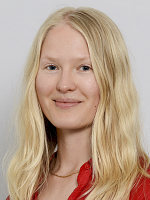
Cana Elgvin serves as a Senior Lecturer (50%) at UiO: Energy and Environment and a PhD candidate (50%) at the Centre for Materials Science and Nanotechnology (SMN), University of Oslo. Her dual role encompasses research advising, seminar leadership for ENERGI4010, and doctoral research in advanced electron microscopy techniques.
Her academic foundation includes:
- Master's degree (2021) in Materials Science for Energy and Nanotechnology (MENA) from University of Oslo, specializing in transmission electron microscopy (TEM)
- Bachelor's degree (2019) in Materials Science for Energy and Nanotechnology (MENA) from University of Oslo, specializing in materials physics
Her research bridges experimental spectroscopy and solid-state physics through scanning transmission electron microscopy (STEM). She pioneers momentum-resolved electron energy loss spectroscopy (q-EELS) to map electronic excitations in momentum space, enabling direct experimental observation of materials' band structures. This work probes electronic transitions, plasmonic responses, and chemical bonding at nanometer-scale resolution, with applications in energy materials characterization.
Her publication record shows focused expertise in combining advanced EELS methodologies with first-principles calculations, as demonstrated in her 2024 Physical Review B paper on zinc oxide. This reflects a consistent trajectory in developing experimental techniques to validate theoretical models of electronic properties.
Scientific awards: None documented in available sources.
As an early-career academic, she currently supervises seminar activities for ENERGI4010 but does not advise PhD students. Her research is supported through two key initiatives:
- MORTY: PhD project at SMN developing q-EELS for band structure mapping
- MagNEO: UiO:Energy and Environment project on advanced magnets for sustainable mobility
She operates within UiO's materials research ecosystem at Gaustadalléen 21, collaborating across physics, nanotechnology, and energy research groups while advancing experimental methodologies for next-generation materials characterization.