معرفی
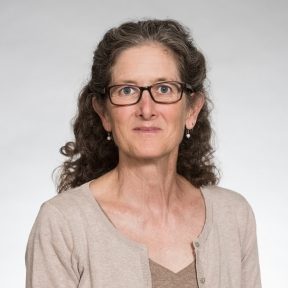
C. Leigh Anderson serves as the Marc Lindenberg Professor for Humanitarian Action, International Development, and Global Citizenship at the University of Washington's Evans School of Public Policy & Governance, where she has been a faculty member since 1997. She founded and directs the Evans School Policy Analysis and Research Group (EPAR), which conducts agricultural research across sub-Saharan Africa and South Asia with primary funding from the Bill & Melinda Gates Foundation.
Her research centers on rural poverty and agricultural systems, examining how market structures and policy frameworks shape decision-making among smallholder farmers. Anderson's work spans financial inclusion metrics, climate risk assessment, crop yield measurement methodologies, and gender dynamics in agricultural households. EPAR's outputs—including open-source code, technical reports, and data visualizations—aim to improve agricultural data accessibility for policymakers addressing food security and poverty reduction.
Recent publications reveal consistent methodological rigor in analyzing agricultural development challenges, with recurring themes in gender-inclusive measurement systems, climate-agriculture linkages, and evaluation of development interventions. Her interdisciplinary approach combines economics, statistics, and field-based empirical methods to address measurement gaps in smallholder farming contexts.
Anderson has received the University of Washington’s Excellence in Teaching Award and the Department of Economics Henry T. Buechel Award for outstanding undergraduate teaching. Her research portfolio demonstrates sustained engagement with major development funders, particularly the Gates Foundation's agricultural development initiatives.
As EPAR director, she leads a multidisciplinary team producing evidence on agricultural data systems, risk assessment frameworks, and inclusion metrics. The group maintains active collaborations with institutions across Africa and Asia, contributing to policy discussions on agricultural transformation through rigorous analysis of household survey data, remote sensing inputs, and experimental methodologies.