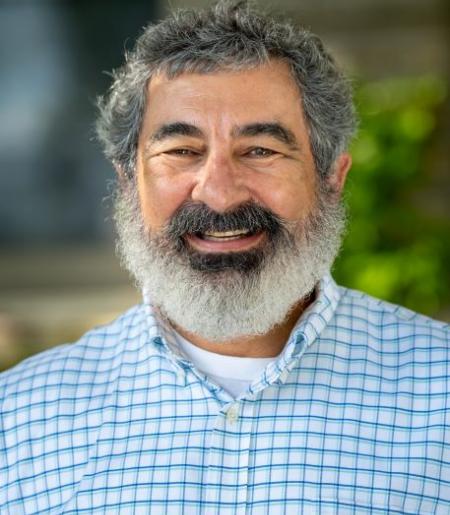
Bruce V. Lewenstein
استاد · Public communication of science and technology
Cornell Universityمعرفی
Bruce V. Lewenstein is Professor of Science Communication jointly appointed in Cornell University’s Department of Communication and Department of Science & Technology Studies, and he currently serves as Cornell’s University Ombuds. A historian of science by training, he has become a leading international authority on how science and technology are communicated to—and understood by—the public.
Education
- Ph.D., History and Sociology of Science, University of Pennsylvania (1987)
- M.A., History and Sociology of Science, University of Pennsylvania (1985)
- B.A., History, University of Chicago (1980)
Research Interests
Lewenstein’s scholarship focuses on the historical and contemporary dimensions of public communication of science and technology. He examines how media, policy, and public culture shape the understanding of controversial scientific issues such as biotechnology, nanotechnology, and citizen science initiatives. His work integrates historical case studies with evaluation of informal science-education projects, emphasizing how inclusive public engagement contributes to reliable knowledge production.
Scientific Awards
- Inaugural Award for the Advancement of Science Communication as a Professional Field, International Network on Public Communication of Science & Technology (2025)
- SUNY Chancellor’s Award for Excellence in Faculty Service (2020)
- Cornell CALS Alumni Association Outstanding Faculty Award
Outreach & Grants
Through funded projects—including National Science Foundation support for studies of media coverage of emerging technologies—Lewenstein has created publicly accessible archives (e.g., the Cornell Cold Fusion Archive and the Y2K media collection) that serve researchers worldwide. He regularly advises scientific organizations, trains practitioners, and collaborates with international networks to improve public engagement strategies.
Teaching & Mentorship
Since 1987 he has taught undergraduate and graduate courses such as “Public Communication of Science and Technology,” “Science Writing for Media,” and “Introduction to Science & Technology Studies.” His teaching philosophy centers on cultivating critical thinking skills that students can apply beyond any specific scientific content.