معرفی
Brett Sanford Kaufman is an Assistant Professor at the University of Illinois at Urbana-Champaign, holding joint appointments in the Department of Classics, Department of Anthropology, Materials Research Lab, and School of Art and Design. He is also affiliated with the Center for East Asian and Pacific Studies. Before joining UIUC, he served as a faculty member at the University of Science and Technology Beijing (USTB) and held a postdoctoral fellowship at Brown University. He is the Managing Editor of the journal Advances in Archaeomaterials.
Dr. Kaufman earned a BA from Brandeis University and MA/PhD degrees from the University of California, Los Angeles (UCLA). His research focuses on the Middle East and North Africa from the Bronze Age to the present, integrating archaeological evidence with historical texts and Semitic inscriptions. Key areas include Israelite/Jewish heritage, Phoenician/Punic civilizations, and the evolution of democracy influenced by ancient Mediterranean governance systems. His work also spans engineering and design, particularly archaeometallurgy using materials science methods, and contextual engineering to bridge cultural understanding in technical fields.
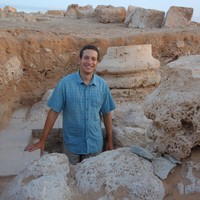
His advocacy mission emphasizes preserving academic freedom and combating misinformation in higher education. He has conducted fieldwork in Tunisia, China, Italy, Israel, and New York, leading excavations and developing models to study urban collapse and human-environment interactions. His grants include support from the National Science Foundation, National Geographic Society, and the National Natural Science Foundation of China.
Dr. Kaufman’s interdisciplinary approach connects metallurgical studies with broader societal contexts, exploring topics like fuel efficiency of ancient alloys, metal circulation patterns in Zhou China, and the impact of colonial transitions on resource exploitation. He collaborates internationally and has contributed to policy discussions linking archaeological insights to modern environmental challenges.