معرفی
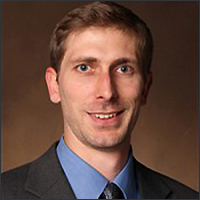
Brett Byram serves as Associate Professor of Biomedical Engineering at Vanderbilt University's School of Engineering and holds the Hoy Family Faculty Fellow distinction. He maintains dual affiliations with the Vanderbilt Institute for Surgery and Engineering (VISE) and the Vanderbilt University Institute of Imaging Science (VUIIS). Currently, he is the incoming Faculty Director of ACCRE—Vanderbilt’s High Performance Compute Center—and incoming chair for the NIH’s Image Technology Development (ITD) Panel, where he has served as a standing member.
Educational Background:
- Ph.D. in Biomedical Engineering, Duke University (2011)
- B.S. in Biomedical Engineering and Mathematics, Vanderbilt University
Dr. Byram's research centers on medical ultrasound with emphases in signal processing, elasticity imaging, and beamforming. His work spans beamforming/image formation, motion estimation, blood flow imaging, and hardware development—frequently integrating deep learning. The BEAM Laboratory, which he founded in 2013, develops ultrasound solutions for clinical challenges including transcranial imaging, placenta analysis, and kidney stone characterization. His methodology bridges advanced signal processing with tangible medical applications, particularly through AI-enhanced imaging techniques.
Recent publications (2024-2025) reveal three dominant trends: deep learning integration for image reconstruction/stitching (e.g., SynStitch, LOTUS), clinical metric refinement (gCNR for lesion detectability), and specialized applications in obstetrics (placenta segmentation) and neuroimaging (transcranial ultrasound). These works consistently address data scarcity through synthetic training and domain adaptation while advancing quantitative assessment frameworks.
Scientific Awards:
- Hoy Family Faculty Fellow
Dr. Byram leads the BEAM Laboratory (Biomedical Elasticity and Acoustic Measurement), established in 2013 as part of Vanderbilt's Biomedical Engineering Department with VISE affiliation. His NIH ITD Panel leadership and ACCRE directorship reflect significant institutional trust. While specific grants aren't detailed, his 11+ years of continuous lab operation indicate sustained funding for projects spanning Siemens Healthcare collaborations, transcranial imaging development, and deep learning beamformer research—often translating academic innovations to clinical tools.
The BEAM Lab functions as Vanderbilt's nexus for ultrasound innovation, maintaining strong VISE/VUIIS ties while pursuing hardware/software co-design. Current initiatives include real-time deep learning beamformers for echocardiography, transcranial functional ultrasound validation, and placenta segmentation systems. The lab's industry partnerships (notably with Siemens) and NIH panel involvement position it at the forefront of translating ultrasound research into clinical practice, with emerging work on diffusion models for 3D imaging and standardized biomechanical phantoms.