معرفی
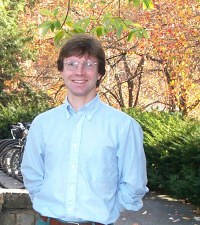
Brandi Robinson serves as an Associate Teaching Professor in the John and Willie Leone Family Department of Energy and Mineral Engineering at Pennsylvania State University's College of Earth and Mineral Sciences. She concurrently holds leadership roles as Director of Online Education and Co-Director of the Local Climate Action Program, focusing on policy formation and climate change mitigation strategies at local governance levels.
Her academic credentials include:
- Master of Science in Geography from Penn State (2005)
- Bachelor of Arts in Environmental Studies and Geography from University of Pittsburgh (2003)
Robinson's research centers on leveraging local policy mechanisms to address global climate challenges, specifically examining how to integrate climate change impacts with community priorities to drive meaningful action. Her expertise spans climate policy development, greenhouse gas inventory methodologies, carbon market analysis, and sustainability education frameworks. She actively bridges academic research with practical community applications through structured partnerships.
Her publication trajectory (2005-2024) reveals consistent interdisciplinary engagement across environmental science, policy education, and local climate action. Key themes include climate pedagogy innovation, civic engagement models for climate solutions, and practical implementation of greenhouse gas reduction strategies at municipal scales. The works demonstrate strong alignment between her teaching responsibilities and community-based research initiatives.
Recognition for her contributions includes:
- College of EMS G. Montgomery and Marion Mitchell Award for Innovative Teaching (2023)
- Penn State Award for Community Engagement and Scholarship (2025)
- College of Earth and Mineral Sciences Faculty Advising Award (2013)
- University Faculty Advising Award (2018)
Robinson mentors students through the Local Climate Action Program, which partners undergraduates and graduates with municipal officials to conduct emissions inventories and develop climate action plans. She chairs the Implementation Technical Advisory Group for the Centre Region's Climate Action and Adaptation Plan targeting 80% emissions reduction by 2050, demonstrating sustained commitment to translating academic work into community impact.
Her leadership in the Local Climate Action Program and regional climate governance structures exemplifies her operational model of embedding students within real-world policy development processes while advancing measurable climate mitigation outcomes at local scales.