معرفی
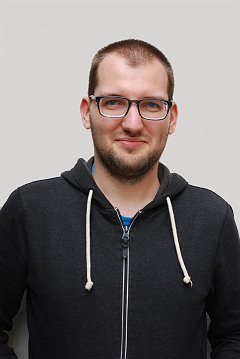
Benjamin Kaminski is a Professor at Saarland University and a Lecturer at University College London, where he contributes to the field of computer science with a strong emphasis on formal verification and logic. He is currently the Head of the Examination Board for the B.Sc. in Computer Science (English) program at Saarland University and actively supervises PhD, Master’s, and Bachelor’s students in research projects related to logic and verification.
His research centers on the quantitative aspects of formal program verification, particularly in probabilistic and quantum programs. Key interests include weakest-precondition reasoning, expected runtimes, incorrectness logic, and the integration of machine learning with formal methods. He advocates for explainable verification and explores non-classical models such as weighted programming.
His recent publications reflect a consistent focus on probabilistic semantics, runtime analysis, and deductive verification of programs, utilizing formal logic and mathematical structures to ensure correctness and efficiency. These works span high-impact venues such as POPL, LICS, and JACM.
- Ackermann Award for outstanding dissertations 2020
- Distinguished Paper at POPL 2021
- Best Paper Award at LOPSTR 2020
- EATCS Best Paper Award at ESOP 2016
- Borchers Badge for doctoral distinction 2019
- Best scientific production award at Université Paris-Saclay 2022
Benjamin Kaminski has advised numerous students at various levels, including current PhD candidates Tobias Gürtler, Lena Verscht, Anran Wang, and Linpeng Zhang. He has served on program committees for top conferences such as POPL, CAV, LICS, and ICALP, and has reviewed for prestigious journals including Journal of the ACM and TOPLAS. He has also evaluated research proposals for the Israel Science Foundation and Czech Science Foundation, highlighting his role in shaping global research agendas. His editorial work includes contributions to Foundations of Programming and Software Systems (2019).
He is actively involved in the formal methods research community, contributing to workshops and symposia on static analysis, dependable software engineering, and quantitative evaluation of systems. His leadership in organizing and reviewing for major conferences underscores his influence in theoretical computer science.
حوزههای پژوهشی