معرفی
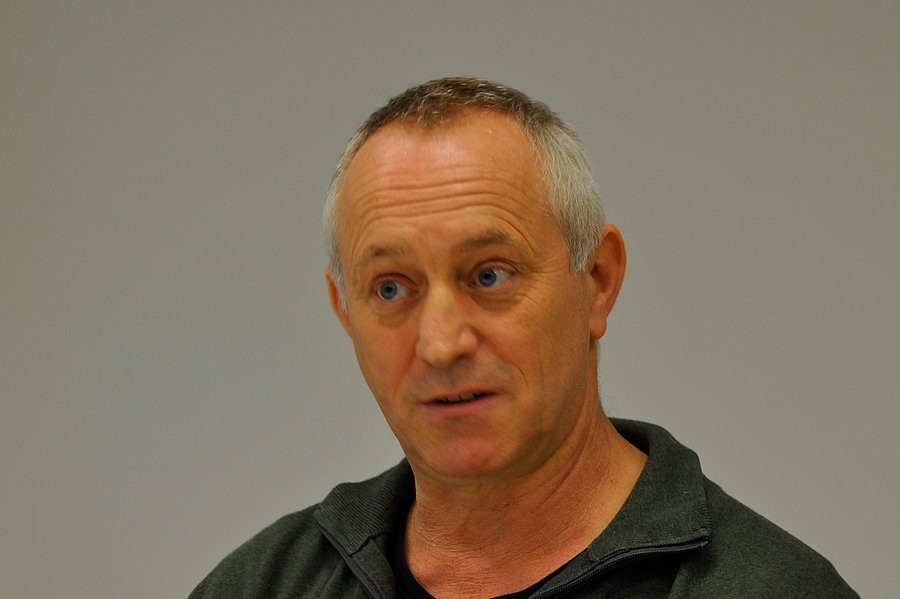
Professor Armin Seyfried serves as Director of the Civil Safety Research division (IAS-7) at the Institute for Advanced Simulation within Forschungszentrum Jülich and holds a professorship at the University of Wuppertal where he leads the teaching and research area 'Computer Simulation for Fire Safety and Pedestrian Traffic.' His career bridges theoretical physics with practical safety applications, having established the 'Civil Security and Traffic' department at Jülich Supercomputing Centre in 2004, which evolved into his current division.
Dr. Seyfried's research program focuses on pedestrian dynamics, crowd modeling, and traffic flow with significant applications in security and safety research. His interdisciplinary approach combines physics, computer science, psychology, and safety engineering to understand how collective phenomena emerge from individual behaviors in crowds. Key research areas include bottleneck dynamics, crowd safety at major events, pedestrian flow characteristics, and the development of simulation frameworks like JuPedSim.
His extensive publication record reflects evolving research trends from fundamental pedestrian flow studies to cutting-edge AI applications in crowd analysis. Recent work emphasizes machine learning for pushing behavior detection, microscopic analysis of pedestrian movement, and interdisciplinary approaches that integrate physical and socio-psychological factors in crowd dynamics. This progression demonstrates his commitment to addressing increasingly complex safety challenges with innovative methodologies.
- Director of Civil Safety Research (IAS-7) at Forschungszentrum Jülich
- Professor at University of Wuppertal specializing in pedestrian traffic simulation
- Leader of research on crowd safety for major events including UEFA EURO 2024
- Developer of simulation frameworks and analysis tools for pedestrian dynamics
- Organizer of international conferences on traffic and granular flow
Professor Seyfried's work bridges theoretical understanding with practical safety applications through extensive collaboration with event organizers, architects, and safety authorities. His research group conducts laboratory experiments, field studies, and develops computational models to improve crowd management practices worldwide. Current projects focus on AI-driven crowd analysis, real-time safety monitoring, and establishing data standards for pedestrian dynamics research.
His laboratory investigations of pedestrian movement patterns, combined with real-world applications at major public events, have established him as a leading authority in crowd safety research. The team's work on identifying dangerous crowd conditions before they escalate represents a significant advancement in preventive safety measures for mass gatherings.