معرفی
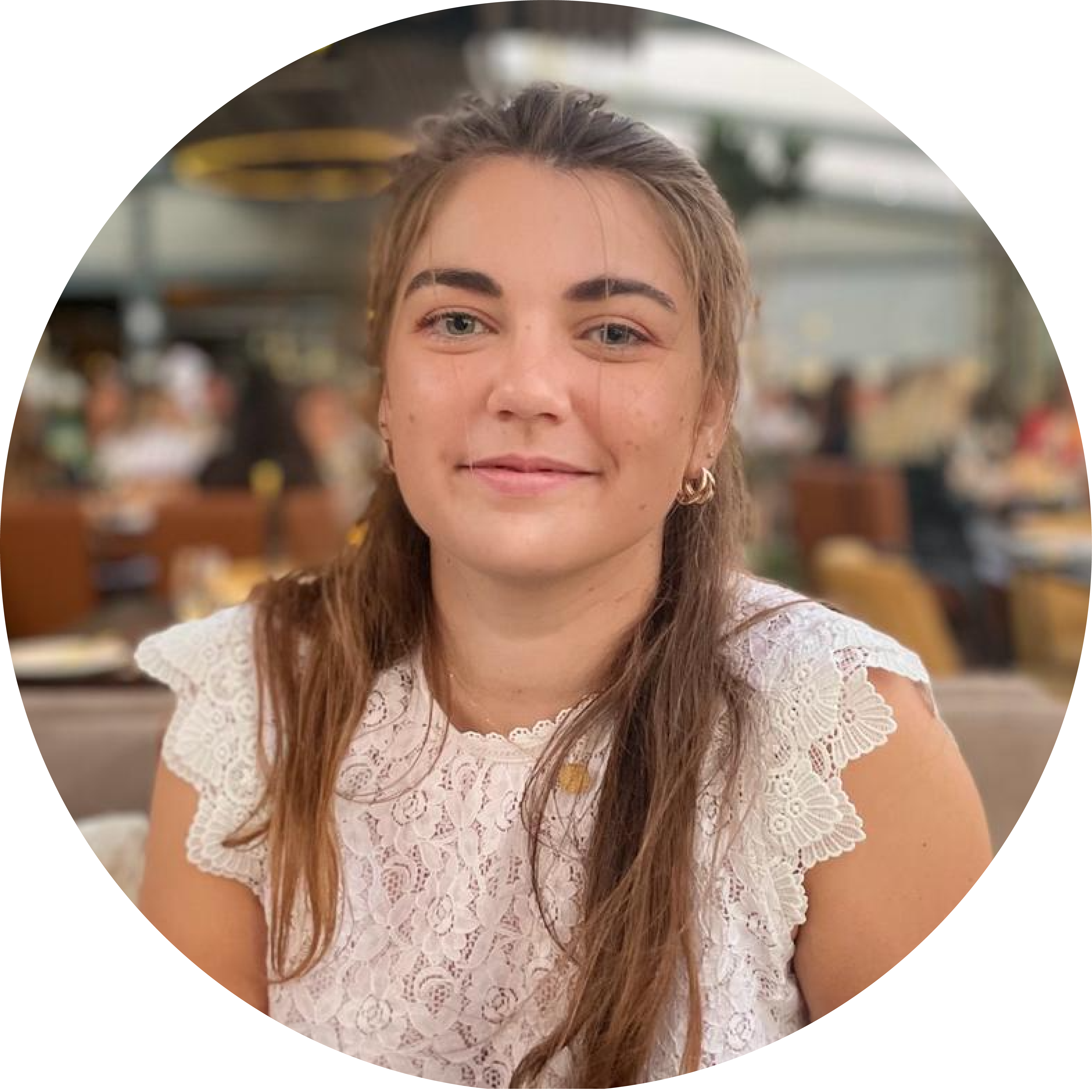
Armelle Ballian is a Research Scientist in the Climatology and the Biosphere group at the Geo- and Environmental Research Centre (GUZ) at the University of Tübingen, Germany. She is part of the Faculty of Science, Department of Geosciences, where she combines stable isotope analysis with cave monitoring to investigate environmental processes and paleoclimate dynamics across various timescales.
Armelle's educational background includes:
- Geology studies at Saint-Étienne (France) and Freiburg im Breisgau
- PhD at the Senckenberg Biodiversity and Climate Research Centre (BiK-F) in Frankfurt am Main, focusing on reconstructing the Miocene surface uplift history of the European Alps using stable and clumped isotope methods
Armelle is a geochemist and paleoclimatologist dedicated to understanding regional and global paleoclimate and paleoenvironmental dynamics. Her research bridges modern and ancient systems, using observations of present-day environmental changes to inform reconstructions of past climate and environmental history. She specializes in stable isotope analysis of water samples and active monitoring of cave systems to investigate environmental processes. Her work particularly focuses on reconstructing the Miocene surface uplift history of the European Alps within a paleoclimatic framework, using stable and clumped isotope methods in collaboration with the University of Tübingen.
Analysis of Armelle's recent publications reveals a strong focus on paleoclimatology and geochemistry, particularly using stable isotope methods to reconstruct past climate conditions. Her research spans multiple geographic regions including the European Alps, the northern Mediterranean, and coastal Thailand. A key theme across her work is understanding how surface uplift of mountain ranges like the Alps has influenced regional climate patterns throughout the Miocene epoch. She frequently employs climate modeling approaches to compare with empirical data, creating a robust framework for paleoelevation estimates and climate reconstructions. Her methodological expertise includes triple clumped isotope analysis of carbonates, which represents cutting-edge techniques in paleothermometry.
Armelle collaborates extensively with researchers across institutions including the University of Tübingen, Senckenberg Biodiversity and Climate Research Centre, and international partners. Her work involves field studies in diverse locations such as Thailand (Chanthaburi), France (Digne-Valensole basin), Austria (Mölltal Valley), and Spain (Armantes section), demonstrating her commitment to empirical data collection across different environmental settings.
Armelle is an active member of the Climatology and the Biosphere workgroup at the Geo- and Environmental Research Centre, where she contributes to the group's research on climate dynamics across different timescales. Her work on cave monitoring systems provides valuable data for understanding both contemporary environmental processes and past climate conditions, bridging the gap between modern observations and paleoclimate reconstructions.