معرفی
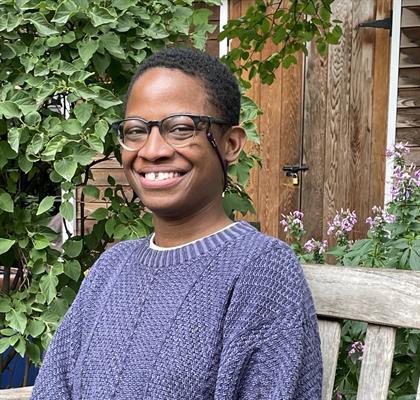
April Masten is a Professor of American History at Stony Brook University in the Department of History, part of the College of Arts and Sciences. She teaches both undergraduate and graduate courses on the Early Republic, antebellum period, Civil War, industrialization, slavery, women's work, and popular culture. She is known for her innovative course 'Dancing Through American History,' which combines archival study with experiential dance learning.
- PhD in American History, Rutgers University
- MA in Social History of Art, University of Leeds
- BA in Music and Dance, San Francisco State University
Her research focuses on 19th-century U.S. social and cultural history, particularly labor history in the arts. She examines how social, economic, and political structures shape artistic production and recognition, with a focus on marginalized creators. Her work spans painting, print-making, music, and dance, emphasizing the lived experiences of artists often excluded from traditional narratives.
The recent articles and books reflect a strong interdisciplinary trend combining history, performance studies, and visual culture. Themes include gender, race, labor, and cultural identity in 19th-century America, particularly through the lens of dance and visual art. Her scholarship recovers underrepresented voices and explores how art forms emerge from and respond to social conflict and change.
- Eugene Asher Distinguished Teaching Award, American Historical Association, 2021
- SUNY Chancellor’s Award for Excellence in Teaching, 2021–2022
- Article Prize, Nineteenth-Century Studies Association, 2005
April Masten has received research support from prestigious institutions including the American Antiquarian Society, Houghton Library at Harvard, the Shelby Cullom Davis Center at Princeton, and the National Humanities Center. She mentors students through interdisciplinary research and innovative pedagogy, integrating dance and history. While specific advisees are not listed, her teaching impact is nationally recognized. She continues to publish and expand the boundaries of cultural history through performance-based methodologies.
Though not explicitly mentioned, her work implies deep engagement with digital and public history initiatives, especially through her dance-based teaching and outreach. Her collaboration with other historians, such as her partner Vincent DiGirolamo, suggests integration within scholarly communities focused on social and cultural history. Her upcoming book and ongoing projects indicate a sustained commitment to recovering marginalized histories through creative, embodied scholarship.
حوزههای پژوهشی