معرفی
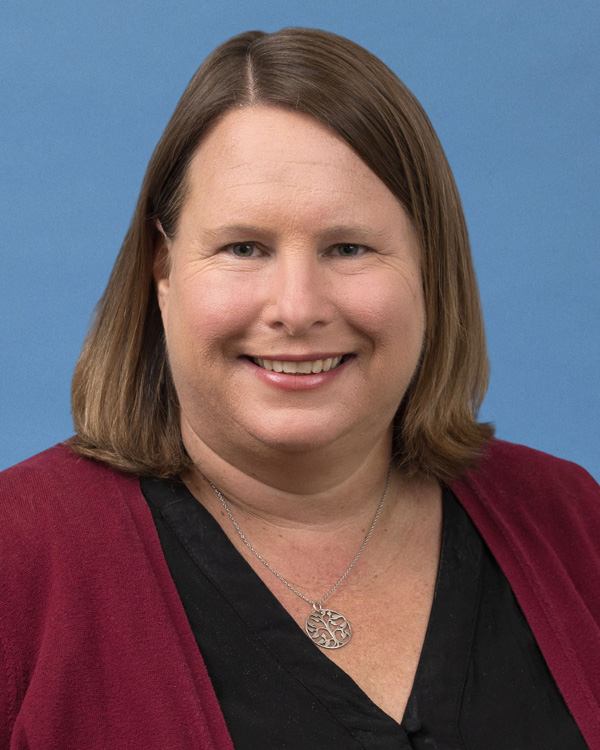
Anne Collins is an Associate Professor in the Department of Psychology at the University of California, Berkeley, with dual affiliation at the Helen Wills Neuroscience Institute. Her research integrates computational modeling with experimental neuroscience to investigate learning, decision-making, and executive functions across healthy and clinical populations.
Education:
- PhD in Cognitive Neuroscience, UPMC Paris
Dr. Collins' work centers on dissecting multi-system interactions in cognition using reinforcement learning frameworks, Bayesian inference, and neural network modeling. She employs behavioral paradigms, EEG, neuroimaging, and pharmacological interventions to study how working memory interfaces with reinforcement learning systems, particularly examining dopamine's role in learning efficiency and effort valuation. Her research spans healthy adults, patient populations (including schizophrenia and anxiety disorders), and developmental contexts from infancy to adolescence.
Analysis of her 2025 publications reveals dominant themes: 1) Dynamic interactions between working memory and reinforcement learning systems, 2) Dopaminergic modulation of learning speed and effort costs, 3) Hierarchical structure in reinforcement learning, and 4) Transdiagnostic impacts of anxiety/depression on learning mechanisms. Her work consistently bridges computational theory with neural implementation.
Scientific Awards:
- No awards mentioned in source material
As Principal Investigator of the Computational Cognitive Neuroscience Lab, Dr. Collins directs research exploring how multiple cognitive systems interact during learning. Her lab recruits human participants through berkeley.edu channels and maintains active science communication via Twitter (@ccnlab) and YouTube. While specific grants aren't detailed, her prolific publication record and lab operations indicate substantial research funding supporting computational modeling development and experimental work.
The CCN Lab operates at the intersection of psychology and neuroscience, using a tripartite methodology: 1) Precision behavioral experiments, 2) Quantitative computational modeling to infer hidden cognitive processes, and 3) Neuroscience techniques (EEG/fMRI) to link cognitive models with neural mechanisms. Current projects investigate hierarchical rule learning, habit formation, and the neural basis of exploration under uncertainty.