معرفی
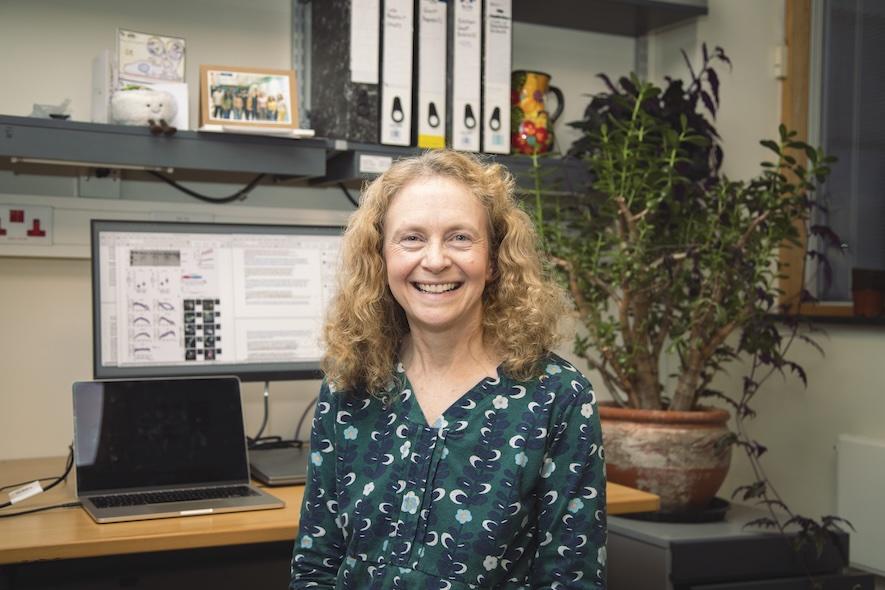
Dr. Anna Taubenberger leads the Oncomechanics research group at Dresden University of Technology's Center for Molecular and Cellular Bioengineering (BIOTEC). Her lab focuses on the biomechanical properties of cancer cells and their microenvironment, investigating how mechanical changes influence metastatic potential.
Her research interests center on cancer biomechanics and 3D tumor modeling. The Taubenberger Group develops physiologically relevant 3D in vitro models informed by mechanical characterization of tumor samples. They systematically study how cell and microenvironment stiffness affect tumor spheroid growth, invasion, drug resistance, and metastasis using atomic force microscopy and real-time deformability cytometry. Key research aims include understanding how cells sense mechanical properties in 3D environments and identifying clinical biomarkers for breast cancer therapy.
The group's publication trends reveal consistent focus on mechanical aspects of cancer progression across multiple systems. Recent work demonstrates how growth in stiff microenvironments causes compressive stress on breast cancer spheroids, altering cytoskeleton organization and slowing cell cycle progression. Their research bridges biomechanics, cancer biology, and tissue engineering to uncover novel therapeutic approaches.
- Awards:
- DFG postdoctorial fellowship
- Early career fellowship, QUT Australia
Dr. Taubenberger mentors multiple PhD students including Vaibhav Mahajan and Mathilde Lettinga. Her research receives funding from European and German institutions, supporting projects on tumor mechanics and metastasis. The lab maintains collaborations across international institutions and utilizes advanced bioengineering approaches to create humanized models for metastasis studies. Current work focuses on identifying how cells sense mechanical environments in 3D and translating these findings toward clinical applications.
The Oncomechanics lab operates within Dresden's BIOTEC center, utilizing state-of-the-art facilities for biomechanical characterization. The team includes PhD students, technical staff, and guest scientists working collaboratively on cancer mechanics projects. Their engineered tumor microenvironments enable systematic investigation of mechanical factors influencing cancer progression under controlled conditions.