معرفی
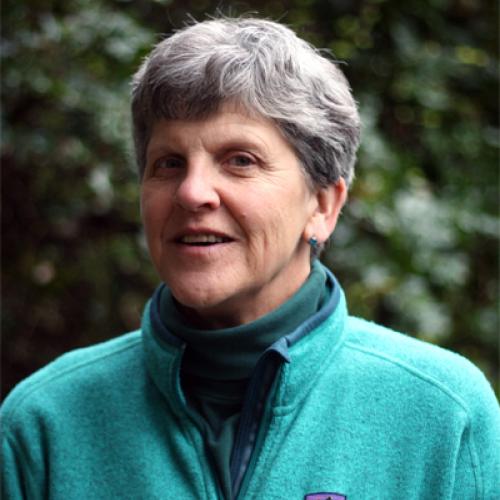
Dr. Anita Morzillo is an Associate Professor in the Department of Natural Resources & the Environment at the University of Connecticut. She has held academic positions since 2010, advancing from Assistant Professor to Associate Professor in 2020, with prior roles at Oregon State University and the US Environmental Protection Agency. Her interdisciplinary work bridges natural and social sciences to examine human-nature relationships.
Her educational foundation includes:
- PhD in Fisheries and Wildlife and Ecology, Evolutionary Biology, and Behavior (dual-degree program) from Michigan State University
- MS in Zoology from Southern Illinois University Carbondale
- BS in Biological Sciences from State University of New York (SUNY) College at Plattsburgh
Dr. Morzillo's research centers on landscape ecology and human dimensions of natural resource management, with specific expertise in wildlife management, forest ecosystems, water resources, and urban-rural interfaces. She investigates human-nature conflicts in wildland-urban transition zones, emphasizing community perceptions in exurban landscapes and rural forested communities. Her methodological approach integrates spatial analysis with social science frameworks to address sustainability challenges.
Analysis of her publication record (2014-2024) reveals consistent themes in human-environment systems, particularly community responses to ecological changes in forested regions. Key trends include spatial analysis of human-wildlife interactions (e.g., timber rattlesnake attitudes), exurban forest management challenges, and green infrastructure engagement barriers. Her work demonstrates interdisciplinary synthesis across ecology, geography, and sociology, frequently employing mixed-methods approaches to examine scale-dependent resource governance.
Scientific recognition includes:
- 2023 Outstanding Paper in Landscape Ecology Award for her 2015 Journal of Rural Studies article
Professional activities encompass research leadership in human dimensions of natural resources, with no publicly documented student advising or grant information provided in source materials. Her work operates at the intersection of conservation science and social inquiry without specific laboratory or team affiliations noted in available documentation.