معرفی
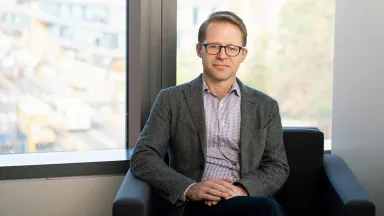
Anil Kumar is a Professor and Department Executive Officer in the Department of Economics at the Henry B. Tippie College of Business, University of Iowa. He is also a Henry B. Tippie Research Fellow, reflecting his significant research contributions. His academic work spans applied microeconomics, public economics, labor economics, and applied econometrics, with a focus on taxation, labor supply, social security, and fiscal policy.
His research interests lie at the intersection of economic policy and empirical analysis. He investigates how individuals and households respond to tax and transfer programs, using advanced econometric techniques and natural experiments. His work on taxable income elasticity, credit constraints, and social security claiming behavior has been published in leading journals such as the Journal of Political Economy, American Economic Journal: Economic Policy, and Journal of Public Economics. He frequently collaborates with prominent economists including Sören Blomquist, Whitney Newey, and Che-Yuan Liang.
The trends in his recent publications indicate a strong emphasis on causal inference in public policy evaluation, particularly using discontinuities, panel data, and structural models. His work spans micro and macro domains, with consistent applications to U.S. economic policy. He has also contributed to Federal Reserve publications analyzing Texas’s economy, unemployment, and pandemic-related fiscal support.
- Henry B. Tippie Research Fellow
Kumar has advised on graduate studies at the University of Iowa and has presented his research at institutions such as Iowa State University and the University of Oklahoma. His research has been supported by affiliations with the Federal Reserve Bank of Dallas, where he served as Economic Policy Advisor and Senior Economist for two decades. He has not received individual grants mentioned in the text, but his work appears to be institutionally supported.
He is affiliated with research organizations including the American Economic Association and the Econometric Society. His publications suggest active involvement in policy-relevant research, particularly through the Federal Reserve System and academic collaborations.