معرفی
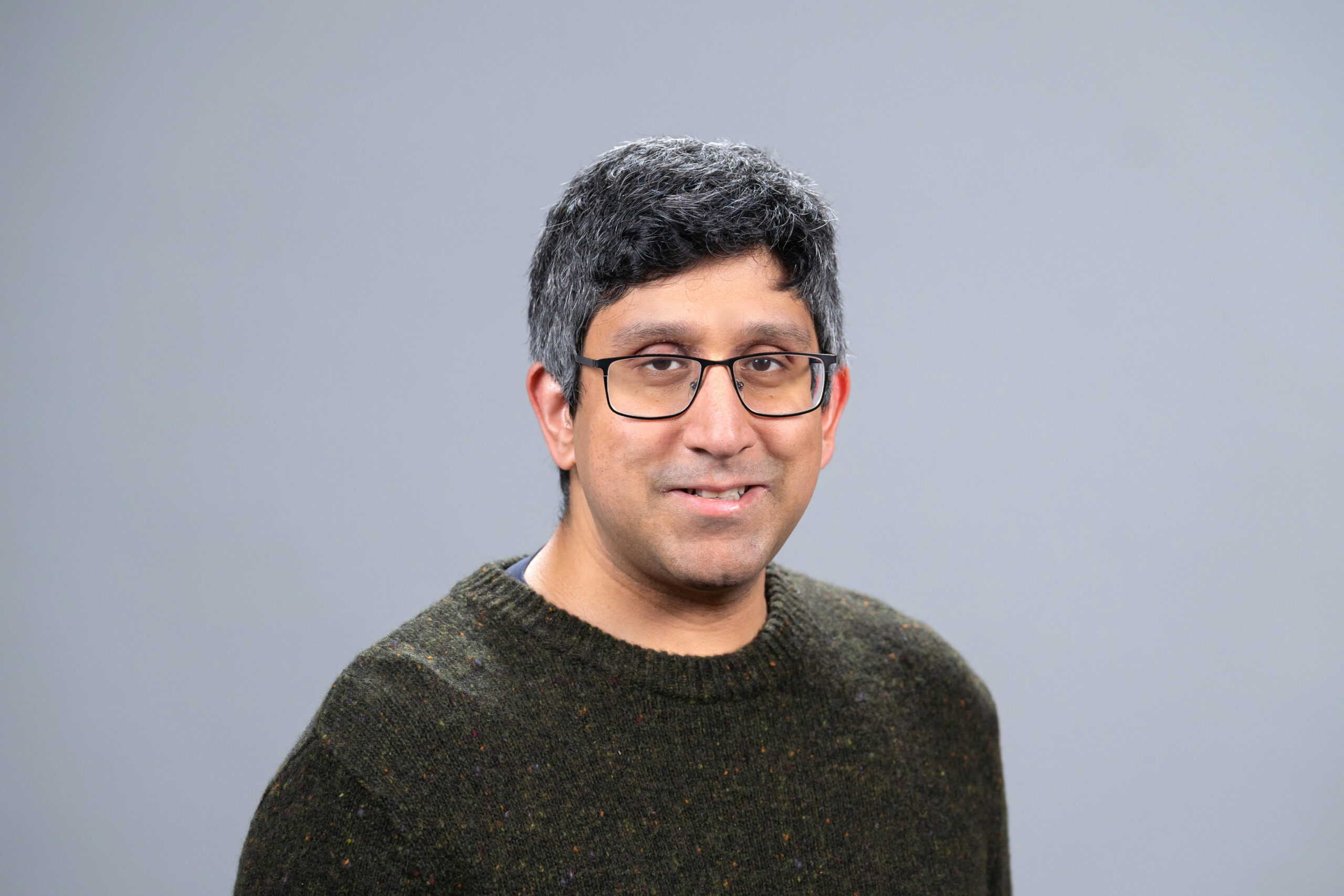
Anil Aswani serves as an Associate Professor and Head Undergraduate Advisor in the Department of Industrial Engineering and Operations Research (IEOR) at the University of California, Berkeley's College of Engineering. His work centers on developing statistical and optimization techniques for big data to model human behavior in complex systems, enabling better system design and management across healthcare, energy, and social domains.
Education:
- Ph.D. in Electrical Engineering and Computer Sciences, UC Berkeley (2010)
Research interests include operations research, machine learning, optimization, and statistical modeling, with applications in healthcare systems (e.g., personalized disease management, mechanical ventilation), energy systems (e.g., EV charging, HVAC), and human behavior analytics. His methods integrate causal inference, reinforcement learning, and tensor completion to address real-world challenges in resource allocation and system optimization.
Analysis of recent publications reveals dominant trends in applying reinforcement learning to healthcare (mechanical ventilation, disease management), contract design for end-of-life care and cybersecurity, and fair decision-making frameworks. Key methodological themes include off-policy evaluation, tensor completion for high-dimensional data, and optimization under uncertainty across dynamic systems.
Scientific Awards:
- NSF CAREER Award (2019) for "Data-Driven Personalized Chronic Disease Management"
As Head Undergraduate Advisor, Aswani guides academic planning and curriculum development for IEOR students. His research is primarily funded by the NSF CAREER award, focusing on data-driven healthcare optimization, with additional support for interdisciplinary projects like food assistance program analysis and medical data privacy. Collaborations span public health, medicine, and engineering domains.
His interdisciplinary team bridges operations research, computer science, and domain-specific applications, evidenced by joint studies on nutritional assistance programs, NICU admissions prediction, and step-tracker re-identification. Current work emphasizes scalable methods for personalized interventions in complex socio-technical systems.