معرفی
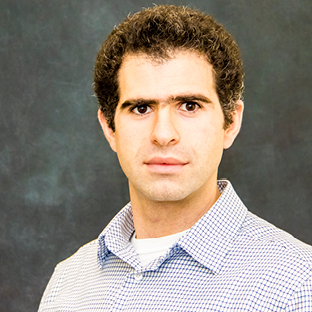
Andrey Khlystov serves as a Research Professor in Chemistry within the Atmospheric Sciences division at the Desert Research Institute (DRI) in Reno, Nevada. With over two decades of continuous research activity, his work focuses on critical atmospheric chemistry questions related to aerosol formation, transformation, and impacts on air quality and human health.
Dr. Khlystov's research interests span multiple interconnected domains of atmospheric science. His primary focus is on aerosol chemistry, particularly the physical and chemical properties of particles emitted from various sources including biomass burning, electronic cigarettes, and cannabis cultivation. He has made significant contributions to understanding the volatility of organic aerosols, bioaerosol characterization, and the chemical transformations that occur as emissions age in the atmosphere. His work bridges fundamental aerosol physics with practical environmental and health concerns, particularly regarding wildfire smoke impacts and emissions from emerging products like e-cigarettes.
Analysis of Dr. Khlystov's recent publications (2022-2024) reveals several key research trajectories. His work increasingly focuses on the intersection of atmospheric chemistry with public health concerns, particularly regarding emissions from cannabis products and their impacts on indoor and outdoor air quality. He has developed novel methodologies for measuring and characterizing complex aerosol mixtures, with particular emphasis on volatile and semi-volatile organic compounds. His research on wildfire smoke has expanded to examine impacts beyond traditional air quality metrics, including effects on agricultural products and water systems. The interdisciplinary nature of his work is evident in collaborations spanning atmospheric science, toxicology, analytical chemistry, and environmental health.
Dr. Khlystov actively mentors several researchers including Vera Samburova, Chiranjivi Bhattarai, Young-Min Son, Dipti Sengupta, Pavel Bahdanovich, and Kelsey Axelrod. His laboratory at DRI maintains specialized equipment for aerosol characterization, including thermodenuders for volatility measurements, oxidation flow reactors for aging studies, and advanced analytical instrumentation for chemical speciation. His research has been supported by various funding sources including the National Science Foundation and Health Effects Institute, with particular emphasis on understanding emissions from emerging sources and their atmospheric processing.