معرفی
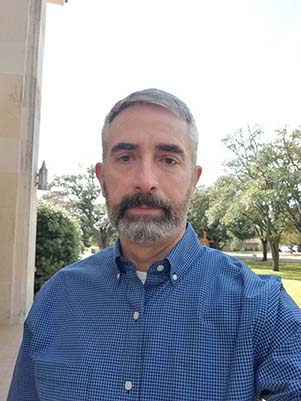
Andrew Jay Sloin is an Associate Professor of History at the Weissman School of Arts and Sciences at Baruch College, City University of New York. He holds a joint Ph.D. in History and Jewish Studies from the University of Chicago and has taught courses ranging from Global History Since 1500 to specialized topics on the Holocaust, Russian Revolution, and Soviet regime. A scholar of Soviet Jewish history, antisemitism, and socialist labor dynamics, Sloin’s work bridges cultural, economic, and political histories of Eastern Europe and the Soviet Union.
- Ph.D., University of Chicago (History & Jewish Studies)
- M.A., University of Chicago (Social Sciences)
- B.A., Sarah Lawrence College (History & Political Science)
Sloin’s research focuses on intersections of Soviet history, Jewish identity, and labor movements. His publications and presentations examine topics like Stalinist anti-fascism, Soviet anti-Semitism, and the role of Jewish communities in socialist narratives. Current projects include Troubled Time: International Socialism and the Yiddish Historical Imagination, 1871-1948 and We, Robot: Socialism, Automation, and the Machine Age, with funding from PSC-CUNY and the Andrew W. Mellon Foundation.
His 15 most recent publications highlight themes in Soviet cultural history, Jewish labor politics, and socialist economic crises. Books like The Jewish Revolution in Belorussia (2017) and Between Blues and Tsures (2023) explore Jewish identity and Soviet modernity, while articles in past & present and Judaic-Slavic Journal analyze topics such as Stalinist antifascism and the Skotsboro Boys case in Soviet context. Media contributions on energy geopolitics further demonstrate his interdisciplinary approach.
- Dorothy Rosenberg Book Prize (2018)
- Eugene M. Lang Fellowship (2017)
- Helen B. Schwartz Fund Book Prize (2016)
- Von Holst Prize Lectureship (2007)
Active in academic service, Sloin co-directs the Wasserman Jewish Studies Center and serves on Baruch College’s Personnel and Budget Committee. He advises the History Club and participates in critical faculty review and curriculum development. His editorial roles with Critical Historical Studies and memberships in organizations like the American Historical Association underscore his professional engagement.