معرفی
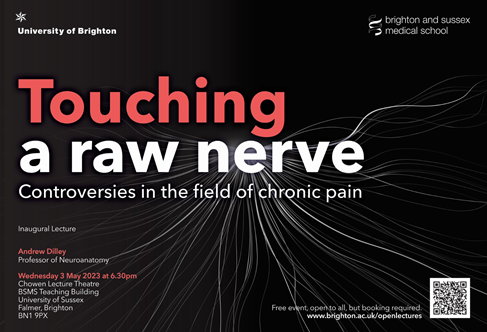
Professor Andrew Dilley is a leading academic in clinical neuroscience and neuroanatomy at the Brighton and Sussex Medical School (BSMS), a joint institution of the University of Sussex and the University of Brighton. He holds the position of Professor of Neuroanatomy (Clinical Neuroscience) and plays a central role in the BM BS medical program, leading Phase 1 teaching. His work spans research, education, and international collaboration, with a focus on peripheral neuroinflammation and chronic pain mechanisms.
His educational background includes a BSc in Anatomy and Developmental Biology from University College London (UCL) and a PhD in Neurophysiology from King’s College London, where he studied Guillain-Barré syndrome. He furthered his research as a Postdoctoral Fellow at UCL and as an Instructor in Anesthesia at Harvard Medical School before joining BSMS in 2007.
Andrew Dilley’s research is centered on understanding the role of peripheral neuroinflammation in chronic musculoskeletal pain, particularly in conditions like whiplash, repetitive strain injuries, and neuropathic pain. He employs both laboratory models—using electrophysiology, immunohistochemistry, and behavioral assays—and human studies involving MRI and ultrasound imaging to investigate nerve pathology and pain mechanisms. A key area of interest is the disruption of axonal transport and its contribution to neuronal hyperexcitability.
His recent publications reflect a strong trend in identifying biomarkers of neuroinflammation and nerve damage in chronic pain conditions, especially using advanced imaging. Many of his studies focus on whiplash-associated disorders, sciatica, and work-related upper limb pain, combining clinical data with mechanistic insights. His work bridges basic science and clinical application, aiming to identify novel therapeutic targets.
- Best Second Year Teacher at BSMS (nine consecutive years)
- Two University of Sussex Awards for Teaching Excellence
Andrew Dilley is actively involved in supervising students and has received research funding from major organizations including Versus Arthritis, NC3Rs, the Pain Relief Foundation, and the US Department of Defense. He also contributes to public engagement in science and curriculum development. He holds leadership roles in the International Federation of Associations of Anatomists (IFAA), where he leads neuroscience research initiatives. His teaching integrates innovative methods such as ultrasound-based anatomy education, enhancing student learning through multimodal approaches.
He is affiliated with research labs and teams focused on pain mechanisms and neuroinflammation, both at BSMS and through collaborations with institutions like Harvard Medical School. His ongoing projects include longitudinal studies on whiplash chronicity and the role of inflammatory mediators in sensory neurons.