معرفی
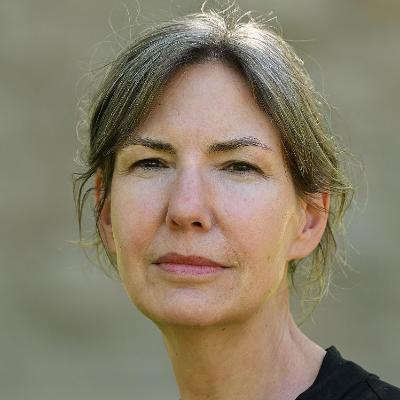
Andrea D. Lanoux serves as the Elizabeth S. Kruidenier '48 Professor of Slavic Studies at Connecticut College, where she has been a faculty member since 1999. She specializes in Russian and Polish languages and literatures, with particular expertise in gender studies in Slavic cultures, nationhood and nationalism studies, literary canon formation, and post-Soviet children's literature.
Professor Lanoux teaches courses in Russian and Polish languages and cultures, global studies, and youth cultures, including networked courses with institutional partners in Russia and Poland and community-engaged courses with Russian-speaking émigrés in Southeastern Connecticut. Her innovative teaching has led to significant student projects including the Being Ukraine: An Introduction to Europe's Eastern Vanguard open educational resource (2022) and the Global COVID Project (2020), which involved a 46-student research collective across four continents.
Her research focuses on post-Soviet literary transitions, particularly in children's literature, as evidenced by her recent co-authored book Growing Out of Communism: Russian Literature for Children and Teens, 1991-2017 (2022). Her publications span literary analysis of canonical works like Tolstoy's Anna Karenina, studies of gender representation in Slavic cultures, and examinations of literary canon formation in Eastern Europe.
Lanoux has received the Helen Brooks Regan Faculty Leadership award for her distinguished service to Connecticut College, where she has chaired multiple committees including the Priorities, Planning and Budget Committee (2019-20), and served as faculty director of the Toor Cummings Center for International Studies and the Liberal Arts (2018-2022). She has secured over $1 million in Mellon grant funding for global education initiatives (2009-2012, 2014-2016).
Professor Lanoux maintains active collaborations with institutions including the Higher School of Economics in St. Petersburg, Collegium Civitas in Warsaw, and New Bulgarian University in Sofia, and continues to contribute significantly to Slavic Studies through her research, teaching, and service. She is currently scheduled for a sabbatical in Fall 2025.