معرفی
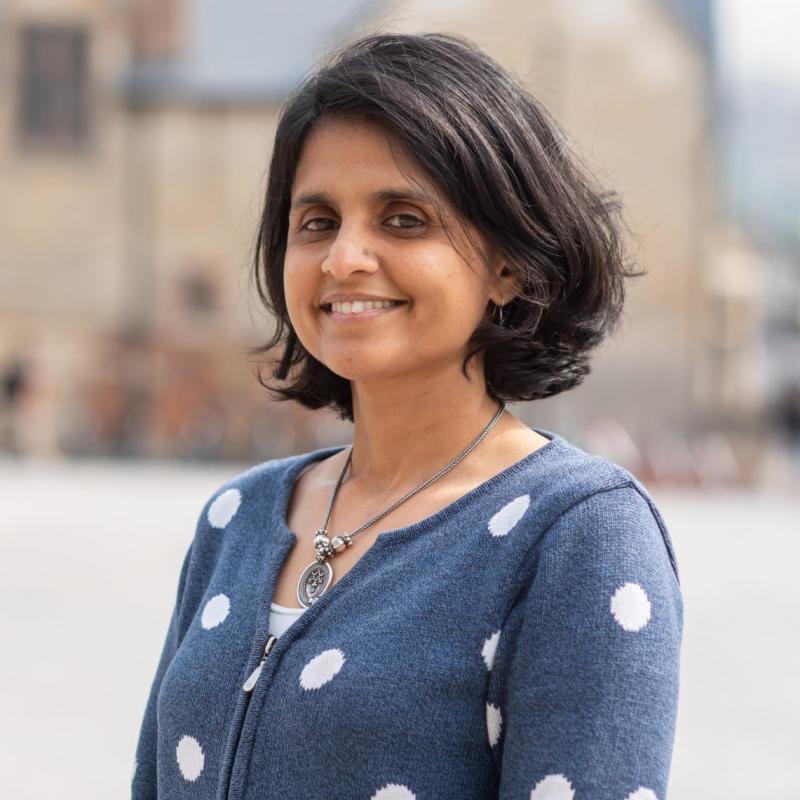
Anandi Mani is Professor of Behavioural Economics and Public Policy at the Blavatnik School of Government, University of Oxford. She is a leading scholar in development economics, with a focus on the behavioural dimensions of poverty, gender inequality, and public policy. Her research has been widely published in top-tier journals and featured in major media outlets such as the BBC, The New York Times, and The Guardian. She holds affiliations as a Research Affiliate at Ideas42 (Harvard University), a Fellow at the Centre for Comparative Advantage in the Global Economy (CAGE) at the University of Warwick, and a Member of the Institute for Advanced Study at Princeton.
- Professor of Behavioural Economics and Public Policy, Blavatnik School of Government, University of Oxford
- Research Affiliate, Ideas42, Harvard University
- Fellow, CAGE, University of Warwick
- Member, Institute for Advanced Study, Princeton
- Member, World Economic Forum Global Council on the Future of Behavioral Sciences
Her research explores how scarcity—particularly financial scarcity—affects cognitive bandwidth and decision-making, drawing on field studies with sugarcane farmers in India and drought-affected farmers in Brazil. She investigates how poverty creates a 'scarcity mindset' that impairs long-term planning and perpetuates cycles of disadvantage. Her work also examines gender gaps in political participation, showing how women are underrepresented not only in elected office but in the preparatory stages of political engagement such as networking and civic involvement.
The body of her recent publications reveals a strong trend toward integrating behavioural insights into development policy, with a focus on designing interventions that account for cognitive limitations under scarcity. Her articles span topics including cash transfer programs, stigma among sex workers, household investment decisions, and the psychological effects of poverty. This body of work underscores a consistent theme: structural inequalities are not only economic but cognitive and social, requiring multidimensional policy responses.
Her scientific recognition includes participation in the World Economic Forum at Davos and membership in its Global Council on Behavioral Sciences. Her research has influenced public discourse on poverty, with features in The New York Times and BBC programs like The Why Factor, which highlighted her findings on how scarcity damages decision-making.
- Programme participant, World Economic Forum 2017, Davos
- Member, Global Council on the Future of Behavioral Sciences, WEF
Anandi Mani advises on policy-relevant research and has collaborated extensively with international organizations and think tanks such as the International Growth Centre and Ideas42. She teaches courses in development economics, behavioural economics, and public policy at both undergraduate and graduate levels. Her work continues to shape the understanding of how psychological factors interact with economic conditions to influence individual and societal outcomes.
She leads research on interventions that smooth income volatility and reduce cognitive load among the poor, and her lab collaborates with policymakers to scale evidence-based solutions. Her team emphasizes experimental methods and real-world applicability, often working in low- and middle-income countries to test and refine public policies.