معرفی
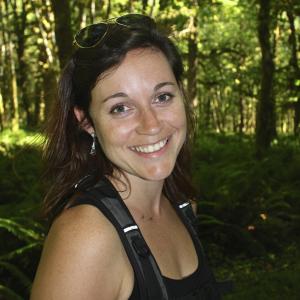
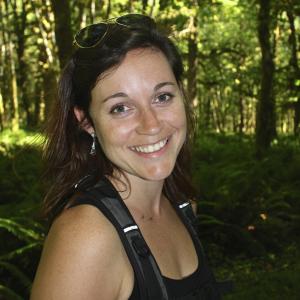
Anaïs Ferot is a Courtesy Faculty member in the Department of Earth Sciences at the University of Oregon, within the College of Arts and Sciences. She is actively involved in geochemical and mineral physics research, with a strong focus on high-pressure and high-temperature experimental studies of water in Earth's upper mantle. Her work contributes to understanding mantle dynamics, mineral hydration, and seismic behavior. She has held significant roles in national research programs, particularly with the NSF GeoPRISMS initiative.
Education:
- PhD in Earth Science, Laboratoire Magmas et Volcans, Blaise Pascal University, France (2011)
- MSc in Earth Science, Paul Sabatier University, France (2007)
- BSc in Earth Science, Blaise Pascal University, France (2006)
- Associate of Science in Earth Science, François Rabelais University, France (2004)
Her research centers on experimental petrology, particularly water storage capacity and distribution in mantle minerals such as olivine, pyroxene, and wadsleyite under extreme conditions. Using advanced techniques like multi-anvil presses, FTIR, SEM, SIMS, and synchrotron-based XANES, she investigates how water influences mantle rheology and seismic properties. Her work bridges mineral-scale processes with large-scale geodynamic phenomena.
The available publications (2010–2012) focus on high-pressure mineral behavior, including water solubility, iron oxidation states, and diffusion in dense silica phases. These studies contribute to models of mantle hydration, subduction zone processes, and the geochemical cycling of volatiles. Collectively, the articles highlight a strong emphasis on experimental methods and their application to fundamental Earth science questions.
Anaïs Ferot has played a key role in the National Science Foundation's GeoPRISMS Program as Science Coordinator since 2016, previously at the University of Michigan (2013–2016) and Rice University (2012–2013). In this capacity, she has managed scientific communication, outreach, website content, newsletters, and logistics for national and international meetings. She also supported the Steering & Oversight Committee and facilitated international scientific collaboration. While no formal advisees are listed, her leadership in research coordination demonstrates mentorship and organizational impact. She has not received any explicitly mentioned scientific awards in the provided text.
Her work has been conducted in collaboration with major research facilities, including the European Synchrotron Radiation Facility (ESRF) in Grenoble, France, and through international programs such as the Misasa International Student Intern Program in Japan. Her role integrates laboratory research with science policy, communication, and program management, positioning her at the intersection of experimental science and large-scale geoscience initiatives.