معرفی
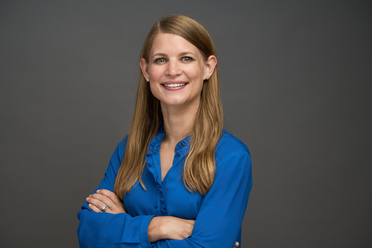
Amy Witkoski Stimpfel is an Assistant Professor at NYU Rory Meyers College of Nursing, where she also serves as Program Director of the doctoral training program in occupational and environmental health nursing, funded by the National Institute for Occupational Safety and Health (NIOSH). Her research focuses on optimizing nurses’ work environments to enhance both nurse well-being and patient safety, with a strong emphasis on shift work, scheduling, and sleep.
Her research expertise lies at the intersection of health services research, occupational health and safety, sleep/circadian science, and nursing. She has published extensively in leading journals such as Health Affairs, Health Services Research, and The International Journal of Nursing Studies. Her recent work explores nurse burnout, mental health, work-life balance, and systemic factors influencing job satisfaction and retention, especially during and after the pandemic.
The trends in her publications show a consistent focus on:
- Impact of scheduling and shift length on nurse and patient outcomes
- Workplace stress, burnout, and psychological distress
- Organizational and unit-level culture in healthcare
- Support systems and interventions to improve nurse well-being
- Mental health and substance use among healthcare professionals
Scientific awards and honors include:
- Excellence in Nursing Research Award (2022)
- Connelly-Delouvrier Scholarship for International Nursing
- Induction into Sigma Theta Tau International Honor Society
- T01 Pre-doctoral and T32 Post-doctoral fellowships from federal agencies (NIOSH and NINR)
She is actively involved in advising and mentoring, accepting PhD students, and leading a NIOSH-funded training program. Her work is supported by grants from the American Nurses Foundation and the National Council of State Boards of Nursing. She is also a member of several professional organizations, including AcademyHealth, American Association of Occupational Health Nurses, and the Sleep Research Society. Her research contributes to shaping policy and practice around nurse working conditions and healthcare system resilience.
She has no formal lab but leads research projects and collaborates with interdisciplinary teams focused on nursing workforce issues, patient safety, and occupational health.