معرفی
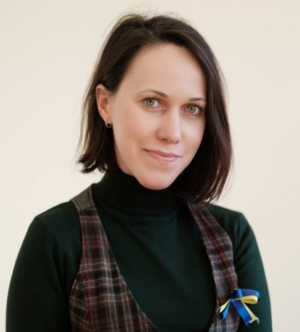
Alla Nedashkivska is a Professor in the Department of Modern Languages and Cultural Studies at the University of Alberta, specializing in Slavic Linguistics and Applied Linguistics. She has been affiliated with the university since 1999 and has held administrative roles such as Interim Chair (2020–2022) and Associate Chair, Undergraduate (2019–2020). Her research focuses on language policy, media discourse, gender linguistics, and pedagogical innovation in Ukrainian language education. She has led major projects like the Nationalities, Culture and Language Policies research cluster under the Research Initiative on Democratic Reforms in Ukraine (RIDRU) and collaborated with institutions like the Canadian Institute of Ukrainian Studies (CIUS).
Education: BA in Slavic Philology (Ivan Franko National University of Lviv), MA and PhD in Slavic Linguistics (University of Pittsburgh). Prior to joining the University of Alberta, she taught at the University of Toronto as a Visiting Lecturer.
Research Interests: Her work bridges linguistic theory and practice, with a focus on political language, language pedagogy, and Ukrainian cultural identity. She has developed influential textbooks such as *Ukrainian Through Its Living Culture* (2010) and *Ukrainian for Professional Communication* (2018), recognized with prestigious awards. Current projects include the textbook *PodorozhiUA* and collaborations with Dresden Technical University on Ukrainian diaspora identity.
- Awarded the 2018 Hetman Leadership Award for community engagement.
- Recipient of teaching awards, including the 2008 Faculty of Arts Undergraduate Teaching Award and 2019 AATSEEL Teaching Award.
- Organized conferences like *Language and Culture in Post-Maidan Ukraine* (2016) and *Finding a Way Forward in Ukraine* (2017).
Teaching: Offers courses in Ukrainian language (beginner to advanced levels), applied linguistics, and graduate seminars on gender linguistics and Slavic typology. Leads study-abroad programs in Ukraine and develops innovative blended-learning models for language instruction.