معرفی
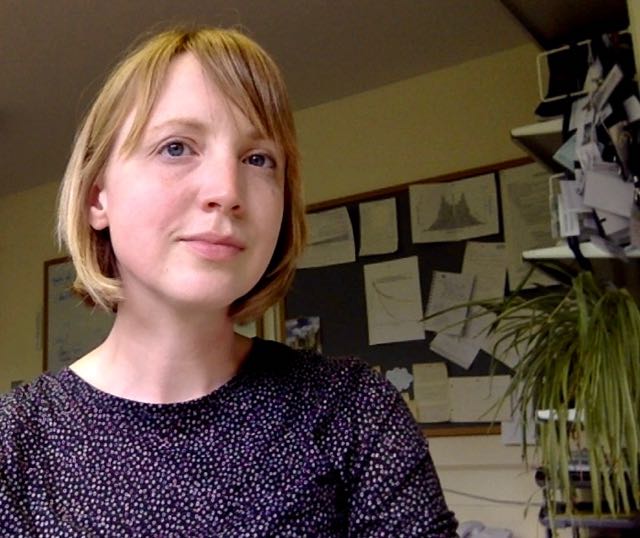
Dr. Alison Rudd is a researcher in atmospheric science and meteorology, with a focus on data assimilation, ensemble forecasting, and modeling of atmospheric processes. Her work appears in high-impact journals such as Geoscientific Model Development, Nonlinear Processes in Geophysics, and Boundary-Layer Meteorology. She earned her PhD from the University of Surrey in 2009, where her thesis explored nonlinearity in variational assimilation of satellite observations.
Her research interests lie primarily in data assimilation techniques, numerical weather prediction, and model error representation in convective-scale and limited-area models. She investigates challenges in integrating satellite observations into models, particularly under nonlinear conditions, and contributes to understanding forecast sensitivity to ensemble size and model configuration.
The analysis of her publications reveals a consistent focus on improving predictive accuracy in meteorological models, especially through variational methods, inverse modeling, and ensemble-based uncertainty quantification. Her work bridges theoretical model development with practical applications in emergency response and weather forecasting.
Scientific Contributions:
- Developed inverse methods for source characterization in atmospheric releases.
- Explored nonlinear effects in satellite data assimilation using column models.
- Contributed to understanding model error in convection-permitting ensembles.
- Participated in the DIAMET project studying intense European cyclones.
Dr. Rudd has collaborated with leading institutions and researchers in the UK meteorological community. While no formal advising or grant information is available, her co-authorship on major projects suggests active participation in funded research initiatives. She has not listed any students, but her publications indicate mentorship-level contributions through collaborative research.
She has not provided information about associated labs or research teams, though her involvement in projects like DIAMET implies membership in larger observational and modeling consortia.