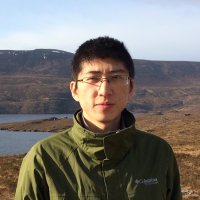
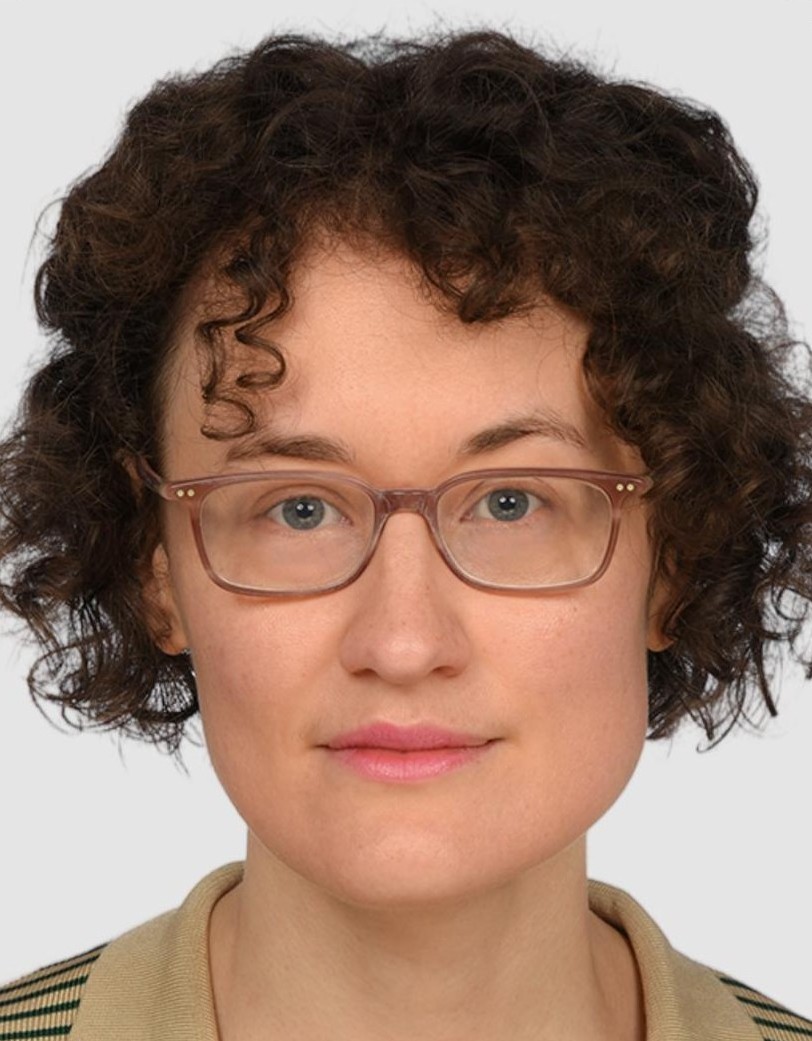
Dr. Moritz Ziegler is a geomechanics researcher affiliated with the Technical University of Munich (TUM) and the Assistant Professorship of Geothermal Technologies . He previously worked at GFZ Potsdam (2017–2023) and earned his PhD in Geophysics from the University of Potsdam (2014–2017). His research focuses on geomechanical numerical modeling , uncertainty quantification , and 3D stress field analysis , with applications to geothermal energy, seismic hazard, and rock mechanics. Education: Bachelor of Science in Geosciences (2008–2011), Freie Universität Berlin Master of Science in Geophysics (2011–2014), University of Potsdam PhD in Geophysics (2014–2017), University of Potsdam & GFZ Potsdam His work integrates advanced computational methods ( Altair Hypermesh , Dassault Systèmes Abaqus , Python , Matlab ) to address complex geomechanical problems. Recent publications analyze stress gradients in the North Alpine Foreland Basin, fault-stress interactions, and physics-based machine learning in geomechanics. He has contributed to software development (DOuGLAS v1.0) and calibration tools (FAST Calibration v2.4). Scientific awards or honors are not explicitly mentioned in the provided text. However, his research has been published in leading journals such as Geophysical Journal International , Solid Earth , and Pure and Applied Geophysics .
Dr. Martin Lange is part of the Project Group Ecological Epidemiology within the Department of Ecological Modelling at the Helmholtz Centre for Environmental Research (UFZ). His research focuses on computational epidemiology, particularly in wildlife and livestock systems. Key areas include disease transmission dynamics, surveillance strategies, and the development of predictive models for infectious diseases like African Swine Fever (ASF) and Bovine Viral Diarrhea Virus (BVDV). Affiliations: UFZ, Department of Ecological Modelling; EcoEpi research group. Education: PhD in Veterinary Epidemiology (2013, TU Bergakademie Freiberg). Research interests span ecological epidemiology, wildlife disease control, and the application of agent-based and individual-based models to understand pathogen spread. Notable contributions include modeling ASF in wild boar populations and BVDV eradication strategies in Ireland. Awards: Received the 2018 UFZ-Wissenstransferpreis (shared with H.H. Thulke) and the Konrad-Bögel-Nachwuchsförderpreis for his doctoral work on eco-epidemiology of wild boar diseases. Also recognized at the DACh Epidemiologietagung 2011. Publications: Over 50 peer-reviewed articles since 2006, emphasizing interdisciplinary approaches to disease modeling and environmental systems. Recent work includes digital twin frameworks for biodiversity monitoring and Python-based model coupling tools like FINAM. Labs/Teams: Active in the EcoEpi group and contributes to projects like BioDT (Biodiversity Digital Twin) and CauSES (Causation in Social-Ecological Systems).
Dr Ting Sun is an Associate Professor in Climate & Meteorological Hazard Risks at University College London , Department of Risk and Disaster Reduction. He earned his BEng (2009) and PhD in Hydrology (2013) from Tsinghua University , followed by a visiting period at Princeton University (2011–2012). After postdoctoral appointments at Tsinghua and the University of Reading , he held a NERC Independent Research Fellowship at Reading (2017–2022) before joining UCL in May 2022. Education PhD in Hydrology, Tsinghua University, 2013 BEng in Hydraulic Engineering, Tsinghua University, 2009 Visiting PhD Student, Princeton University, 2011–2012 Research Interests Dr Sun’s work converges on urban climate modelling across scales —from neighbourhood blocks to global grids—focusing on the impacts of weather and climate extremes such as heat waves and extreme rainfall in cities. He is the lead developer of the Surface Urban Energy and Water balance Scheme (SUEWS) and its Python wrapper SuPy , developed in collaboration with Prof Sue Grimmond’s micromet group. He also contributes as a core member of the Urban Multi-scale Environmental Predictor (UMEP) development team. His multidisciplinary expertise integrates hydro-climate dynamics, computational modelling, machine learning, built-environment processes, and public-health linkages . Research Trends from Recent Publications Across the 15 most recent articles, a clear trajectory emerges from high-resolution urban-process modelling toward integrated socio-environmental assessments . Studies published in 2024–2025 couple atmospheric models (WRF-SUEWS) with global building-morphology datasets (GLAMOUR) to quantify how cities alter rainfall patterns, temperature sensitivity, and heat-related mortality. Earlier works progressively refined SUEWS’s physical parameterisations and Python accessibility, while recent outputs leverage deep-learning remote-sensing tools (SHAFTS) and hybrid hydrological-neural architectures to deliver actionable insights for urban planning and climate adaptation. Scientific Awards & Fellowships NERC Independent Research Fellowship , University of Reading, 2017–2022 HEA Fellowship , University College London, 2023 Professional Service & Editorial Roles Topic Editor , Geoscientific Model Development (from 2025) Editorial Board Member , Scientific Data (from 2024) Peer review and consultancy for journals, conferences, and policy bodies Supervision of taught-course projects and research degrees External examining and mentoring Labs, Teams & Collaborations Dr Sun leads and collaborates within the UCL Department of Risk and Disaster Reduction , working closely with the micromet group at the University of Reading (Prof Sue Grimmond) on SUEWS/SuPy development. He is an active member of the UMEP consortium and maintains extensive international collaborations spanning Tsinghua University, Princeton, and numerous European research centres, underpinning a vibrant, interdisciplinary research network focused on urban climate resilience.
Klaus Wallmann is a Professor and Head of the Research Unit Marine Geosystems at GEOMAR Helmholtz Centre for Ocean Research Kiel and the Christian-Albrechts-University (CAU) Kiel. His research focuses on marine biogeochemistry, particularly gas hydrates, fluid flow, nutrient cycling, and the geochemical evolution of oceans and atmosphere. He leads major research initiatives including the Cluster of Excellence 'The Future Ocean' and coordinates EU projects such as MIGRATE and GEOSTOR. Dipl. Chemistry, Philipps University of Marburg (1986) Dr. Ing., TU Hamburg-Harburg (1990) PD Dr. habil (Geosciences), CAU Kiel (1999) His research interests center on marine biogeochemical processes, including the microbial degradation of organic matter, gas hydrate formation, nutrient recycling, isotopic trends in marine carbonates, and numerical modeling of ocean-atmosphere evolution. He investigates cold seeps, mud volcanoes, and subduction zones to understand volatile cycling and seafloor dynamics. His recent publications reveal a strong focus on carbon cycling and climate mitigation, particularly through sub-seabed CO₂ storage, seafloor alkalinity enhancement, and the impact of anthropogenic activities on marine carbon storage. His work combines field observations, experimental data, and advanced numerical models to explore long-term geochemical trends and modern environmental challenges. Scholarship from the Evangelical Study Foundation, Haus Villigst (1982–1986) Wallmann has supervised numerous students and collaborators, contributing to major discoveries in marine methane dynamics, gas hydrate systems, and ocean deoxygenation. His research is supported by extensive fieldwork, ocean expeditions, and leadership in collaborative programs such as SFB 574 and SFB 754. He has played a central role in assessing the environmental impacts of CO₂ storage and natural gas hydrate exploitation. He leads research in marine geosystems at GEOMAR, focusing on biogeochemical feedbacks, fluid-sediment interactions, and climate-relevant gas cycling. His team integrates geochemical data, isotopic analyses, and modeling to study processes from molecular to global scales.
Prof. Dr. Jochen Garcke is a faculty member at the Institute for Numerical Simulation, University of Bonn, with a dual affiliation at Fraunhofer SCAI's Department of Numerical Data-Based Prediction. His work bridges numerical simulation and machine learning, focusing on high-dimensional problems, sparse grids, and optimal control. Key research themes: Sparse grids, machine learning for simulations, reinforcement learning, uncertainty quantification Teaching includes courses on Numerical Methods in Science and Technology and Scientific Computing , emphasizing practical machine learning applications. Recent publications explore hybrid models combining data-driven and physics-based approaches in automotive engineering, wind turbines, and geoscientific modeling. His group employs adaptive sparse grids, graph algorithms, and spectral methods to tackle challenges in crash simulations, fluctuating renewable energy systems, and turbulent flow analysis. Collaborations span Fraunhofer SCAI and industry 4.0 initiatives.
Lina von Sydow is a Professor in Computational Science at Uppsala University's Department of Information Technology. She serves as Section Dean for the Mathematical-Computer Science Section since July 2023. Her academic journey includes becoming an Associate Professor in 2000, Senior Lecturer since 1997, and leading the Department of Information Technology from 2018 to 2023. PhD in Domain Decomposition Methods (1995, Uppsala University) Postdoctoral Fellow at Oxford University (1996-1997) Her research spans computational science with dual focuses on Computational Finance and Ice Sheet Modeling . In finance, she develops numerical methods for option pricing using PDEs, radial basis functions, and stochastic volatility models. In climate science, she contributes to ice sheet dynamics through full Stokes models and adaptive time-stepping approaches, particularly in simulating grounding line migration. Recent publications (2025) address gender disparities in IT education, including comparative analysis of admission trends and intervention studies to boost female enrollment. Earlier works (2020-2015) focus on high-order finite difference methods for financial derivatives, BENCHOP benchmarking projects, and preconditioning techniques for PDEs. Scientific awards include Excellent Teacher (2013) She actively collaborates on educational reforms, co-authoring studies like Gender-aware course reform in Scientific Computing (2013). Her leadership roles include Head of Department (2018-2023) and Section Dean (2023-present), influencing academic governance and interdisciplinary research. Labs and teams: Works with Uppsala University's Computational Science group, Elmer/ICE project collaborators (e.g., Per Lötstedt, Gong Cheng), and international partners in numerical finance and climate modeling.
Clarissa Alicia Kroll is a Research Fellow affiliated with the Professorship for Climate Dynamics at ETH Zurich's Department of Environmental Systems Science. Her research focuses on tropical atmospheric circulation, stratospheric water vapor dynamics, and process-based model evaluation. She holds an ETH Postdoctoral Fellowship (2024) and contributes to high-performance computing projects involving km-scale weather and climate simulations on systems like Alps and Daint. Her work spans interdisciplinary fields including climate dynamics, atmospheric chemistry, and medical physics. Key research areas include the impact of volcanic eruptions on stratospheric moisture, hydrometeor transport pathways in the tropical tropopause layer, and improving computational models for MRI-guided radiation therapy. Research Highlights: Analysis of indirect stratospheric moisture changes post-volcanic eruptions Development of high-resolution climate models (ICON-Sapphire) Investigation of spatial distortion effects in medical imaging Publications reflect her dual expertise in climate science and medical physics, with recent contributions to Communications Earth and Environment , Environmental Research Letters , and Geoscientific Model Development . She actively collaborates with global research networks on both climate systems and computational healthcare technologies.
Boris Kaus is a Full Professor and Chair of Geophysics and Geodynamics at the Institute of Geosciences, Johannes Gutenberg University Mainz, Germany. His research focuses on understanding geological processes from grain scale to planetary scale using mathematical and numerical models. Funded by the German Research Foundation, European Research Council, and BMBF, his work spans lithospheric deformation, melt migration, fold-and-thrust belts, and high-performance computing applications in geosciences. His research interests center on geodynamic modeling of lithospheric processes, including subduction zones, mantle convection, and crustal deformation. Kaus develops novel numerical approaches to simulate complex geological phenomena, with emphasis on coupling between erosion, lithosphere dynamics, and mantle flow. His group creates specialized software for high-performance computing systems to tackle multi-scale geophysical problems. His scientific awards include the Paul Niggli Medal, EGU Arne Richter Award, multiple ERC grants (Starting, Proof-of-Concept, Consolidator), and the Carl Friedrich Gauss Lecturer honor. He has received recognition for editorial contributions including G-Cubed's Excellence in Refereeing award. ERC Consolidator Grant MAGMA (2018-2023) ERC Proof of Concept Grant SALTED (2016-2017) ERC Starting Grant MODEL (2010-2015) John von Neumann Excellence Project for HPC ETH Medal for Ph.D. thesis Kaus actively supervises graduate students and leads research projects funded by major European and German agencies. His group develops open-source software like GeophysicalModelGenerator.jl and maintains strong collaborations with international institutions including ETH Zürich and USC. Current projects focus on magma dynamics, lithospheric shear localization, and the development of advanced numerical methods for geodynamic simulations. The research group operates within the Geodynamics & Geophysics team at JGU Mainz, utilizing high-performance computing resources and collaborating with multiple European research initiatives including IMPRS and FORTHEM networks. Their laboratory specializes in numerical modeling of Earth systems with applications to tectonics, volcanology, and crustal evolution.
Juan Antonio Añel Cabanelas is a Professor of Earth Physics at the University of Vigo , affiliated with the EPhysLab research group and the Specialized Group on Atmospheric and Ocean Physics of the Royal Spanish Society of Physics . He serves as an Executive Editor for Geoscientific Model Development and an Associate Editor for PLoS Climate . PhD in Physics (2007) from the University of Vigo, thesis: Climatic analysis of the tropopause using radiosonde data Taught courses in Meteorology, Atmospheric Physics, Computational Science, and Renewable Energy at the University of Vigo and international institutions His research focuses on climate change impacts , upper troposphere-lower stratosphere dynamics , renewable energy modeling , and computational reproducibility in climate research . He emphasizes instrumental data recovery and open science , with recent work addressing stratospheric contraction and mercury cycling . Key publications span extreme weather-energy sector interactions , Fortran code quality , and ozone data analysis . He mentors PhD students in Physics and Computer Science, and has collaborated with institutions in Mexico, Portugal, and the private sector. He advocates for free software and has organized workshops on climate intervention and citizen science . His work is funded by public grants from Spain's Government, Xunta de Galicia, and private entities like Naturgy and Acciona, with computing support from Google and Microsoft.
Scot M. Miller is an Associate Professor in the Department of Environmental Health and Engineering at the Whiting School of Engineering, Johns Hopkins University. He leads the Greenhouse Gas Research Group, focusing on quantifying emissions of greenhouse gases and air pollutants using satellite, aircraft, and tower observations. His research spans global scales, from Arctic ecosystems to urban and industrial sources in the U.S. and China. His research interests include atmospheric science, greenhouse gas emissions, inverse modeling, big data analytics, and climate policy. He integrates tools from statistics, high-performance computing, and satellite remote sensing to improve emission estimates and inform environmental regulations. Recent publications highlight trends in methane, ethane, and sulfuryl fluoride emissions, carbon cycle dynamics, and innovative methods for analyzing massive satellite datasets. His work increasingly leverages OCO-2 and OCO-3 satellite data to study carbon dioxide and methane fluxes across diverse ecosystems. Scientific awards include the NSF CAREER Award, JHU Catalyst Award, and the Carnegie Distinguished Postdoctoral Fellowship. He was also recognized with Harvard’s Certificate of Excellence in Teaching. Miller advises multiple PhD students, including Mingyang Zhang, Dylan Gaeta, and Leyang Feng, and has secured grants from NASA, NSF, NOAA, and JHU. He is a member of the NASA OCO Science Team and collaborates with institutions such as Northern Arizona University, Carnegie Institution, and NOAA. His lab is involved in urban environmental monitoring in Baltimore and interdisciplinary climate policy research.
Dr. Christoph Müller is a leading scientist at the Potsdam Institute for Climate Impact Research (PIK), Germany, where he has served as working-group leader of the Land Biosphere Dynamics group since 2012. He also co-leads the Global Biosphere and Water Modeling team and acts as the scientist-in-charge for the internationally renowned LPJmL global vegetation and crop model. Additionally, he is Co-lead of the Ag-GRID initiative within the Agricultural Model Intercomparison and Improvement Project (AgMIP) and serves as Topical Editor for Geoscientific Model Development . Education Diploma in Geoecology, University of Potsdam (2002) PhD in Geoecology, University of Potsdam & International Max Planck Research School (IMPRS) (2007) Research Interests Dr. Müller’s research centres on understanding and modelling the interactions between climate, land use, and the biosphere to support sustainable food-system transformations. His work integrates global-scale vegetation and crop models with climate projections, socio-economic scenarios, and observational data to assess: Impacts of climate change and extreme events on crop yields and food security Carbon, nitrogen, and water cycles in managed and natural ecosystems Land-based climate-mitigation strategies and their co-benefits or trade-offs Adaptation options for agriculture under global change He promotes open science and reproducible modelling workflows, exemplified by the LPJmL open-source ecosystem model and associated toolkits. Publication Profile & Trends Since 2014 he has authored or co-authored more than 200 peer-reviewed articles. Recent work (2024-2025) highlights three dominant themes: (1) quantifying underestimated negative impacts of climate extremes on crop yields, (2) assessing the sustainability of large-scale land-based mitigation measures, and (3) advancing model intercomparison frameworks (e.g., AgMIP, ISIMIP) to reduce uncertainty in global yield projections. His studies increasingly integrate economic and health perspectives, examining how dietary shifts and food-system transformations can achieve climate, environmental, and social co-benefits. Scientific Awards & Recognition While no formal awards are explicitly listed, several publications have received notable recognition: “Soil quality both increases crop production and improves resilience to climate change” (Nature Climate Change, 2022) – listed among China’s top ten major advances in agricultural science in 2023. “Large potential for crop production adaptation depends on available future varieties” (Global Change Biology, 2021) – top-downloaded article. “Climate change impacts on global agriculture emerge earlier in new generation of climate and crop models” (Nature Food, 2021) – widely cited in IPCC AR6. Leadership, Grants & Collaboration Dr. Müller leads or co-leads multiple international projects and working groups: Working Group Leader – Land Biosphere Dynamics, PIK Research Department 2 Co-Lead – Ag-GRID, Agricultural Model Intercomparison and Improvement Project (AgMIP) Scientist-in-Charge – LPJmL model development and application Topical Editor – Geoscientific Model Development journal These roles involve coordinating multi-institutional consortia, securing competitive grants, and mentoring early-career researchers. Laboratory & Data Resources Dr. Müller’s “team” is essentially the LPJmL modelling group at PIK, comprising post-docs, doctoral researchers, and software engineers who maintain and extend the LPJmL code-base, develop satellite-data fusion products, and provide model-driven policy support to governments and international organisations such as the IPCC, FAO, and World Bank.
Mario Costa Sousa is a Professor in the Department of Computer Science at the University of Calgary. He holds a BSc from Catholic University of Petrópolis (1989), an MSc from Pontificia Universidade Católica do Rio de Janeiro (1994), and a PhD in Computer Science from the University of Alberta (1999). His primary research focuses on computer graphics, scientific visualization, and sketch-based modeling with applications to geoscience and reservoir engineering. He leads the illustrares research group, which develops novel visual computing paradigms for interdisciplinary challenges in science, engineering, and design. Research interests include non-photorealistic rendering, sketch-based interfaces, visualization/visual analytics, and human-data interaction. His work integrates geoscientific data with interactive modeling tools to address reservoir uncertainty and enhance decision-making in energy and environmental domains. Recent projects involve rapid prototyping of subsurface CO2 sequestration models and machine learning for drill core analysis. He teaches courses such as CPSC 591/691 Rendering (Fall 2024), CPSC 319 Data Structures (Winter 2025), and DATA 501 Data Science Capstone (Winter 2025). His research has contributed to energy innovation initiatives at the University of Calgary, focusing on geothermal energy and unconventional reservoirs. Key collaborations include work on Gaussian process-based uncertainty quantification, functional data analysis for production forecasting, and immersive VR tools for surgical training (e.g., NeuroSimVR and JackVR oil rig simulators). His publications span reservoir modeling, geological visualization, and interactive systems for spatial data exploration.
Oliver G. Ernst is a Professor of Numerical Analysis at Technische Universität Chemnitz . His research focuses on Numerical Analysis , Uncertainty Quantification , and Inverse Problems , with applications in Thermo-Hydro-Mechanical (THM) processes , Electromagnetics , and Stochastic Partial Differential Equations . He is associated with the Numerical Analysis group at TU Chemnitz. Key Research Areas : Efficient numerical methods for PDEs Krylov subspace techniques Stochastic finite element methods Multi-physics modeling Geoscientific applications Recent Publications (2025-2010): THM simulations under uncertainty Neural network PDE solvers Bayesian inversion frameworks Rational Krylov algorithms Deflated restarting strategies Collaborations : TU Bergakademie Freiberg University of Manchester Technical University of Munich University of Maryland University of Geneva Software Development : Contributor to OpenGeoSys platform Developer of FEMALY MATLAB library Academic Recognition : h-index 32, i10-index 66, with over 4423 citations since 2020.
Anna Walsh-Vilander serves as a Doctoral Research Fellow at the Section for Meteorology and Oceanography within the Department of Geosciences at the University of Oslo. The department operates under the Faculty of Mathematics and Natural Sciences and maintains facilities across multiple campus buildings including the Kristine Bonnevies Building where the meteorology section is housed. Her research focuses on earth system sciences with specialization in: Atmospheric dynamics and weather systems Ocean-atmosphere interactions Climate modeling and prediction Marine meteorological processes Based at Blindernveien 31 in Kristine Bonnevies hus (0371 Oslo), she contributes to the department's mission of advancing geoscientific knowledge through research spanning from deep earth processes to atmospheric phenomena. The Department of Geosciences, formed in 2003 through merger of three earth science departments, provides infrastructure for cross-disciplinary collaboration in environmental research.
apl. Prof. Wolfgang Gossel is a Senior Scientist and Adjunct Professor in Hydrogeology at Martin Luther University of Halle-Wittenberg. His research focuses on groundwater vulnerability assessment, hydrogeological modeling system coupling, and large-scale GIS applications in hydrology. He leads a multidisciplinary team including Dr. Christoph Bott, Dr. Andreas Englert, and others. Education: 1990: Diploma in Geology, RWTH Aachen University 1999: Doctor of Natural Sciences, Freie Universität Berlin 2008: Habilitation (venia legendi in Applied Geology), MLU Research Interests: Specializes in applied geology challenges such as groundwater system modeling interfaces and vulnerability analysis. His work bridges theoretical hydrogeology with practical GIS applications for environmental management. Publications: Recent work includes studies on groundwater vulnerability in India, paleo-saltwater intrusion modeling in Northeast Africa, and large-scale aquifer system analysis. Themes emphasize interdisciplinary approaches to complex hydrological systems. Team & Infrastructure: Manages a lab with researchers and assistants focusing on geospatial hydrology. Coordinates international collaborations through projects like the Nubian Aquifer System modeling.