معرفی
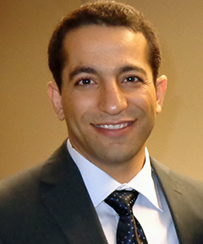
Ali Azarbarzin, Ph.D., serves as Associate Professor of Medicine at Harvard Medical School and Lead Investigator in the Division of Sleep and Circadian Disorders within the Departments of Medicine and Neurology at Brigham and Women's Hospital. His work focuses on advancing precision medicine approaches for sleep-disordered breathing through physiological phenotyping and novel therapeutic development.
Dr. Azarbarzin's research centers on obstructive sleep apnea pathophysiology, with specific emphasis on hypoxic burden quantification, autonomic cardiovascular responses, and upper airway collapse mechanisms. His investigations explore how physiological traits like arousal threshold, loop gain, and collapsibility interact to determine disease severity and treatment response, particularly for hypoglossal nerve stimulation and pharmacotherapies. Current studies examine the impact of metabolic interventions (e.g., tirzepatide) on sleep apnea outcomes and the role of digital health technologies in remote monitoring.
Analysis of his recent publications reveals a strong trend toward biomarker-driven risk stratification, moving beyond traditional apnea-hypopnea index metrics. Key themes include hypoxic burden as a superior predictor of cardiovascular events, site-specific upper airway collapse patterns guiding surgical interventions, and combinatorial pharmacotherapies targeting multiple pathophysiological pathways. His work increasingly integrates multi-ethnic cohort data and real-world evidence to address health disparities in sleep apnea outcomes.
As Lead Investigator of the Division of Sleep and Circadian Disorders at Brigham and Women's Hospital, Dr. Azarbarzin directs a translational research program that bridges basic physiological investigations with clinical trials, leveraging advanced techniques including drug-induced sleep endoscopy, polysomnographic endotyping, and wearable sensor technology to develop personalized treatment algorithms for sleep-disordered breathing.