معرفی
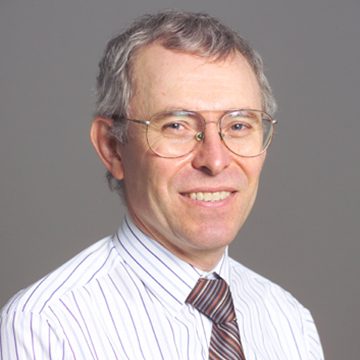
Dr. Ali Anwar serves as a Knowledge Exchange Fellow in the Department of Mechanical & Aerospace Engineering within the University of Strathclyde's Faculty of Engineering. His interdisciplinary research bridges quantum physics and aerospace engineering, with significant contributions to space technology and industrial mechanical systems.
He earned his PhD in Mechanical Engineering from the University of Strathclyde in 2019, completing his thesis on pressure relief valve leak tightness under high-pressure conditions. This foundational work established his expertise in fluid-structure interactions and sealing mechanisms.
Dr. Anwar's research focuses on fluid dynamics in extreme environments, quantum optical systems, and granular material behavior. His current investigations include vibro-fluidization of lunar regolith under microgravity, polarization-entangled photon-pair generation, and thermovibrationally-driven particle accumulation phenomena. These projects address critical challenges in space exploration and quantum information processing.
Recent publications reveal a strategic dual-track research trajectory: quantum optics advancements (particularly stable entangled photon sources using folded interferometers) and space engineering applications (fiber dispersion manipulation and regolith fluidization in microgravity). This synergy between quantum technology and aerospace systems defines his innovative approach.
His scientific recognition includes:
- Hermann Oberth Gold Medal/Graduate 1st Prize (2024)
- Rudy Scavuzzo PhD Student Paper Competition (2017)
- IMECHE Conference grant (2017)
Dr. Anwar currently leads multiple industry-funded projects including DEM tool development for wear prediction (Weir Group, 2024-2027) and XAI for high-pressure grinding rollers. His collaborative work with Marcello Lappa and Peter Watson on space environment vibrations demonstrates strong industry-academia partnerships focused on practical engineering solutions.
He actively collaborates with the Microgravity Research Group at Strathclyde, contributing to the university's Space Engineering initiative through experimental and computational studies of particle dynamics in low-gravity conditions.