معرفی
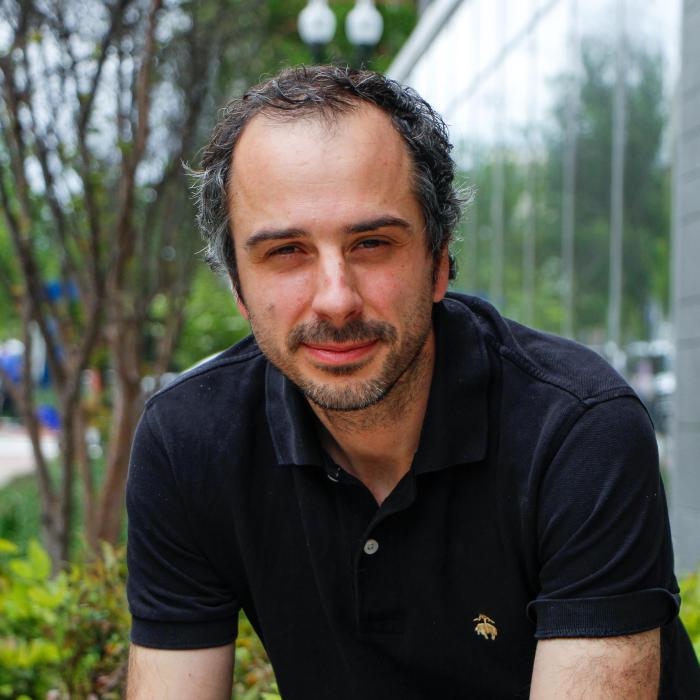
Professor Alexei Lapkin serves as Professor of Sustainable Reaction Engineering at the Department of Chemical Engineering and Biotechnology, University of Cambridge. He leads the Sustainable Reaction Engineering (SRE) Group, which focuses on developing cleaner manufacturing processes within chemical and chemistry-using industries, with particular emphasis on liquid- and multi-phase catalytic and biochemical processes.
Professor Lapkin's research program centers on sustainable chemical engineering approaches, with expertise spanning flow chemistry, heterogeneous catalysis, and the integration of machine learning with chemical process development. His group pioneers methods of machine learning for automated process optimization and explores Big Data applications to chemical reaction networks. Current research focuses on developing innovative digital technologies to address sustainability challenges in the chemical industries, with specific projects on CO2 electro-reduction, circular economy solutions, and sustainable manufacturing of molecules and materials.
His publication record demonstrates a clear trajectory toward integrating AI and machine learning with traditional chemical engineering principles to solve sustainability challenges. His recent work spans reaction network optimization, digital twin development for chemical processes, sustainable pharmaceutical manufacturing, and electrochemical CO2 conversion technologies. This research often involves interdisciplinary collaborations across chemistry, computer science, and engineering disciplines.
Professor Lapkin actively supervises PhD students and has mentored researchers who have established successful spin-out companies including Chemical Data Intelligence (CDI), AM Ltd, and Reactwise (founded by former PhD students Alexander Pomberger and Daniel Wigh). His research is supported by diverse funding sources including UKRI (EPSRC), National Research Foundation (Singapore), and Pharma Innovation Programme Singapore (PIPS).
He is deeply involved in several Cambridge research centers including the SynTech CDT, Innovation Centre in Digital Molecular Technologies (iDMT), and the Cambridge Centre for Advanced Research and Education in Singapore. His group leads the 'Sustainable Manufacture of Molecules and Materials' (SM3) project and plays a key role in the Pharma Innovation Programme Singapore, focusing on digital solutions for sustainable chemical manufacturing.