معرفی
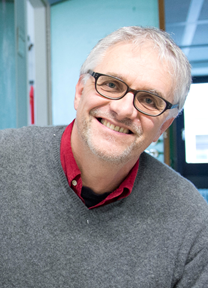
Alexander Deisting is a Senior Scientist at Johannes Gutenberg University Mainz within the Faculty of Physics, Mathematics and Computer Science and the Institute of Physics. He works in Prof. Oberlack's group on next-generation dark matter detectors and serves on the PRISMA+ Ombuds team for diversity and inclusion concerns.
His academic background includes:
- Dr. rer. nat. in Physics from Ruprecht-Karls-Universität Heidelberg (2018) with thesis on ion mobility and GEM discharge studies for the ALICE TPC upgrade
- Master of Science from Rheinische Friedrich-Wilhelms-Universität Bonn (2014) on InGrid detector readout
- Bachelor of Science from Rheinische Friedrich-Wilhelms-Universität Bonn (2012) on charge deposition reconstruction in GEM-Pixel-TPCs
Dr. Deisting specializes in advanced particle detector instrumentation, particularly time projection chambers (TPCs). His research focuses on:
- Gas-filled TPCs with high spatial resolution
- Single-phase liquid TPCs for low-energy thresholds
- Optical readout systems for TPCs
- Novel amplification stages for enhanced detector performance
Analysis of his 12 publications (2017-2025) reveals consistent expertise in detector R&D for particle physics. Key trends include liquid xenon/argon TPC advancements for dark matter and neutrino experiments, gas detector optimization for heavy-ion colliders, and cross-disciplinary applications like environmental monitoring. His work emphasizes precision engineering, stability under extreme conditions, and innovative readout techniques.
Dr. Deisting actively supervises BSc, MSc, and PhD theses in detector physics. He serves as Task Leader in DRD2 "Liquid detectors" and Darwin WG6 "Liquid Xenon Properties and Calibration," while regularly reviewing for JINST, EPJ C, NIM A, and MDPI journals.
He is integral to the ETAP (Experimental Elementary Particle Physics) group at Mainz and the PRISMA+ Cluster of Excellence. His experimental work spans XENONnT/Darwin (dark matter), DUNE/T2K (neutrinos), and past collaborations including ALICE, RD51, and AIDAinnova for gaseous detector systems.