معرفی
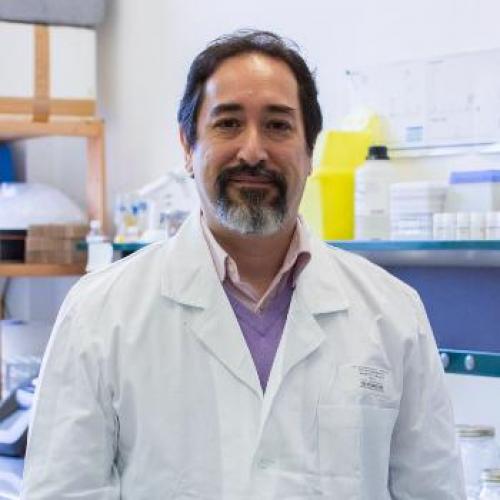
Aldo Pagano serves as a Full Professor in the Department of Experimental Medicine (DIMES) at the University of Genoa, where he also holds a position on the Board of Directors of the university's Higher School (IANUA). His teaching responsibilities span the Medicine and Surgery (single-cycle master's) and Biotechnology degree programs, covering courses in Biology, Biosafety, Laboratory for Medical Trainees, and Recombinant DNA Technologies across academic years 2024-2025 and 2025-2026.
His research focuses on Cancer Biology and Stem Cell Research, particularly investigating brain tumors (glioblastoma, meningioma) and neuroblastoma through molecular pathways like Wnt/β-catenin signaling and chemokine activity. Methodologically, he integrates single-cell sequencing, molecular docking with PPARs, and advanced fluorescence imaging to analyze tumor heterogeneity, metabolic dysregulation in hepatosteatosis, and nuclear chromatin architecture. His work bridges computational biology and experimental cellular models to uncover mechanisms sustaining stem-like phenotypes in cancer.
Recent publications (2023-2024) demonstrate consistent exploration of cancer stemness drivers, including prion protein's role in glioblastoma, CXCL11/CXCL12 chemokine control in meningioma, and novel imaging tools like IsoConcentraChromJ for chromatin analysis. These studies reveal interdisciplinary trends connecting bioinformatics, metabolic modeling, and tumor microenvironment dynamics to identify therapeutic targets.
No scientific awards or fellowships were documented in the provided materials.
Professor Pagano mentors students through laboratory-intensive courses and his research lab (contact: +39 010 5558244), though specific advisees aren't listed. His active publication record and teaching load indicate ongoing grant-supported research, likely from national biomedical funding bodies, focusing on experimental validation of computational models in cancer biology.
He maintains a dedicated research laboratory at the University of Genoa specializing in cellular imaging and molecular oncology, utilizing fluorescence techniques and sequencing technologies to investigate stem-like signatures in tumor models. The lab collaborates across medical and biotechnology disciplines within DIMES, emphasizing translational approaches to cancer mechanisms.