معرفی
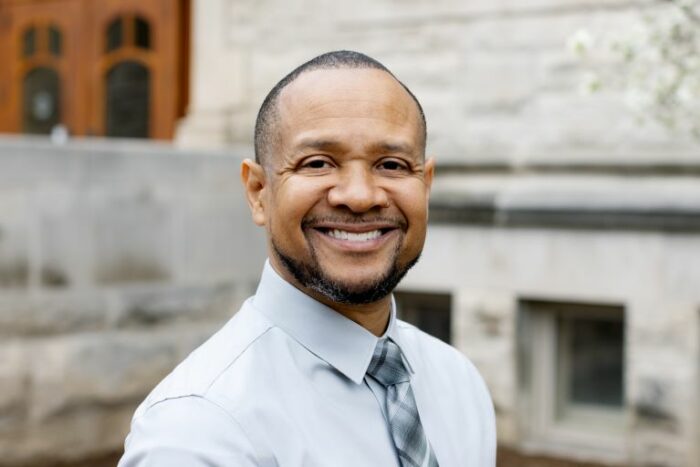
Akinwumi Adesokan is a Professor of Comparative Literature and Cinema and Media Studies at Indiana University Bloomington, where he teaches courses on African literature, cinema, and media studies. He serves as Editor-in-Chief of Black Camera and was recently named interim director of the Black Film Center/Archive (BFCA), overseeing significant archival projects including a $325,582 NEH grant to digitize Paulin S. Vieyra's film collection.
Adesokan's research focuses on African cinema, Nollywood, globalization and film, intersections of print and electronic media, and postcolonial artistic and intellectual traditions. His work explores 'the poetics of engaged expatriation,' examining how intellectual and social figures navigate scattered publics and resist or court representation across different contexts. His scholarship bridges literary studies, film studies, and cultural theory with a strong emphasis on connections between historical and contemporary African cultural production.
His recent publications demonstrate a consistent focus on African artistic forms in global contexts, with particular attention to how digital culture transforms traditional modes of artistic production and circulation. Adesokan's work connects new ideas, forms, media, systems and practices to supposedly old ones, creating a dialogue between historical and contemporary cultural production.
- ANA Fiction Prize (1996)
- PEN USA West Freedom to Write Award (1998)
- Lillian Hellman/Dashiel Hammett Human Rights Watch Award (1999)
- Association of Nigerian Authors' Prize for Fiction (1996)
As interim director of the Black Film Center/Archive, Adesokan oversees one of the most important collections of African and African diaspora film in the United States. His teaching spans undergraduate and graduate levels with courses including Introduction to African Literature, Film and Media in the Global Context, African Cinema, Nollywood Films, Black/Postcolonial Motions, Biopolitics and Postcolonial Discourse, Cinema and Decolonization, and Media Theory. His current research examines the impact of global demographic and technological changes on artistic composition across long durations, primarily from the standpoint of Black, diasporic and postcolonial intellectual traditions.