معرفی
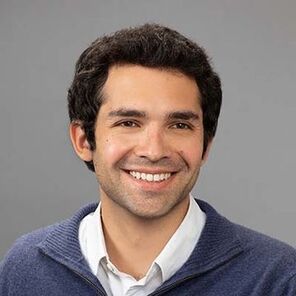
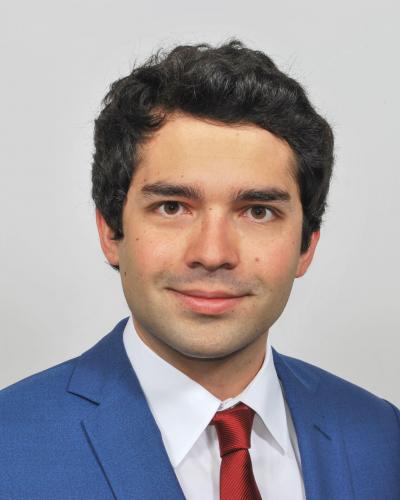
Adrien Bilal is an Assistant Professor of Economics at Stanford University, specializing in macroeconomics with a particular focus on environmental, spatial, and labor economics. His research bridges theoretical macroeconomic models with pressing real-world issues, particularly climate change economics and spatial economic dynamics.
Dr. Bilal's research interests span several interconnected areas:
- Macroeconomics and Climate Change - analyzing the economic costs of climate change, decarbonization policies, and adaptation strategies
- Spatial and Environmental Economics - examining how environmental factors shape spatial economic outcomes and vice versa
- Labor Market Dynamics - studying unemployment patterns, job transitions, and worker-firm matching in heterogeneous economies
- Heterogeneous Agent Models - developing new mathematical and computational methods for analyzing economies with diverse agents
His recent publications reveal a strong trend toward integrating climate change considerations into macroeconomic frameworks, with several high-impact papers examining the global and local economic impacts of temperature changes. Bilal's methodological contributions in solving complex heterogeneous agent models have also gained significant attention in the field, offering more efficient computational approaches that accelerate model solving by threefold.
Among his notable recognitions, Dr. Bilal was recently nominated for the Prize of the Best Young French Economist by Le Cercle des Economistes and Le Monde. His work on 'The Macroeconomic Impact of Climate Change' has received extensive media coverage across major international outlets including The New York Times, The Guardian, The Economist, and Le Monde.
As a researcher, Bilal actively collaborates with leading economists including Diego Känzig, Esteban Rossi-Hansberg, and James Stock. He participates in NBER working groups on Economic Fluctuations and Growth and International Trade and Investment, contributing to cutting-edge research at the intersection of macroeconomics and environmental policy.