معرفی
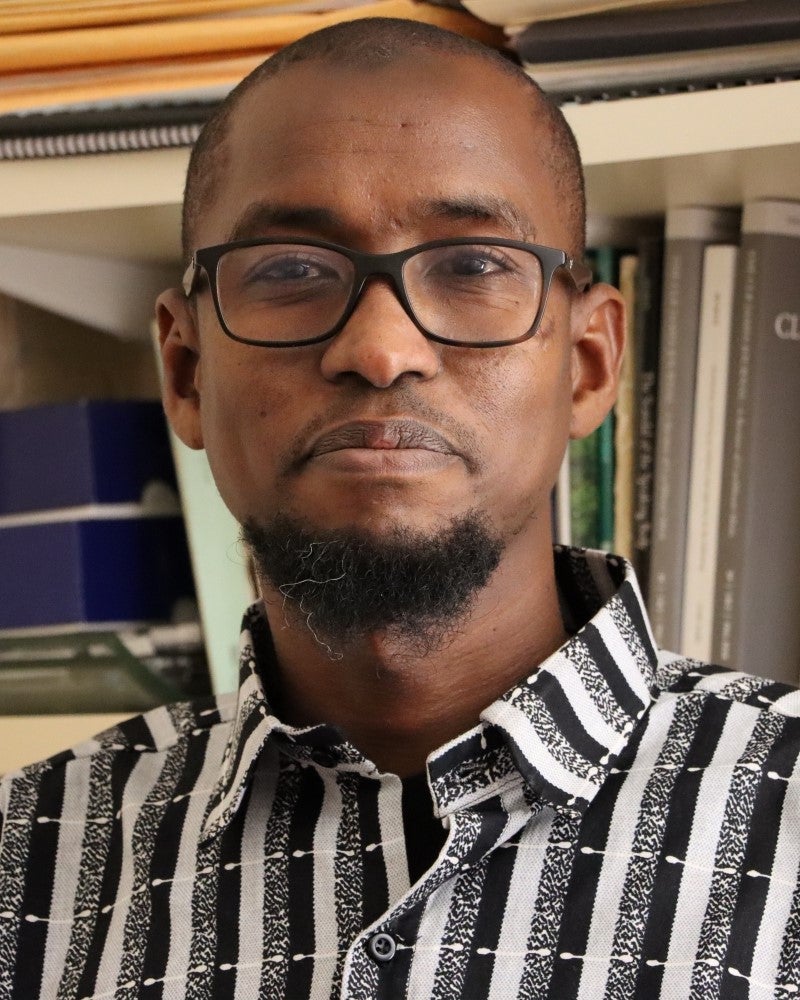
Adetayo Alabi is a Professor of English in the Department of English at the University of Mississippi, within the College of Liberal Arts. He specializes in African, African American, Caribbean, and other Postcolonial and World Literatures, with a strong focus on comparative Black literatures and literary theory.
Educational Background:
- B.A. Honors in English Studies, Obafemi Awolowo University (1988)
- M.A. in English Language, University of Ibadan (1991)
- M.A. in English Language and Literature, University of Guelph (1993)
- Ph.D. in English, University of Saskatchewan (1998)
Dr. Alabi's research centers on Comparative Black Literatures, particularly the autobiographical genre across African, African American, and Caribbean traditions. His theoretical work engages deeply with Postcolonial Theory, Feminist Theory, and Globalization Theory, situating literary texts within broader sociopolitical and cultural discourses. He explores how identity, memory, and resistance are constructed in postcolonial and diasporic narratives.
He teaches a diverse range of courses at both undergraduate and graduate levels, including surveys of African and world literatures, studies in 20th and 21st-century comparative Black literatures, major authors, cultural studies, and directed research. His academic contributions reflect a sustained engagement with global literary forms and critical frameworks.
Scientific Awards:
Dr. Alabi is actively involved in academic instruction and research supervision. He has taught core and advanced courses such as ENG 222 (Survey of World Literature), ENG 375 (Survey of 20th and 21st c. African Literature), AAS 441 (Comparative Black Literatures), and graduate seminars including ENG 619 and ENG 747 on African and Diasporic literatures. While specific grant funding or student advising details are not listed, his extensive course offerings suggest significant mentorship and curriculum development roles.
There is no mention of specific research labs or collaborative teams in the provided text, but his interdisciplinary focus suggests potential affiliations with programs in African American Studies (AAS) and Cultural Studies at the university.