معرفی
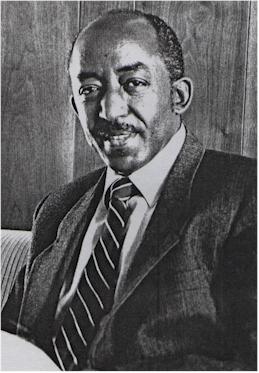
Abraham Demoz was a Professor of Linguistics and African Studies at Northwestern University from 1974 until his death in 1994. He also served as the head of the Program of African Studies and held a visiting professorship at the University of London. His academic career included roles as dean of the Faculty of Arts at Haile Selassie I University in Ethiopia from 1964 to 1967 prior to joining Northwestern.
Abraham Demoz held a diverse academic background. He earned his bachelor's degree from Haile Selassie I University in 1956, followed by a master's in education from Harvard University in 1957. He completed his master's and doctorate in Semitic languages at the University of California, Los Angeles (UCLA) in 1959 and 1964, respectively.
Abraham Demoz’s research focused on Ethiopian and Semitic languages, sociolinguistics, and the intersection of language with broader societal issues. He was particularly noted for his contributions to African Studies, emphasizing the study of Semitic linguistic structures within the Ethiopian context. His work also extended to language modernization and educational reform, reflecting his commitment to both academic scholarship and community engagement. Additionally, he was involved in constitutional reform efforts and highlighted critical social issues such as the Ethiopian famine and South African divestment campaigns, demonstrating his interdisciplinary approach to academia and activism.
In his roles at Northwestern, Dr. Demoz contributed significantly to academic programs and student engagement. He served as the head of the Program of African Studies, fostering interdisciplinary research and community. While specific grants or formal advising relationships with students are not documented here, his legacy is perpetuated through the Abraham Demoz Prize, which supports and recognizes outstanding undergraduate work in Linguistics. This prize highlights his dedication to nurturing student excellence and involvement in the department.
Dr. Demoz’s specific involvement in laboratories or research teams is not detailed in the provided texts. However, his contributions to sociolinguistics and Ethiopian studies are well-recognized, and he remains a pivotal figure in Northwestern’s Linguistics and African Studies departments.