معرفی
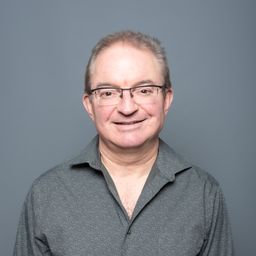
Dr Aaron Opdyke is a Senior Lecturer in Humanitarian Engineering at the School of Civil Engineering, University of Sydney. He specializes in infrastructure and social systems at the intersection of humanitarian response, disaster risk reduction, and climate change adaptation. His work emphasizes equitable development, particularly in marginalized communities lacking access to basic services.
Opdyke holds a PhD (2017) and Master of Science (2015) in Civil Engineering from the University of Colorado Boulder, and a Bachelor of Science Honors (2013) in Civil Engineering from California Polytechnic State University, San Luis Obispo. He has taught courses like CIVL5320 (Engineering for Sustainable Development) and CIVL5330 (Global Engineering Fieldwork).
Research interests include post-disaster housing recovery, multi-hazard risk assessments integrating local knowledge, and systemic drivers of disaster displacement. He leads projects such as the 'Risk Index for Climate Displacement' (International Organization for Migration), 'Promises and Perils of Climate Buffer Infrastructures' (Sydney Environment Institute), and 'Advancing Local Flood Decision-Making' (Asia-Pacific Network for Global Change Research).
- His 2024 publications focus on humanitarian housing impact analysis, flood modeling in Indonesia, and serious games for climate adaptation.
- 2023 work includes typhoon mortality studies and fragility function derivation in the Philippines.
He has received the Dean’s Award for Outstanding Research and Teaching (2022), Supervisor of the Year (SUPRA 2022), and the New Face of Civil Engineering (ASCE 2021). His grants include funding from the Sydney Environment Institute, Southeast Asia Centre, and the Department of Foreign Affairs and Trade.
Advises three current students: Anni Burkhardt (climate adaptation in coastal projects), Grace Muir (disaster risk creation processes), and Angga Sabarulman (earthquake-resistant housing in Indonesia). Collaborates with the Humanitarian Frontiers Lab and is a member of the Sydney Environment Institute, Sydney Southeast Asia Centre, and the Net Zero Institute.