معرفی
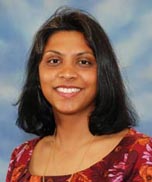
Aaron Fath is an Associate Teaching Professor in the Department of Psychology at the University of Southern Mississippi. He earned his PhD in Mathematics from Indiana University-Bloomington (2016) and holds Master's and Bachelor's degrees in Cognitive Science and Mathematics from Rensselaer Polytechnic Institute (2010), teaching core psychology courses including Sensation and Perception, Statistics, and Research Methods.
His educational qualifications include:
- PhD in Mathematics, Indiana University-Bloomington (2016)
- MS in Cognitive Science, Rensselaer Polytechnic Institute (2010)
- BS in Mathematics, Renssela Polytechnic Institute (2010)
- AS, Hudson Valley Community College (2006)
Dr. Fath's research centers on human vision with a primary focus on motion perception and its critical role in higher visual processing and action control. His work integrates Experimental, Cognitive, and Ecological Psychology frameworks to investigate Sensation & Perception, Perception & Action, and Motion Perception. He examines how visual motion information guides motor behavior across the lifespan, studying children, adults, and older adults in contexts ranging from time-to-contact estimation to affordance-based navigation and manual control tasks.
His publication record (2010-2018) reveals a cohesive research program at the perception-action interface, emphasizing motion perception's application to motor control. Key themes include monocular/binocular time-to-contact perception, age-related differences in motor learning, geometric/dynamic affordances for reaching, and perceptuo-motor adaptation across the lifespan. His experimental work with diverse age groups demonstrates how visual information structures action capabilities and learning trajectories in real-world tasks.
Scientific awards:
- No awards mentioned
As an instructor of PSY 475 (Senior Seminar) and PSY 718 (Graduate Seminar in Modern Psychology), Dr. Fath mentors undergraduate and graduate students in advanced research. While specific advisees aren't listed, his teaching portfolio indicates active supervision of capstone projects and thesis work. No research grants are documented in the provided materials.
No dedicated research laboratories or specialized teams are described, though his experimental publications suggest collaboration with human subjects in motion perception and motor control studies.