معرفی
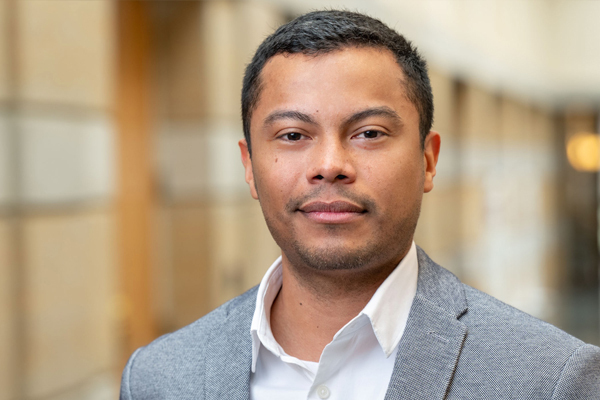
A. Rashied Omar serves as Associate Teaching Professor of Islamic Studies and Peacebuilding at the University of Notre Dame's Keough School of Global Affairs. He is a core faculty member at the Kroc Institute for International Peace Studies and a faculty fellow at both the Ansari Institute for Global Engagement with Religion and the Institute for Social Concerns.
- University of Notre Dame - Keough School of Global Affairs
- Kroc Institute for International Peace Studies
- Ansari Institute for Global Engagement with Religion
- Institute for Social Concerns
Professor Omar's research focuses on the intersection of religion and peacebuilding, with particular expertise in Islamic ethics of war and peace, religious violence, and interreligious solidarity. His work emphasizes how religious traditions can contribute to constructive social engagement and conflict transformation, especially in post-apartheid South Africa. He approaches peacebuilding from an Islamic theological perspective centered on compassion and restorative justice.
His recent publications explore Muslim responses to contemporary challenges including violent extremism and the COVID-19 pandemic, demonstrating how Islamic resources can inform effective peacebuilding strategies and social justice initiatives. Professor Omar's scholarly work bridges traditional Islamic scholarship with contemporary peace studies.
As an educator, he teaches the popular undergraduate and graduate course Islamic Ethics of War and Peace, along with other peace studies courses. He serves as field research advisor to Master of Global Affairs students conducting peacebuilding work in Cape Town, South Africa, where he also serves as imam at the Claremont Main Road Mosque.
Professor Omar maintains significant international engagement through his roles as trustee of the Healing of Memories Institute in South Africa, member of the Interfaith Council for Ethics Education with Arigatou International in Japan, and advisory board member for Critical Investigations into Humanitarianism in Africa.