معرفی
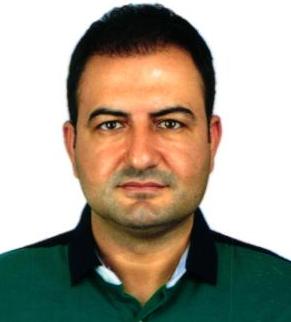
Dr. İdris Kahraman serves as a Lecturer in the Department of Computer Engineering at Karabuk University's Faculty of Engineering, where he has held academic positions since 2010. His current role as Doctor Research Assistant (2024-present) follows over a decade as a Research Assistant, during which he completed his PhD while teaching undergraduate courses including Algorithms, Introduction to Computer Engineering, and Engineering Ethics.
His educational background demonstrates progressive specialization:
- PhD in Computer Engineering, Karabuk University (2014-2019)
- Master's Degree in Computer Engineering, Karabuk University (2010-2014)
- Bachelor's Degree, Turkish Military Academy Command (2003-2007)
Dr. Kahraman's research bridges theoretical computer science and practical geospatial applications, with four core pillars: Information Systems development, Image Processing techniques, Machine Learning implementations, and Artificial Intelligence solutions. His work consistently applies these to satellite imagery analysis, 3D modeling, and real-time detection systems, creating tangible outputs like AR tourism applications and automated protozoa identification tools.
Publication trends reveal evolving expertise from foundational 3D campus modeling (2011-2013) through satellite road detection systems (2015-2017) to current biomedical and urban analytics applications. The 2024 Applied Sciences paper on real-time protozoa detection represents his most sophisticated integration of deep learning with practical instrumentation.
Research funding shows sustained activity through university-supported projects since 2011:
- Current: Principal researcher on 3D building modeling project (2024-2026)
- Recent: Principal investigator for neural network road detection project (2017-2018)
- Historic: Multiple roles in satellite imagery and 3D campus system projects (2011-2024)
Though no formal laboratory is documented, Dr. Kahraman operates within Karabuk University's collaborative research ecosystem, maintaining a decade-long productive partnership with Prof. İsmail Rakıp Karaş and contributing to the institution's geographic information systems research cluster through both technical projects and curriculum development.