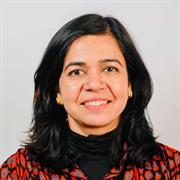
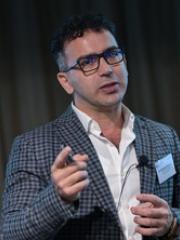
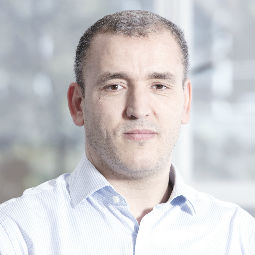
Radmehr Monfared is a Senior Lecturer in Intelligent Automation at Loughborough University, affiliated with the EPSRC Centre for Innovative Manufacturing in Intelligent Automation. His work focuses on robotics, virtual engineering, and smart manufacturing systems. BSc in Mechanical Engineering (1988, Amirkabir University) MSc in Computer Integrated Manufacturing (1994, Loughborough University) PhD in Modelling of Cell Control Systems (2000, Loughborough University) Research interests center on manufacturing automation , virtual engineering , production control , and business analysis , with recent work spanning smart manufacturing , ontology-based systems , and blockchain integration in supply chains. Articles highlight neural networks , energy optimization , and human-centered robotics . Scientific recognition includes FIMechE (Fellow of the Institution of Mechanical Engineers) and CEng (Chartered Engineer) certifications.
Adrian Ellison is a Research Fellow at the Institute of Transport and Logistics Studies (ITLS) at the University of Sydney. He specializes in large dataset analysis, particularly spatial data, applied to transport and logistics challenges such as road safety and active travel. He teaches GIS for Transport and Logistics and manages the Travel Choice Simulation Laboratory (TRACSLab). His research includes developing web-based travel surveys and smartphone app integration. Ellison holds a PhD from the University of Sydney and has received the Eric Pas Dissertation Prize (2014). He has contributed to studies on electric vehicle feasibility, cycling infrastructure impacts, and driver behavior profiling. Education: BCom (Ryerson University), MCom/MLogMan, PhD (University of Sydney). Research focuses on spatial data analytics, big data applications in logistics, and road safety. His work intersects transportation, technology, and public health, with publications addressing pedestrian safety in smart cities, trip stop identification from smartphone data, and customer service analytics via social media. Grants include a 2020 project on Trust and Safety in Autonomous Mobility Systems. His awards highlight contributions to travel behavior research. Teaching includes courses on GIS and big data for transport researchers.
Daniel L. Brinton, PhD, MHA, MAR, is Associate Professor of Healthcare Leadership and Management at the Medical University of South Carolina, College of Health Professions. He specializes in advanced quantitative methods for health-services and observational research, leveraging large-scale electronic health records and administrative data to improve patient outcomes and inform policy. Education: Doctor of Philosophy (PhD) Master of Health Administration (MHA) Master of Arts in Religion (MAR) Research Interests: Dr. Brinton’s work centers on missing-data methodologies that enable robust inference from real-world clinical datasets. He applies these techniques to pediatric health-services research , examining access, quality, and cost of care for asthma, Kawasaki disease, firearm injury, and autism spectrum disorder. A second major strand explores critical-care outcomes , using machine-learning and natural-language-processing to phenotype acute respiratory distress syndrome (ARDS) and optimize ventilator management. He also investigates orthopaedic surgery quality , opioid-prescribing patterns, and efficiency of global clinical trials. Recent Research Trends: Across 34 publications from 2018-2025, Brinton has increasingly integrated machine learning and big-data analytics to address clinical questions that were previously infeasible at scale. Studies range from predictive modeling of ARDS and neonatal acute kidney injury to economic evaluations of extended VTE prophylaxis and pediatric asthma adherence interventions. Scientific Awards: No awards explicitly listed in the provided materials. Advising & Grants: While individual student names are not disclosed, Dr. Brinton mentors graduate students and junior investigators in the Department of Healthcare Leadership and Management. His research has been supported by federal and foundation grants focusing on comparative effectiveness, health economics, and informatics, although specific grant identifiers are not provided. Labs & Teams: Dr. Brinton collaborates with multidisciplinary teams at MUSC, including the College of Health Professions’ Healthcare Leadership and Management research group, critical-care investigators, pediatric specialists, and external partners utilizing national EHR networks such as the Pediatric Health Information System (PHIS).
Dr. Shimi Naurin Ahmad is an Associate Professor of Business Administration at Morgan State University's Earl G. Graves School of Business and Management. Her research focuses on Online Consumer Behavior and Text Mining of Online Word-of-Mouth, with a particular emphasis on leveraging large unstructured datasets to uncover behavioral patterns. Dr. Ahmad holds a Ph.D. in Business Administration from Concordia University's joint doctoral program with McGill, HEC, and UQAM, alongside an M.Sc. in Electrical Engineering from Concordia and a B.Sc. from Rajshahi University of Engineering and Technology. Research Interests: Online Consumer Behavior Text Mining Techniques Online Pricing Strategies Cross-Cultural Marketing Social Commerce Dynamics Her work has been published in top-tier journals such as the Journal of Marketing Analytics and International Journal of Information Management . Notably, her 2023 Journal of Marketing Analytics paper earned the Most Popular Article Award. She has secured grants including the Provost Innovation Grant and Transform Morgan Grant, supporting her research initiatives. Awards & Recognition: 2023 Most Popular Article Award (Journal of Marketing Analytics) Competitive Research Grants from Morgan State University Dr. Ahmad's research bridges technical disciplines like data mining with business applications, contributing to both academic and practical insights in consumer behavior and digital marketing strategies.
Dimitris Zissis is a Lecturer in Operations Management at Norwich Business School, University of East Anglia. He holds a Ph.D. from Athens University of Economics and Business (AUEB) and has prior affiliations with the University of Bath, University of Liverpool, and Cranfield University. His research focuses on mathematical modelling (especially game theory), optimization, and their applications in supply chain and operations management. Education: Bachelor's in Mathematics, University of Athens M.Sc. in Statistics and Operations Research, University of Athens Ph.D. in Management Science and Technology, AUEB Research Interests: Game Theory applications in supply chains Optimization techniques for operational efficiency Digitalization impacts on supply chain coordination Sustainable energy market policies His recent work explores topics like review rating prediction via machine learning, energy market spillover effects, omnichannel strategies in gambling, and collaborative logistics under disruptions. Articles frequently blend theoretical models with practical industry applications. Awards: University of Athens scholarship for master’s excellence AUEB fellowship for Ph.D. studies Advising/Grants: While no students are listed, he participated in Greek, EU, and industry-funded projects. His work often involves cross-institutional collaborations highlighted in his research network. Labs/Teams: Engaged in interdisciplinary teams at Norwich Business School focusing on innovation and operations management challenges.
Dr. Serdar Arslan is a Lecturer at the Department of Computer Engineering at Cankaya University. He holds a PhD in Computer Engineering from Middle East Technical University (METU), with a thesis on multidimensional data indexing. His academic background includes a Master's (2005) and Bachelor's (2001) in Computer Engineering from METU and Hacettepe University, respectively. His research focuses on database systems, machine learning, multimedia data indexing, and forecasting models. Education: Bachelor of Engineering, Computer Engineering, Hacettepe University (2001) Master of Science, Computer Engineering, METU (2005) Doctor of Philosophy, Computer Engineering, METU (2018) Research Interests: Machine Learning applications in healthcare forecasting and financial markets Advanced indexing techniques for multimedia databases (e.g., MM-FOOD structure) Natural language processing for stance detection in political discourse Hybrid forecasting models combining LSTM and Prophet algorithms Domain-specific NLP for product name extraction in Turkish text Publications: His recent work emphasizes machine learning-driven solutions for complex systems, including pandemic modeling, cryptocurrency analysis, and conflict discourse analysis. His earlier contributions focused on multimedia indexing and image retrieval systems using MPEG-7 standards. The 2025 paper on OSINT architecture frameworks highlights his expanding focus on cybersecurity and system design. Labs/Teams: While no specific lab is mentioned, his GitHub repositories (e.g., Forecasting, NLP projects) suggest active involvement in collaborative research projects related to his domains.
Dr. Sena Chae is an Assistant Professor in the College of Nursing at the University of Iowa. She holds a PhD in Nursing from the University of Iowa, an MS in Health Informatics from the same university, an MSN from Yonsei University (South Korea), and a BSN from CHA University (South Korea). Her research focuses on nursing informatics, data-driven solutions for symptom prediction, standardized nursing terminology (NIC/NOC), and symptom science. She has developed algorithms to extract symptom data from clinical notes and explores relationships between chronic conditions and symptoms in acute leukemia patients. Dr. Chae’s work emphasizes leveraging health informatics for risk prediction in home healthcare, including models for hospitalization and emergency department visits. Her research integrates machine learning, natural language processing, and clinical decision support systems to improve patient outcomes. Notable projects include clustering cancer patients by symptom trajectories and validating nursing outcome classifications for cardiac disease. Education: PhD in Nursing, University of Iowa MS in Health Informatics, University of Iowa MSN in Nursing Education & Administration, Yonsei University BSN, CHA University Her articles highlight trends in predictive analytics for home healthcare risks, natural language processing of clinical notes, and symptom trajectory modeling. She has contributed to improving the readability of mHealth apps for heart failure patients and explored concordance between POLST documentation and care practices. Labs/Teams: Collaborates with the Center for Nursing Classification and Clinical Effectiveness (CNC) and the Iowa Center for Advancing Multimorbidity Science (CAMS). Grants & Future Work: Focuses on innovativeness in healthcare progress through academia-practice collaboration, fairness in AI models, and symptom science in oncology and chronic disease management.
Associate Professor Sonika Tyagi leads the Digital Health and Bioinformatics research lab at RMIT University's School of Computing Technologies. She is an affiliate Machine Learning scientist at Monash University and holds leadership roles in the Australasian Institute of Digital Health (AIDH) and Australian Research Council (ARC). Her research focuses on integrating machine learning with genomics and healthcare data to address clinical challenges, such as preterm birth prediction and antibiotic resistance. Research Interests: Multimodal data integration for personalized medicine AI-driven genomics and healthcare analytics Biomedical data standardization and infrastructure Natural language processing of unstructured medical data Key Projects: EHR-QC and EHR-ML pipelines for clinical outcome prediction GenomicBERT for genomic sequence analysis SuperbugAI flagship project on antibiotic resistance Awards: Healthcare Innovator Award 2024 (AI in Health) Women in AI (WAI) Awards Finalist 2022 Brilliant Women in Digital Health 2023 Grants & Funding: NHMRC grants (2017-2025) AISRF EMCR Fellowship (2020) Industry and university grants for equitable AI resources She advises diagnostic startups and collaborates with clinical institutions to translate research into practical solutions. Her lab trains over 30 students, focusing on interdisciplinary data science and computational biology.
Dr. Morteza Namvar is a Senior Lecturer at The University of Queensland Business School and an Affiliate of both the Centre for the Business and Economics of Health and Centre for Enterprise AI. His work bridges business contexts with advanced computational techniques, focusing on practical applications of artificial intelligence in organizational and healthcare settings. Faculty of Business, Economics and Law - School of Business Centre for the Business and Economics of Health Centre for Enterprise AI - Faculty of Engineering, Architecture and Information Technology Dr. Namvar specializes in Machine Learning (ML), Natural Language Processing (NLP), and Large Language Models (LLMs), with research concentrated in three primary areas: leveraging NLP and LLMs for enhanced theory building in Information Systems research, text feature engineering using advanced language models, and personalization/user experience enhancement through contextual understanding. His work systematically analyzes unstructured text data to develop robust theoretical constructs and improve machine learning model capabilities. His recent publications reveal strong trends in healthcare applications of LLMs, hate speech detection, and cryptocurrency market analysis through social media. The research consistently applies NLP techniques to solve real-world problems across healthcare, finance, and e-commerce domains, with particular emphasis on sociotechnical aspects of technology implementation. Dr. Namvar has successfully secured competitive funding including the prestigious UQ Knowledge Exchange & Translation Fund grant for developing social media monitoring tools for small businesses, and multiple grants from Medical Protection Society Limited for machine learning applications in healthcare systems. 2021-2022: Developing a context-specific social media monitoring tool to empower Australian small business (UQKx&T Fund) 2021: Enhancing Education Development: Analysing Members' Feedback Using Machine Learning Techniques (Medical Protection Society) 2021: Investigating the effective use of data and analytics in Medical Protection Systems (Medical Protection Society) He currently supervises five PhD students working on NLP and LLM applications in healthcare, data privacy regulation, and patient outcomes. His research impacts include leading machine learning projects with industry partners like Medical Protection Society and PA Hospital, where his NLP techniques have helped improve organizational strategies through text data analysis.
Dr. Ammar Belatreche is a Senior Lecturer in Computer Science and Programme Leader for the MSc Advanced Computer Science at Northumbria University's Department of Computer and Information Sciences. He joined Northumbria University in May 2016 after previous positions as a Research Associate and Lecturer at Ulster University. He is an active member of the Computational Intelligence and Visual Computing (CIVC) research group. Dr. Belatreche earned his PhD in Computer Science from Ulster University in 2007. His professional qualifications include: Member of the Association of Computing Machinery (ACM) since 2012 Fellow of the Higher Education Academy (FHEA) since 2010 Member of the Institute of Electrical & Electronic Engineers (IEEE) since 2009 His research focuses on bio-inspired intelligent systems, machine learning, spiking neural networks, face detection and recognition, structured and unstructured data analytics, capital markets engineering, and image processing. Dr. Belatreche has extensive experience across academic and R&D in these areas, leading numerous research and consultancy projects. His recent work demonstrates a strong emphasis on neuromorphic computing, particularly spiking neural networks and their applications in computer vision, financial analysis, and biometrics. Analysis of his recent publications shows a clear trend toward advancing spiking neural network architectures, with particular focus on quantization, pruning, and binary implementations to improve efficiency. His research spans multiple domains including computer vision (face recognition, palm-vein recognition), financial technology (stock price manipulation detection), and neuromorphic engineering. Many of his recent papers (2024-2025) appear in top-tier conferences like ICLR and journals like IEEE Transactions on Neural Networks and Learning Systems. Dr. Belatreche has received professional recognition including: Fellowship with the Higher Education Academy (FHEA) Role as Associate Editor for the journal Neurocomputing He has successfully supervised or co-supervised 8 PhD students to completion and serves as a Program Committee Member and reviewer for numerous international conferences and journals. As Programme Leader for the MSc Advanced Computer Science, he plays a significant role in shaping postgraduate education in computer science at Northumbria University. His research group work bridges theoretical advances in neural computation with practical applications across multiple domains. Based in CIS 305 at Northumbria University's Newcastle campus, Dr. Belatreche continues to advance research in neuromorphic computing and its applications while contributing to academic leadership through his programme leadership role.
Srividya Bansal is an Associate Professor and Program Chair of the Software Engineering program at Arizona State University's School of Computing and Augmented Intelligence. She joined ASU in 2010 and previously held a visiting assistant professorship at Georgetown University. Her research focuses on semantics-based approaches for Big Data integration, knowledge graphs, and outcome-based STEM education design. She currently co-leads the NSF-funded 'SUDOKN: Supply and Demand Open Knowledge Network' project under the Proto-OKN program. Education: B.Tech in Computer Science, National Institute of Technology Warangal (1999) MS in Computer Science, Texas Tech University (2002) PhD in Computer Science, University of Texas at Dallas (2007) Industry experience: 5 years as a software engineer at SAP Labs India and Tyler Technologies Research interests include semantic computing, web service composition, and educational technology. She has over 75 publications and actively teaches courses like Semantic Web Engineering and Software Enterprise . Current NSF grants include IUSE-funded work on step-based tutoring systems for circuit analysis and Proto-OKN's open knowledge networks. Professional affiliations include IEEE Computer Society and ACM. She leads the Instructional Module Development (IMOD) System project to enhance outcome-based curriculum design in STEM fields.
Dr. Oluwafemi Olukoya is a Lecturer in the School of Electronics, Electrical Engineering and Computer Science at Queen's University Belfast. His research focuses on privacy, malware analysis, systems security, and cybercrime, with an emphasis on mobile systems security, sustainable malware analysis, and cyber-attack attribution. He is particularly interested in interdisciplinary projects addressing socio-technical dynamics in cybersecurity. Research interests include malware detection engineering, digital forensics, and integrating legal/regulatory frameworks with software development. He is actively involved in PhD supervision and has secured research funding, including participation in the NIO New Deal Cyber Bid project (AIDE_NICYBER2025). Dr. Olukoya has published extensively in top-tier venues, leveraging machine learning for cybersecurity challenges such as concept drift in malware classification and vulnerability detection. He received the Queen's Merit Award for Fellowship in 2022. His work bridges technical cybersecurity solutions with real-world regulatory and societal implications, contributing to both academic and applied domains.
Manuela Waldner is an Assistant Professor (tenure track) at TU Wien's Department of Computer Graphics and Visualization. She leads research in visual interfaces for exploring large-scale data, focusing on human-computer interaction and attention guidance in complex visualizations. Her work spans academic roles including Visualization Group membership and PhD Program Visual Heritage involvement. Research interests include: Interactive data exploration Guided visual attention mechanisms Emerging display environments (VR, multi-display systems) Publications emphasize practical applications of visualization techniques in domains like geographic data, medical imaging, and collaborative analytics. Notable projects include weBIGeo (geographic visualization) and Deskollage (visual information foraging). Awards include the Best Paper Award at EuroVA 2024 . Teaching roles include courses on Information Visualization , Computer Graphics , and Visual Computing . Active in academic service through program committees and editorial roles.
Jihyeon Ha is an Assistant Professor in the Department of Marketing at the Tippie College of Business, University of Iowa. She holds a PhD in Marketing from Emory University, an MS in Business Administration, and a BBA from Seoul National University. Education: PhD in Marketing, Emory University MS in Business Administration, Seoul National University BBA, Seoul National University Her research focuses on leveraging Social Media , Digital Content , and Unstructured Data Analysis using Machine Learning techniques to explore Causal Inference in marketing contexts. A key publication analyzed paywall suspensions' impact on digital news subscriptions in Marketing Science (2023). Recent presentations at institutions like University of South Florida, Texas A&M, and National University of Singapore highlight her expertise in Multimodal Representation Learning for branded content and Natural Language Processing in brand personality assessment.
Vijay Narayanan is the Robert Noll Chair Professor in Computer Science & Engineering and Electrical Engineering at Pennsylvania State University. He co-directs the Microsystems Design Lab and leads research in embedded visual analytics, self-powered processors, and system design using emerging devices. Education: B.E in Computer Science and Engineering (1993) from University of Madras, India Ph.D. in Computer Science and Engineering (1998) from University of South Florida, USA His research spans Power Aware Computing , Computer Architecture , and Embedded Systems , with emphasis on Visual Cortex on Silicon and Self-Powered Processors . Current work includes Non-Volatile Processors and Design Automation under unreliable power conditions via NSF ERC ASSIST. Recent publications focus on GPU architecture (Tensor Cores, ACE), Memory Consistency Verification (QED), and Neural Radiance Fields (Disorf, Distwar) for robotics and rendering. Key collaborations include Tsinghua University and DARPA/SRC LEAST Center . Scientific Awards: IEEE Fellow ACM Fellow He leads the Architecture, Benchmarking and Circuits Thrust in the DARPA/SRC LEAST Center and contributes to NSF ERC ASSIST for self-powered systems. Grants and projects emphasize cross-layer optimizations and hardware-software co-design.