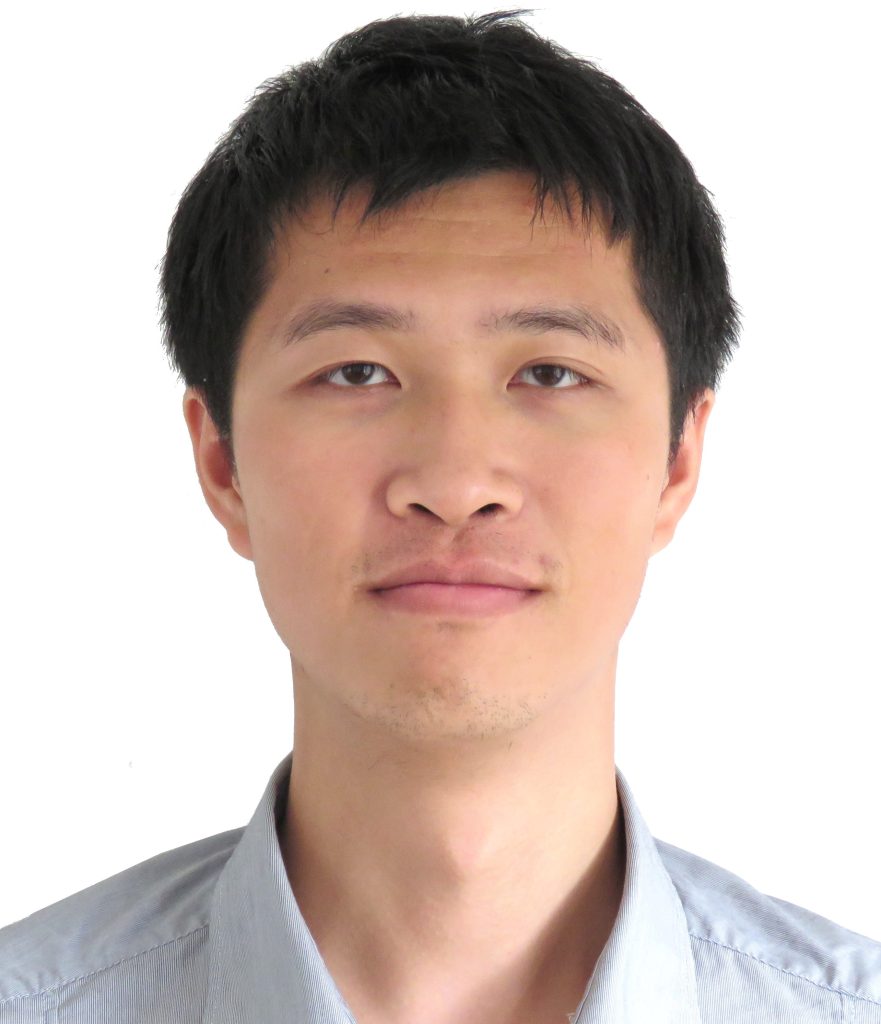
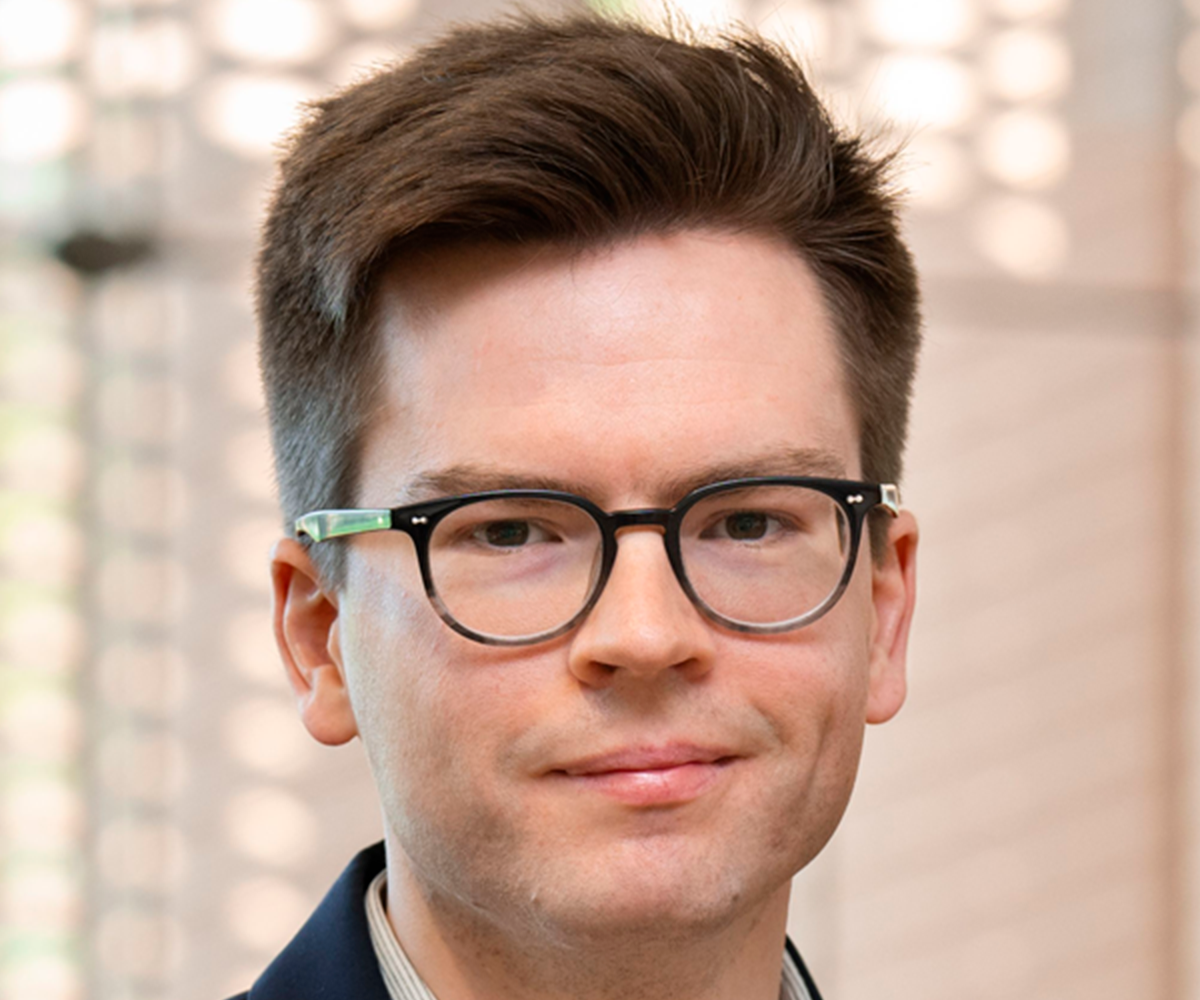
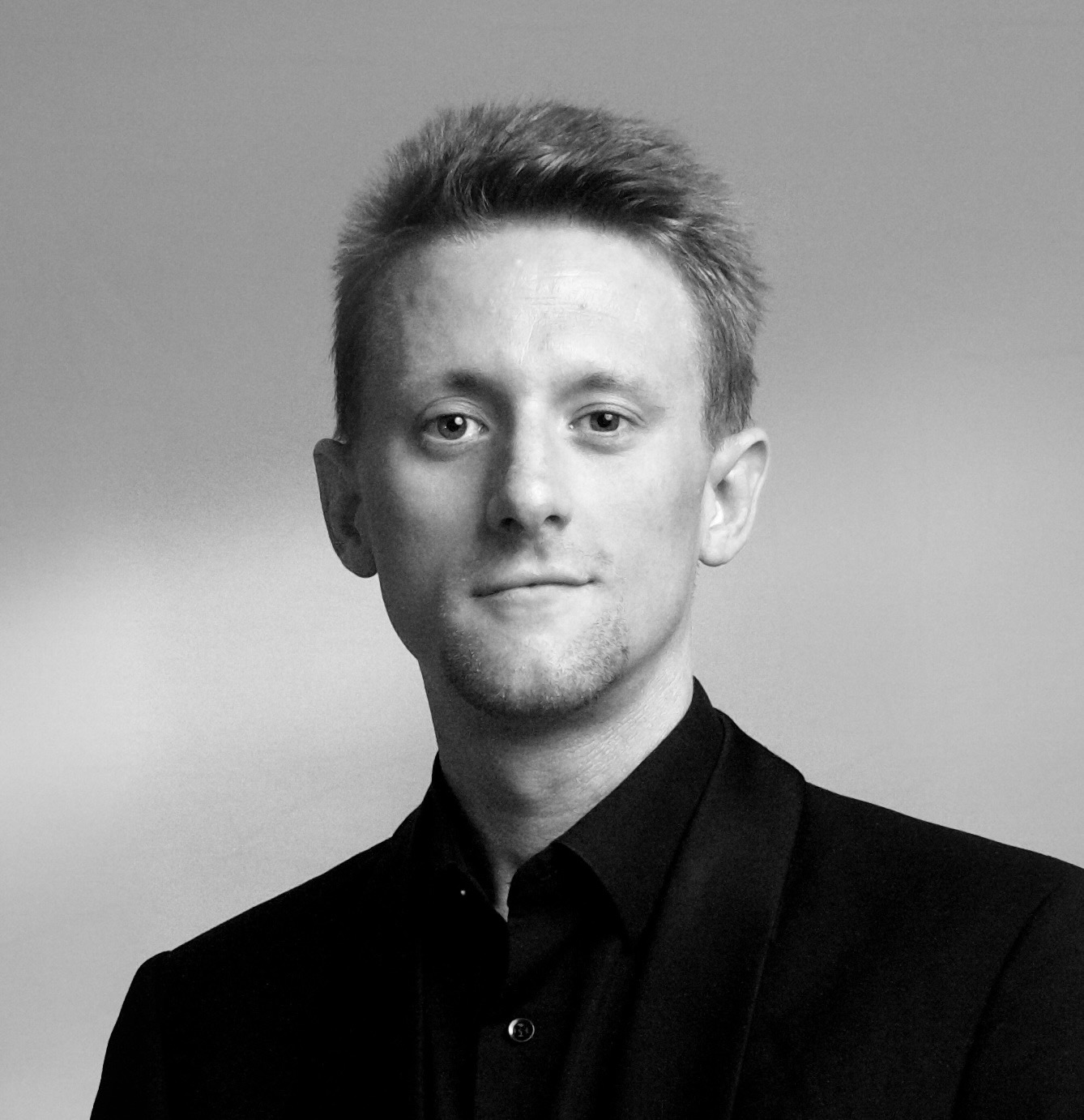
Kaidi Yang is an Assistant Professor at the National University of Singapore (NUS) in the Department of Civil and Environmental Engineering, specializing in Intelligent Transportation Systems and related fields. He holds a PhD from ETH Zurich (2019), an M.Sc. in Control Science and Engineering from Tsinghua University (2014), and dual bachelor’s degrees in Automation and Mathematics from Tsinghua University (2011). His research focuses on advancing traffic control, connected/automated vehicles, shared mobility systems, and data privacy in transportation. He has contributed to developing algorithms for efficient traffic signal control, platooning coordination, and privacy-preserving data sharing in transportation networks. Education: Ph.D., Civil and Environmental Engineering (Transportation), ETH Zurich, 2019 M.Sc., Control Science and Engineering, Tsinghua University, 2014 B.Sc./B.Eng., Dual Degrees in Pure/Applied Mathematics and Automation, Tsinghua University, 2011 Yang has received prestigious awards including the Swiss National Science Foundation’s Postdoc Mobility Fellowship (2021–2022) and the IEEE ITS Conference Best Student Paper Award (2020). He serves as an Associate Editor for the IEEE Conference on Intelligent Transportation Systems (2024). His work bridges theoretical advancements in operations research, robotics, and machine learning with practical applications in urban mobility systems. Recent efforts emphasize integrating privacy-preserving techniques into traffic management and optimizing mixed-autonomy platoon control.
Xi Chen is an Associate Professor in the Department of Computer Science at Columbia University. Prior to this, he was a postdoctoral researcher at the Institute for Advanced Study (Princeton University) and the University of Southern California. He holds a B.S. in Physics/Maths from Tsinghua University (2003) and a Ph.D. in Computer Science from Tsinghua University (2007), advised by Professor Bo Zhang under the guidance of the Institute for Theoretical Computer Science led by Andrew Chi-Chih Yao. His research focuses on Algorithmic Game Theory, Economics, and Complexity Theory. His work is supported by an NSF CAREER award, a Sloan Research Fellowship, and Columbia University startup funds. He has received the EATCS Presburger Award and multiple best paper awards, including at FOCS 2006, ISAAC 2009, and CCC 2017. Xi Chen has taught courses such as Analysis of Algorithms , Lower Bounds in Theoretical Computer Science , and Introduction to Computational Complexity . He co-advises current PhD students Tim Randolph and Erik Waingarten, and has graduated students like Timothy Sun (Emory University) and Xiaorui Sun (University of Illinois at Chicago). He has served on program committees for conferences like WINE, SODA, and STOC. His research spans theoretical computer science, including property testing, graph isomorphism, and fixed-point computation. He is affiliated with Columbia's Theory Group and actively participates in the Theory Seminar organized by Alex Andoni. Xi Chen's research also extends to algorithmic economics, exploring mechanisms, pricing strategies, and market equilibria. His work on complexity theory includes contributions to counting problems and circuit complexity. He maintains a lab and collaborates with researchers in theoretical computer science and algorithmic game theory.
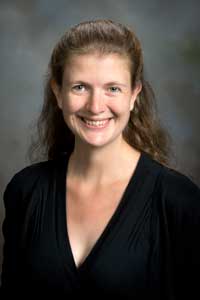
Lara Anderson is an Associate Professor in the Department of Physics at Virginia Tech's College of Science. Her research focuses on the intersection of geometry and string theory, particularly in the context of Calabi-Yau manifolds, F-theory, and heterotic string compactifications. She holds a Ph.D. from the University of Oxford, with a thesis in Mathematical String Theory. Her research interests include string phenomenology, geometric structures in compactifications, and the application of machine learning to approximate Calabi-Yau metrics. Key areas of exploration involve fibrations, Yukawa couplings, and moduli stabilization in heterotic and F-theory frameworks. Anderson has been recognized with a Graduate Research Fellowship in 2004. Her work spans over 50 publications, including contributions to understanding dualities between heterotic and F-theory models, the role of spectral covers in heterotic compactifications, and algorithmic approaches to heterotic phenomenology. She has also organized workshops on F-theory and string geometry, reflecting her leadership in interdisciplinary research. Her research has implications for both pure mathematics and particle physics, bridging abstract geometric concepts with concrete physical predictions. Current projects include exploring the geometric constraints in dual string models and developing numerical tools for studying Calabi-Yau metrics.
Yihan Sun is an Assistant Professor at the University of California, Riverside (UCR) since January 2020. He earned his Ph.D. in Computer Science from Carnegie Mellon University (CMU) , advised by Guy Blelloch , and holds a Bachelor's degree in Computer Science from Tsinghua University . Research Interests: Yihan Sun focuses on the theory and practice of parallel computing , including Parallel algorithms and data structures Write-efficient algorithms for Non-Volatile Memory (NVM) Computational geometry (range trees, Delaunay triangulations) Graph algorithms (SSSP, SCC, cluster-based BFS) Concurrent and persistent data structures Multi-version concurrency control (MVCC) with garbage collection Applications in databases, transactional systems, and computational biology Recent Research Trends: His work on join-based parallel balanced trees has been foundational, supporting four balancing schemes (AVL, red-black, weight-balanced, treaps) and enabling efficient implementations in graph analytics, spatial queries, and dynamic programming. Recent publications focus on output-sensitive algorithms , scalable graph libraries (PASGAL) , and pedagogical approaches to teaching parallel algorithms. Teaching: He teaches CS260 (Parallel Algorithms) at UCR and has served as a guest lecturer for MIT 6.886 (Algorithm Engineering) and CMU 15-859 (Algorithms in the real world) . He also contributed to algorithm education through a tutorial at the ACM Symposium on Principles and Practice of Parallel Programming (PPoPP 2019) . Labs & Collaborations: Yihan is a core contributor to the PAM (Parallel Augmented Maps) library, which has been integrated into systems like Aspen (graph-streaming) and C-trees . He collaborates with teams at CMU-Parlay , PBBS , and Ligra , with his code available on Github for community feedback.
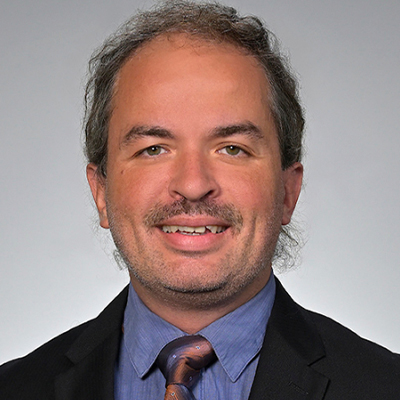
Christos Makris is an Associate Professor in the Department of Computer Engineering and Informatics at the University of Patras, Greece. His academic career spans over two decades with significant contributions to computer science, particularly in data structures, algorithms, and information systems. He maintains active research collaborations and supervises graduate students in his areas of expertise. Dr. Makris's research spans several key areas in computer science with a strong focus on efficient data organization and processing. His work encompasses Data Structures , Information Retrieval , Data Mining , String Management and Processing Algorithms , Computational Geometry , Internet Technologies , Bioinformatics , and Multimedia Databases . His interdisciplinary approach bridges theoretical computer science with practical applications across various domains including web technologies, bioinformatics, and emergency response systems. Analysis of Dr. Makris's publication record reveals a consistent research trajectory focused on efficient algorithms for information management. His work demonstrates evolution from foundational data structure research in the 1990s to more applied work in web technologies, social media analysis, and machine learning applications in recent years. A notable pattern is his ability to adapt core algorithmic techniques to emerging application domains while maintaining theoretical rigor. Dr. Makris maintains an impressive scholarly record with over 3,000 citations, an h-index of 29, and an i10-index of 71 according to Google Scholar metrics. These indicators reflect the significant impact of his research within the computer science community. As an active faculty member, Dr. Makris maintains regular office hours on Tuesdays from 18:00-20:00 and Thursdays from 12:00-14:00. He is accessible via email at makri@ceid.upatras.gr or makri@upatras.gr for academic inquiries and student supervision.
Pavel P. Kuksa is a Research Assistant Professor in the Department of Pathology and Laboratory Medicine, specializing in bioinformatics, computer science, and functional genomics. His work focuses on high-throughput sequencing analysis, chromatin interaction data, and developing scalable software platforms for genomics research.
Simon Puglisi is a Professor at the University of Helsinki's Department of Computer Science, within the Faculty of Science. His research focuses on algorithms, bioinformatics, data compression, and string processing, with notable contributions to genomic data analysis and efficient indexing techniques. He holds the Alberto Apostolico Best Paper Award (2021) and leads the WILL # CHAIR # BOSSA project (2025–2029). His work includes scalable k-mer indexing tools like Themisto and advancements in Lempel-Ziv compression and suffix tree algorithms. He frequently collaborates internationally, participates in editorial roles for journals like the ACM Journal of Experimental Algorithmics , and contributes to conferences such as the International Symposium on Combinatorial Pattern Matching. Research Interests: Algorithm design for string processing and bioinformatics Efficient data structures for genomic data Compression techniques (e.g., Lempel-Ziv, Burrows-Wheeler) Dynamic and space-efficient algorithms Grants & Projects: WILL # CHAIR # BOSSA (2025–2029) Ongoing collaborations with institutions like the University of Melbourne and King's College London
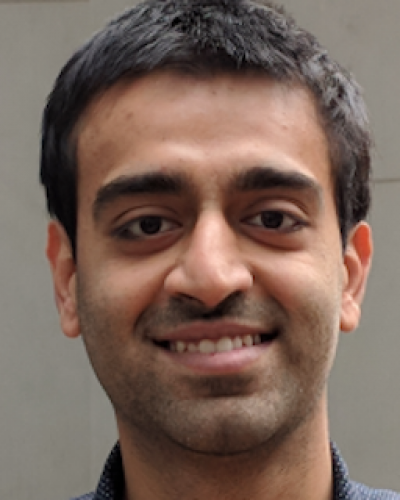
Prabhanjan Ananth is an Assistant Professor in the Department of Computer Science at the University of California, Santa Barbara (UCSB), holding the Glen and Susanne Culler Endowed Chair in Computer Science. He earned his Ph.D. from UCLA in 2017, followed by a postdoctoral fellowship at MIT's CSAIL. His research focuses on cryptography, particularly in classical and post-quantum cryptography, with emphasis on unclonable primitives, pseudorandomness, and cryptographic protocols. Education: Ph.D. in Computer Science from UCLA (2013–2017), postdoctoral research at MIT (2017–2019). Research Interests: His work spans theoretical computer science and cryptography, including post-quantum security, quantum-resistant systems, and unclonable cryptographic primitives. He explores topics like pseudorandomness in quantum models, revocable encryption, and cryptographic protocols for multi-user environments. Recent Publications: His 2025 work advances revocable encryption and pseudorandom unitaries in quantum models. He also contributes to unclonable secret sharing and modular cryptographic design. His research often bridges theoretical foundations with practical applications in quantum-safe systems. Awards: Glen and Susanne Culler Endowed Chair in Computer Science (UCSB). Advising: Current Ph.D. advisees include Aditya Gulati, Yao-Ting Lin, and Divyanshu Bhardwaj. Past students have secured roles at institutions like JPMorgan Chase and EPFL. Teaching: Teaches courses on automata theory (CS 138) and cryptography (CS 178), emphasizing rigorous mathematical proofs and foundational concepts.
Mahmoud Moradi is a Professor of Physical Chemistry at the University of Arkansas, holding the distinguished position of Bruker Analytical Science Professor in the Department of Chemistry & Biochemistry within the College of Arts & Sciences. With a strong background in physics and computational chemistry, he leads the Biomolecular Simulations Lab (BioSimLab) focusing on protein dynamics and membrane transport mechanisms. Education: Ph.D. in Physics from North Carolina State University M.Sc. in Physics from Sharif University of Technology, Iran B.Sc. in Physics from Sharif University of Technology, Iran Postdoctoral Associate at Beckman Institute and Department of Biochemistry, University of Illinois at Urbana-Champaign (2011-2015) Professor Moradi's research centers around two inter-related questions: (i) how do proteins function by changing their conformation and undergoing concerted motions? and (ii) how can we simulate these functionally important conformational changes at an atomic level? His lab develops and employs Molecular Dynamics (MD) based enhanced sampling techniques to tackle both problems. They are particularly interested in the study of large-scale conformational changes of proteins such as those involved in membrane transport and signal transduction. A novel combination of nonequilibrium and equilibrium MD based techniques are employed to reconstruct the slow biomolecular processes such as inward- to outward-facing structural transition of membrane transporters at an atomic level. This research has implications for understanding disease mechanisms at a molecular level and improving computational methodologies for biomedically relevant applications. Professor Moradi's recent publications demonstrate a strong focus on membrane protein dynamics, particularly examining cholesterol-protein interactions, GPCR mechanisms, and membrane transporter functions. His work increasingly integrates experimental and computational approaches, with a notable emphasis on SARS-CoV-2 spike protein dynamics during the pandemic years. The publications consistently apply advanced molecular dynamics techniques to investigate protein conformational changes, with growing applications in drug delivery systems and computational drug design. Scientific Awards: NIH MIRA (R35) Award, 2022-2027 (as PI): Physics-based characterization of functionally relevant protein conformational dynamics NSF I-Corps Award, 2021-2022 (as PI): Physics-Based Binding Affinity Estimator NSF CAREER Award, 2020-2025 (as PI): Riemannian Reformulation of Collective Variable Based Free Energy Calculation Methods NIH R15 Grant, 2020-2023 (as PI): Molecular Characterization of the Influenza Hemagglutinin Mediated Membrane Fusion DOE Grant, 2020-2023 (as co-PI): Protein Targeting to the Chloroplast Thylakoid Membrane NSF HDR Grant, 2019-2022 (as PI): Atomic Level Structural Dynamics in Catalysts Connor Endowed Faculty Fellowship, 2018 Fulbright College Outstanding Researcher Award for 2023/24 academic year Professor Moradi has successfully mentored numerous graduate students through their PhD programs, with recent graduates including Ehsaneh Khodadadi, Shadi Badiee, and Ugochi Isu. His research is supported by substantial grants from NIH, NSF, and DOE, totaling millions of dollars in funding. His NIH MIRA award represents a significant long-term commitment to his research program, while his NSF CAREER award recognizes both research excellence and educational contributions. The Biomolecular Simulations Lab at the University of Arkansas is a vibrant research group that combines computational and experimental approaches to study protein dynamics, maintaining strong collaborations with experimental groups both within the university and at other institutions.
Rui Teixeira is an Assistant Professor in the School of Civil Engineering at University College Dublin (UCD). He leads UCD's Centre for Critical Infrastructure Research (CCIR) and focuses on Uncertainty Quantification, Safety, and Risk in civil engineering systems, with applications to infrastructure resilience. His research emphasizes reliability analysis, multi-fidelity modeling, and AI-driven risk assessment. Education: MSc in Civil Engineering, University of Porto, Portugal PhD in Civil Engineering, Trinity College Dublin Professional Certificate in University Teaching and Learning, UCD Research Interests: Development of novel reliability analysis techniques Resilience of infrastructure systems Artificial intelligence applications for risk assessment Probabilistic system evaluation and safety standards Grants & Projects: Smart Enforcement of Transport Operations (SETO), Horizon Europe (2023–2026) Optimality-Tracking Civil Engineering Systems, Enterprise Ireland (2023–2025) Floating Offshore Wind Dynamic Cables (FlOWDyn), Sustainable Energy Authority of Ireland (2024–2027) Teaching: Coordinates courses such as 'Civil Engineering Systems' and 'Design of Structures 1'. Labs/Teams: Director of the Centre for Critical Infrastructure Research (CCIR), focusing on interdisciplinary approaches to infrastructure resilience.
Doug L. James is a Full Professor of Computer Science at Stanford University since 2015, following roles as Associate Professor at Cornell University (2006-2015) and Assistant Professor at Carnegie Mellon University (2002-2006). He holds a PhD in Applied Mathematics from the University of British Columbia (2001), alongside earlier degrees from the same institution and the University of Western Ontario. His research focuses on computer graphics, sound synthesis, and physically-based modeling, with notable contributions to fluid simulation, cloth animation, and medical modeling. Key achievements include the 2012 Technical Achievement Award from the Academy of Motion Picture Arts and Sciences for 'Wavelet Turbulence,' and the 2013 Katayanagi Prize. He serves as a consulting Senior Research Scientist at Pixar Animation Studios and has led roles like Technical Papers Chair at SIGGRAPH 2015. His work integrates physics-based principles with interactive systems, emphasizing real-time applications and data-driven methods. Research interests span sound synthesis for animations (e.g., cloth, water, impact sounds), deformable models for medical simulation, and tools like 'svMorph' for virtual surgery planning. His publications reflect a blend of algorithmic innovation and practical applications in film, gaming, and healthcare.
Michael Skinnider serves as Assistant Professor at Princeton University's Lewis-Sigler Institute for Integrative Genomics and Assistant Member of the Ludwig Princeton Branch. His research develops AI-driven computational methods to identify unknown small molecules in mass spectrometry data, with applications in cancer biology and forensic drug detection. His educational background includes: BArtsSc from McMaster University (2015) PhD from University of British Columbia (2021) MD from University of British Columbia (2023) Skinnider's work centers on illuminating the "metabolomic dark matter" —unidentified chemical entities in mass spectrometry data. His lab pioneers machine learning approaches for metabolite identification, focusing on connections between unknown metabolites, cancer risk, and the microbiome. Recent innovations include chemical language models that transform mass spectrometry outputs into chemical structures, with applications spanning cancer diagnostics to forensic analysis of designer drugs. His research bridges computational biology, chemistry, and clinical medicine through low-data learning techniques. Publication trends reveal three dominant themes: (1) AI-driven metabolite identification (25% of recent work), (2) single-cell/spatial data analysis (40%), and (3) molecular interaction networks (35%). His 2024 Nature Machine Intelligence paper demonstrated that invalid SMILES strings enhance chemical language models , overturning previous assumptions. Articles consistently apply computational methods to biological discovery, with growing emphasis on cancer metabolism and translational applications. Major recognitions include: Forbes 30 Under 30 (2022) International Birnstiel Award (2022) Dan David Prize Borealis AI Fellowship NIH Award C&EN's Talented Twelve (2023) Young Explorer Award Grand Prize Skinnider leads the Skinnider Research Lab at Princeton's Carl Icahn Laboratory, which collaborates with forensic laboratories and Ludwig cancer researchers. The lab specializes in transforming mass spectrometry data into biological insights through innovative algorithms. During his undergraduate studies, he co-founded Adapsyn Bioscience to translate natural product discovery research into commercial applications. Current projects include developing metabolome-wide identification tools and exploring diet-derived metabolites that modulate cancer progression.
Mark Gotham is a Senior Lecturer in Cultural Computation at King’s College London’s Department of Digital Humanities. He holds a unique position bridging STEM and the humanities, with prior roles as an Assistant Professor of Computer Science at Durham University and a Professor of Music Theory at Technische Universität Dortmund. His research focuses on computational methods for music theory, corpus creation, and accessibility. Gotham completed a Ph.D. in Music Theory at the University of Cambridge, an MMus in Composition at the Royal Northern College of Music, and a First-Class Bachelor’s in Music from the University of Oxford. His work spans computational musicology, including projects like the OpenScore initiative, which digitizes and opens music scores. He is affiliated with King’s Computational Humanities Research Group and the Centre for Digital Culture. Gotham’s compositions, such as the award-winning CD *Utrumne est Ornatum*, blend theoretical rigor with creative expression. He collaborates with institutions like Deutsche Telekom on projects like *Beethoven X* and leads the Music Computing Lab at King’s. Gotham’s research emphasizes interdisciplinary approaches, using computational tools to explore musical structures and democratize access to music theory. His contributions include frameworks for aligning symbolic music, standards for harmonic analysis, and pedagogical innovations in music education.
Dr. Alexander Hunter is a Lecturer and Composition Convenor at the School of Music, Australian National University (ANU). He holds a PhD in composition from Edinburgh Napier University (2014) and has taught composition, theory, and music history since relocating to Canberra in 2014. Hunter founded ANU's Experimental Music Studio, focusing on open-form compositions that engage performers in fluid interpretive roles. His research spans open musical forms, spectralism, acoustic ecology, and intersectional feminism, with a commitment to disability and autistic advocacy in the arts. Education includes studies at Northern Illinois University (BA 2006) and HNC from Colaisde Bheinn na Faoghla (2007). His work integrates multimedia collaborations with artists like Mike Parr and Martyn Jolly, exploring themes of dis/ability, environmental health, and Métis cultural heritage. Key projects include Helping the River Sing (2018–2021), linking river health with artistic expression, and AI-driven music composition research with Charles Martin. Hunter’s performance-led projects often involve magic lantern technology, reimagining 19th-century projection as a medium for contemporary ecological and historical narratives. Research interests also encompass New York School music, reductionist improvisation, and anarchist philosophies in composition. His collaborations with ensembles like Ensemble Dal Niente and the Edinburgh Quartet highlight his commitment to experimental performance practices. Recent publications (2023–2025) explore AI applications in music creation and interdisciplinary performance frameworks.
Zohreh Davoudi is an Associate Professor in the Department of Physics at the University of Maryland, College Park. She holds additional roles as a Fellow of the Joint Center for Quantum Information and Computer Science (QuICS) and Associate Director for Education at the NSF Institute for Robust Quantum Simulation. Her research focuses on simulating strongly interacting systems using lattice quantum chromodynamics (LQCD), quantum simulation, and quantum computing. She earned her B.Sc. and M.Sc. from Sharif University of Technology in Iran, followed by a Ph.D. in Theoretical Physics from the University of Washington (2014), and served as a postdoctoral researcher at MIT's Center for Theoretical Physics before joining UMD in 2017. Her research interests include developing computational frameworks to study nuclear and particle physics phenomena, such as neutrino interactions, dark matter scattering, and neutron star dynamics. She has pioneered efforts to leverage quantum computing to address the 'sign problem' in fermionic systems and simulate real-time dynamics of early universe matter. Notable awards include the 2025 Presidential Early Career Award, 2024 Simons Emmy Noether Fellowship, and 2019 Alfred P. Sloan Fellowship. Her educational contributions include leading training programs in quantum information science and fostering collaborations across institutes like RIKEN (2017–2021) and the NSF Quantum Simulation Institute. She supervises a dynamic research group focused on lattice gauge theory, quantum algorithms, and interdisciplinary applications such as neutrinoless double-beta decay calculations.