Miriam Waltz is an Assistant Professor in gender justice and health technologies at Leiden University, with a joint appointment between the Institute for Cultural Anthropology and Development Sociology and the African Studies Centre. Her research focuses on interdisciplinary health technologies in Africa, pesticide use in Western Kenya, and perinatal healthcare in South Africa. Education: BA in Anthropology and Development Studies, University College Utrecht (2012) Honours and MA in Social Anthropology, University of Cape Town (2013–2015) Joint PhD in Anthropology (Aarhus University & University of Oslo, 2022) Research Interests: Examines pesticide use among smallholder farmers in Kenya, exploring socio-ecological dynamics and non-human entanglements. Investigates perinatal health care navigation and technological interventions in Cape Town. Explores multispecies ethnography and science-policy interfaces in African contexts.
Sarah Bracke is a Professor in Sociology of Gender and Sexuality at the Faculty of Social and Behavioural Sciences, University of Amsterdam . Her work critically examines intersections of gender, sexuality, race, and secularism, particularly in European contexts. She is deeply engaged in analyzing systemic crises—capitalist, nationalist, and ecological—and their impact on marginalized communities. Current Affiliation : University of Amsterdam, Faculty of Social and Behavioural Sciences. Research Focus : Gender theory, reproductive rights, anti-LGBTQ+ mobilizations, secularism, and the political dimensions of care economies. Bracke’s research emphasizes the deliberate erosion of gender, reproductive, and LGBTQ+ rights, often highlighting transnational collaborations among far-right and mainstream political forces. She connects these issues to broader crises, including climate change, capitalist precarity, and nationalist rhetoric. Her work advocates for feminist coalitions that transcend traditional boundaries, prioritizing care ethics and collective solidarity over exclusionary frameworks. Her recent publications explore topics like the racialized dimensions of reproductive politics, the secularist underpinnings of European ‘Muslim Question’ discourse, and the role of academia in resisting oppressive systems. Although no specific awards or advisees are mentioned in the text, Bracke’s scholarship consistently bridges feminist theory, critical race analysis, and critiques of neoliberalism, urging transformative responses to global crises.
Susan Schreibman serves as Full Professor and Key Domain Chair of Digital Arts and Culture within the Faculty of Arts and Social Sciences at Maastricht University. She concurrently holds board positions at the National Library of Ireland and Research School Media Studies, and serves as Academic Editor for the University of Illinois Press. Her research centers on computationally-driven analysis of digital archives, cultural innovation, and participatory engagement design, with core specializations in Digital Humanities, Media Studies, Literary Modernism, and Irish Cultural Studies. She pioneers methodologies for remediating analog publication modalities into born-digital paradigms while critically examining their societal impact. Analysis of her 2022-2025 publications reveals dominant trends in 3D digital scholarship (particularly multimodal historical narratives like the Battle of Mount Street Bridge project), feminist approaches to digital humanities infrastructure, and social justice applications in archival systems. Her work consistently bridges technical innovation with cultural critique across heritage, education, and gender studies contexts. No scientific awards were documented in the source materials. Professor Schreibman leads significant research initiatives including PURE3D Contested Memories and #dariahTeach, indicating active grant-funded collaborations though specific funding sources remain unmentioned. Her editorial role for University of Illinois Press and co-edited volumes like Feminist Digital Humanities: Intersections in Practice (2025) demonstrate scholarly leadership. She directs the PURE3D project developing 3D reconstructions of historical events, contributes to the #dariahTeach digital humanities education platform, and participates in the IGNITE initiative advancing digital scholarly practices. These efforts operate within Maastricht University's Faculty of Arts and Social Sciences infrastructure with external partnerships at cultural institutions like the National Library of Ireland.
Dr. Femke Roosma is an Associate Professor at the Tilburg School of Social and Behavioral Sciences , affiliated with the Department of Sociology . Her research focuses on public opinion, welfare state legitimacy, and political discourse dynamics. Current courses: Soc. Movements in Contemporary Societies, Social Problems, Hybrid Organizations. Email: F.Roosma@tilburguniversity.edu Research Interests : Welfare state attitudes and deservingness theory Universal Basic Income (UBI) policy debates Impact of radical right discourse on welfare chauvinism Democratic interventions for societal discontent Recent Publications analyze multidimensional UBI support, welfare chauvinism during crises, and Dutch Twitter discourse networks. Scientific Recognition : Fellow, Wetenschappelijk Bureau GroenLinks (2022–present) External Roles : Chairman, Stichting Straatalliantie (2023–) Professor by Special Appointment, Dr. J.M. Den Uyl Chair, University of Amsterdam (2023–) Member, Stichting De Waterheuvel (2022–) Former Boardmember, Stichting Pro Juventute (2016–2021) Former Member, Amsterdam City Council (2014–2022)
Jampel Dell'Angelo is an Associate Professor with ius promovendi in Water Governance and Politics at the Department of Environmental Policy Analysis, Institute for Environmental Studies (IVM), Vrije Universiteit Amsterdam. He holds concurrent roles as a Visiting Scholar at the University of California, Berkeley's Ecohydrology Lab, and an Environmental Governance Affiliate Scholar at SESYNC, Maryland. His research focuses on multilevel dimensions of water governance, climate adaptation in African irrigation systems, and transnational land investments' impacts. He leads the EU-funded NEWAVE project, coordinating 15 Early Stage Researchers across 10 institutions. Educated with a dual PhD in Environmental Science (Autonomous University of Barcelona) and International Cooperation (Sapienza University), he also holds advanced degrees from the LSE, Sapienza, Curtin, and the University of Siena. As Editor-in-Chief of World Development , he promotes interdisciplinary research on socio-environmental systems. His work contributes to UN SDGs related to clean water, sustainable cities, and responsible production. Research interests span water grabbing dynamics, socio-ecological resilience, and policy frameworks for equitable resource management. Recent projects address Mediterranean water scarcity solutions and the socio-political implications of global land rushes. He supervises PhD candidates exploring themes like water democracy, agrifood transitions, and environmental justice. Key contributions include pioneering analysis of 'water commons grabbing' and documenting the Global Water Grab Syndrome. His documentary work complements field research, such as Working Together: Research and Water Governance on Mount Kenya . Current projects emphasize innovative governance models and climate-resilient water management in transboundary contexts.
Niels van Oort is an Associate Professor of Public Transport at Delft University of Technology (TU Delft), co-director of the Smart Public Transport Lab, and affiliated with the Department of Transport & Planning within the Faculty of Civil Engineering and Geosciences. His work focuses on public transport planning, data-driven design, and societal impacts including inclusiveness, land-use, and sustainability. He holds a dual role as a part-time consultant via his company Van Oort Mobility Consultancy since 2020. Education: MSc in Public Transport from TU Delft (2003), PhD in Service Reliability in Public Transport (2011). Professional experience includes roles at HTM (public transport operator), MIT (2009), and Goudappel Coffeng consultants (2007–2012). Transitioned to academia as a part-time assistant professor at TU Delft in 2012, becoming full-time in 2018. Research emphasizes network optimization, timetable reliability, micromobility, and first/last mile solutions. Key areas include pandemic impacts on transport behavior, digital inequality in mobility access, and sustainable transport policies. Supervises PhD students on integrated networks and passenger behavior. Teaching includes courses on public transport operations, advanced modelling, and transport networks. Active in academic publishing and conferences, with over 20 peer-reviewed articles since 2010. Engaged in interdisciplinary labs like SUM Lab (Smart Urban Mobility) and contributes to public discourse through media and consultancy. Labs/Teams: Smart Public Transport Lab (co-director), SUM Lab, and Delft Transport Modelling Group. Grants and projects focus on data-driven solutions for public transport efficiency and equity.
Ibo van de Poel is a Full Professor at Delft University of Technology , within the Faculty of Technology, Policy and Management , specifically in the Section Philosophy . He holds the prestigious Antoni van Leeuwenhoek professorship , awarded to excellent young researchers, and is a leading figure in Design for Values , engineering ethics , and technology as social experimentation . Education: Van de Poel studied Philosophy of Science, Technology and Society at the University of Twente , with a propaedeutic exam in Mechanical Engineering . He earned his PhD in Science and Technology Studies (STS) in 1998 from the University of Twente , under the supervision of Prof. Dr. A. Rip. Research Interests: His research spans three major themes: Design for Values : Investigating how moral values can be integrated into engineering design, including empirical studies on how engineers handle value conflicts. Moral Responsibility in R&D Networks : Exploring the "problem of many hands" in large-scale research and development projects, developing formalizations and empirical methods. Ethics of Emerging Technologies : Examining ethical issues in new technologies like nanotechnology and synthetic biology , with a focus on technology as social experimentation . Publications and Impact: Van de Poel has authored over 25 international peer-reviewed articles and 15 book contributions . He is co-editor of major works including the Handbook of Philosophy of Technology and the Engineering Sciences (Elsevier, 2009), Philosophy and Engineering (Springer, 2010), and Ethics, Engineering and Technology (Wiley-Blackwell, 2011). His recent work includes leading the VICI project "New Technologies as Social Experiments" , funded by NWO. Scientific Awards: Antoni van Leeuwenhoek Professorship (TU Delft) VICI Grant for "New Technologies as Social Experiments: Conditions for Morally Responsible Experimentation" Advising and Grants: Van de Poel has led and contributed to multiple high-impact projects, including: NWO Project on "Moral Responsibility in R&D Networks" (2007–2012) EU Project on ethical issues in synthetic biology (2009–2011) VICI Project on "New Technologies as Social Experiments" (ongoing) He has also supervised PhD students and contributed to educational innovations, including the development of the AGORA web-based program and the first Dutch textbook on ethics and technology . Labs and Teams: Van de Poel is an active member of 4TU.Ethics & Technology , a federation of Dutch technical universities focused on ethics and technology. He contributes to the Simon Stevin Series in the Ethics of Technology and participates in various reading groups and PhD communities within the network.
Prof. Gjalt de Graaf is a Full Professor in the Department of Political Science and Public Administration at Vrije Universiteit Amsterdam, leading the New Public Governance (NPG) research group. He holds dual appointments in the Faculty of Social Sciences and Humanities, specializing in public governance quality, integrity, and value conflicts. His work addresses how social media, academic education, and whistleblowing impact governance practices. Research focuses on resolving public value conflicts, particularly in academia and public institutions. He explores governance through lenses like art’s role in policy-making and administrative traditions’ influence on professional ethics. Notable contributions include studies on Dutch justice policy under pressure and cross-national comparisons of academic integrity. Awarded the Best Article Award 2017 Public Integrity and the VU Faculty of Social Sciences Research Prize (2008) , his work aligns with UN SDGs on peace, justice, and strong institutions. He advises 4 PhD theses and leads projects like Veerkrachtige en zinvolle samenlevingen , addressing societal resilience and youth participation. Teaching includes courses on good governance, public administration ethics, and leadership in dynamic environments. He actively engages in media commentary on integrity issues and organizes conferences on anti-corruption and ethical leadership.
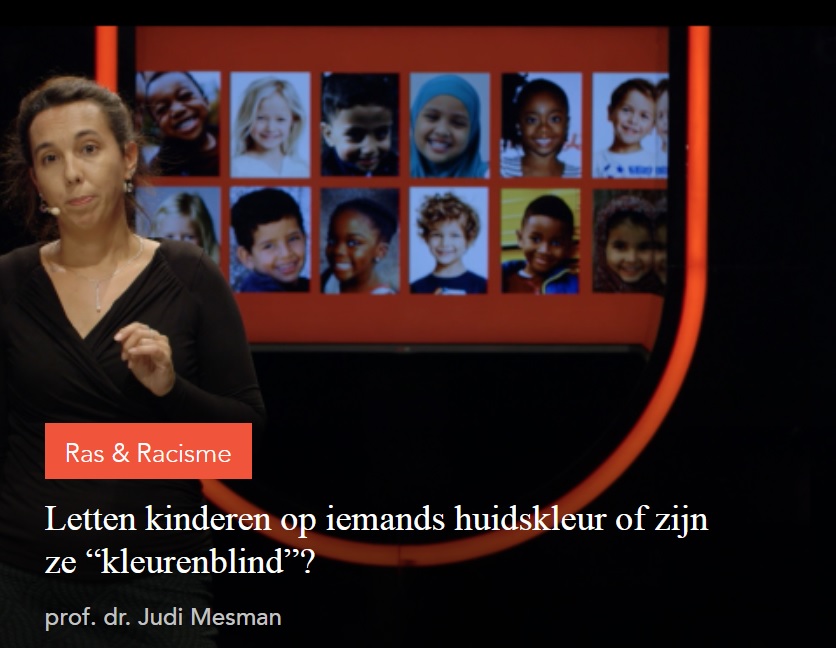
Judi Mesman is a Professor of the Interdisciplinary Study of Social Challenges at Leiden University, where she also holds the position of University Professor of Societal Responsibility and Impact since 2024. She is affiliated with the School of Governance and Global Affairs and the Department of Education and Child Studies. Previously, she served as Dean of Leiden University College The Hague from 2016 to 2022 and as Scientific Director of the Institute of Education and Child Studies from 2012 to 2016. Mesman's research focuses on social (in)justice, particularly intergenerational issues at individual and institutional levels. Her work examines how social and cultural norms in children's upbringing and education influence their self-image and worldview, with special attention to how children perceive and internalize norms regarding sexuality, ethnicity, and gender. She investigates how parents and educators unintentionally transfer prejudices to children through subtle messages and implicit stereotyping. Mesman's research program has significant societal impact, as demonstrated by her receipt of the prestigious Stevin Prize in 2021, the highest award in the Netherlands for researchers who effectively translate knowledge into societal benefits. Her work has influenced educational publishers, teacher training programs, and diversity initiatives. She has conducted studies on implicit stereotyping in schoolbooks and developed interventions to promote anti-racist education. Stevin Prize (2021) Member of Royal Netherlands Academy of Arts and Sciences (2018) Member of Royal Holland Society of Sciences and Humanities Recipient of NWO Veni, Vidi, Vici grants Recipient of ERC Starting and Consolidator Grants Mesman has supervised 26 PhD students to completion and teaches Intercultural Pedagogy in the Bachelor's program in Educational Sciences. She has developed the minor 'The (Un)Just Society' and created a podcast series on working with youth in a multicultural society, for which she received a teaching award. Her current research focuses on how norms and values about gender, ethnicity, and sexuality are transferred among professionals who work with children, including in teacher training programs.
Marcel Lubbers is a Professor of Interdisciplinary Social Science: Relations between groups and cultures at Utrecht University's Faculty of Social and Behavioural Sciences. He leads the European Research Centre on Migration and Ethnic Relations (ERCOMER) and serves as a board member of the Interuniversity Center for Social Science Theory and Methodology (ICS). As associate editor of the European Sociological Review (ESR), he significantly influences academic discourse in migration and political sociology. His work represents Utrecht University in the focus area Migration and Societal Change, connecting research with broader societal implications. Professor Lubbers' research program centers on migration's societal impacts, particularly examining how immigration influences nationalism, Euroscepticism, and voting behavior. His work adopts both macro-level perspectives on societal cohesion and micro-level analyses of immigrant integration processes. Recent publications reveal his focus on political extremism, interethnic relations, and the psychological mechanisms behind public attitudes toward migration. His methodology combines large-scale survey analysis, comparative European studies, and longitudinal approaches to track attitude changes over time. Lubbers' scholarly output shows consistent engagement with contemporary political challenges, including analyses of radical right voting patterns, the workplace as a setting for interethnic contact, and the impact of national nostalgia on political attitudes. His research demonstrates methodological sophistication through meta-analyses, mixed-methods approaches, and innovative survey designs like the Dutch Parliamentary Election Study and Dutch Ethnic Minority Election Study. Through web publications on platforms like Stukroodvlees.nl and contributions to the Migration Advisory Council, Lubbers actively bridges academic research and public policy debates. His work provides evidence-based insights on migration policy, electoral behavior, and societal integration that inform both scholarly and policy discussions in the Netherlands and beyond.
Dr. Vincent Homburg is an Associate Professor in Public Administration at Erasmus University Rotterdam and holds the ERA Chair in 'e-Governance and Digital Public Services' at the University of Tartu, Estonia. He holds a Master’s degree from Twente University and a PhD from Groningen University. His research focuses on e-government, public management theory, and information systems. He has co-authored/co-edited influential books such as Understanding E-Government and The Information Ecology of E-Government . He has supervised multiple PhD students and received the 2010 Best PhD Supervisor Award from NIG. His research interests include e-government in the Netherlands and globally, digital public services, and the role of social media in citizen-government interactions. He has published over 112 peer-reviewed articles and actively contributes to academic journals as an editor and reviewer. His recent work explores institutional trust in digital governance, cross-border digital services in the EU, and social media adoption in China and Canada. Education: PhD in Organisation Studies/Information Systems (Groningen University) Master’s in Public Administration (Twente University) Awards: Best PhD Supervisor Award (2010) His research bridges theoretical and practical aspects of governance, emphasizing institutional dynamics and technology’s role in public administration. He collaborates internationally, contributing to policy discussions on digital transformation and citizen engagement.
Dr. Katharina Bauer is Associate Professor of Practical Philosophy at Erasmus School of Philosophy, Erasmus University Rotterdam. She obtained her doctorate summa cum laude and completed her habilitation on theories of practical necessity. Previously a Feodor-Lynen Fellow at Rijksuniversiteit Groningen and Goethe Universität Frankfurt, she bridges continental philosophy with contemporary societal challenges. Her research investigates the impact of technological and ecological transformations on moral agency, focusing on dignity, authenticity, and autonomy. Key areas include: Ethical implications of human enhancement technologies Technomoral resilience in education systems Democratic hope in crisis contexts Phenomenological approaches to personal identity Publications since 2021 demonstrate sustained focus on pandemic ethics, democratic theory, and moral education, with increasing emphasis on sociotechnical systems and collective agency. Awards include the prestigious Feodor-Lynen Fellowship for Experienced Researchers from the Alexander von Humboldt Foundation. She chairs the Dutch Association of Ethicists and leads PhD supervision in moral philosophy and phenomenology.
Achilleas Psyllidis is an Assistant Professor of Urban Mobility and Director of the Urban Analytics Lab at TU Delft. He also leads the Social Urban Data Lab at Amsterdam Institute for Advanced Metropolitan Solutions and is affiliated with the LDE Centre for BOLD Cities. His roles include membership in TU Delft's Transport & Mobility Institute, the Mobility Futures Vision Team, and serving on the Executive Board of CUPUM. Education: PhD in Spatial Data Science (TU Delft, Faculty of Architecture and the Built Environment) Master of Science in Spatial Planning (National Technical University of Athens) Engineering Diploma in Architectural Engineering (National Technical University of Athens) Research Interests: Focuses on accessibility, walkability, land-use dynamics, and travel behavior. Develops computational methods for analyzing access equity, spatial segregation, and human mobility. Leads projects on sustainable urban mobility, environmental exposures, and the 15-minute city concept. Awards: CTwalk Map: Best Demo Award (ICT.Open 2024) ROUTE Ontology of Urban Transportation Entities (2015) Grants & Projects: Involved in initiatives like PERISCOPE (Social Resilience Design), Horizon2020 'Equal-Life' (Environmental Health), and SocialGlass (Urban Analytics Dashboard). Active in research collaborations across Europe and Asia. Labs & Teams: Directs Urban Analytics Lab and Social Urban Data Lab, focusing on data-driven urban solutions. Engages in interdisciplinary teams addressing mobility futures, urban health, and sustainable design.
Sergio Carrera serves as Senior Research Fellow and Head of the Justice and Home Affairs Unit at the Centre for European Policy Studies (CEPS), a prominent Brussels-based think tank. Additionally, he holds the position of Adjunct Professor at the Paris School of International Affairs (PSIA) in SciencesPo, France, where he contributes to academic teaching and research in international affairs. Dr. Carrera's academic background includes a Ph.D. on immigration and citizenship from Maastricht University (The Netherlands), an LL.M. in European, Comparative and International Law from the University of Maastricht, and a Law Degree from Universidad de Salamanca in Spain. His extensive educational foundation in European and international law underpins his expertise in EU justice and home affairs policy. His primary research interests focus on EU justice and home affairs (JHA) law and the Area of Freedom, Security and Justice policy, with particular emphasis on migration, asylum, citizenship, and Schengen policies. Dr. Carrera's expertise also extends to EU criminal justice law and police cooperation, examining their impacts on data protection, privacy, and the rights of the defense. His work consistently addresses the intersection between security measures and fundamental rights within the European context. Dr. Carrera has produced an extensive body of scholarly work, with over 190 published publications according to the available information. His recent research has particularly focused on EU-US data transfers, rule of law challenges in the context of migration management, global asylum governance, and the evolving landscape of EU security policy. His publications demonstrate a consistent concern with ensuring that security and migration policies uphold fundamental rights and the rule of law. Among his notable contributions are policy analyses on the European Green Deal's implications for climate policy, assessments of the EU's response to the Ukraine crisis, and examinations of the impact of the Trump administration on EU security policy. His research often bridges academic analysis with practical policy recommendations for EU institutions. Dr. Carrera leads and participates in numerous research projects addressing critical issues in EU policy. Current initiatives include "Reclaiming our past, rebuilding our future: new approaches to fighting antigypsyism" (2024-2026) and the "Study on Mapping Civil Dialogue Practices in the EU Institutions" (2024-2025). Previous significant projects include "Global Asylum Governance and European Union's Role" (ASILE, 2019-2023), "Pan-European Response to the ImpactS of COVID-19" (PERISCOPE, 2020-2023), and "IT tools and methods for managing migration FLOWS" (ITFLOWS, 2020-2023). His work has been commissioned by various EU institutions, including the European Parliament's Policy Department for Citizens' Rights and Constitutional Affairs, demonstrating the policy relevance and impact of his research. Dr. Carrera's expertise is frequently sought for task forces addressing timely issues such as EU-US data transfers, digital justice, and cross-border cooperation in criminal matters.
Charles E.H. Berger serves as Professor by Special Appointment in Criminalistics at Leiden University's Institute for Criminal Law and Criminology since November 2011, a position funded by the Stichting Leerstoel Criminalistiek. He concurrently holds a principal scientist position at the Netherlands Forensic Institute (NFI), where he contributes to education, R&D strategy, and research on forensic evidence interpretation. His research program centers on logically sound interpretation of forensic evidence through probability theory and computational methods. Berger specializes in applying Bayesian statistics to forensic anthropology, personal identification, and evidential evaluation. His work emphasizes moving forensic science toward activity-level interpretations while managing contextual information to prevent bias. Berger plays a pivotal international role as member of ISO technical committee TC272, serving as lead editor for Part 4 (Interpretation) of the ISO-21043 Forensic Sciences standard. His scholarly contributions focus on improving forensic reasoning frameworks and establishing objective evaluation methodologies. His publications demonstrate consistent engagement with foundational forensic science challenges, particularly in developing statistically rigorous approaches to evidence interpretation that maintain scientific integrity within legal contexts. Berger actively promotes scientifically sound practices across the criminal justice system, emphasizing the importance of clear communication between forensic scientists, legal professionals, and other stakeholders to ensure proper understanding and application of forensic evidence.